
The Self Hidden Beneath A Dress: Transvestism

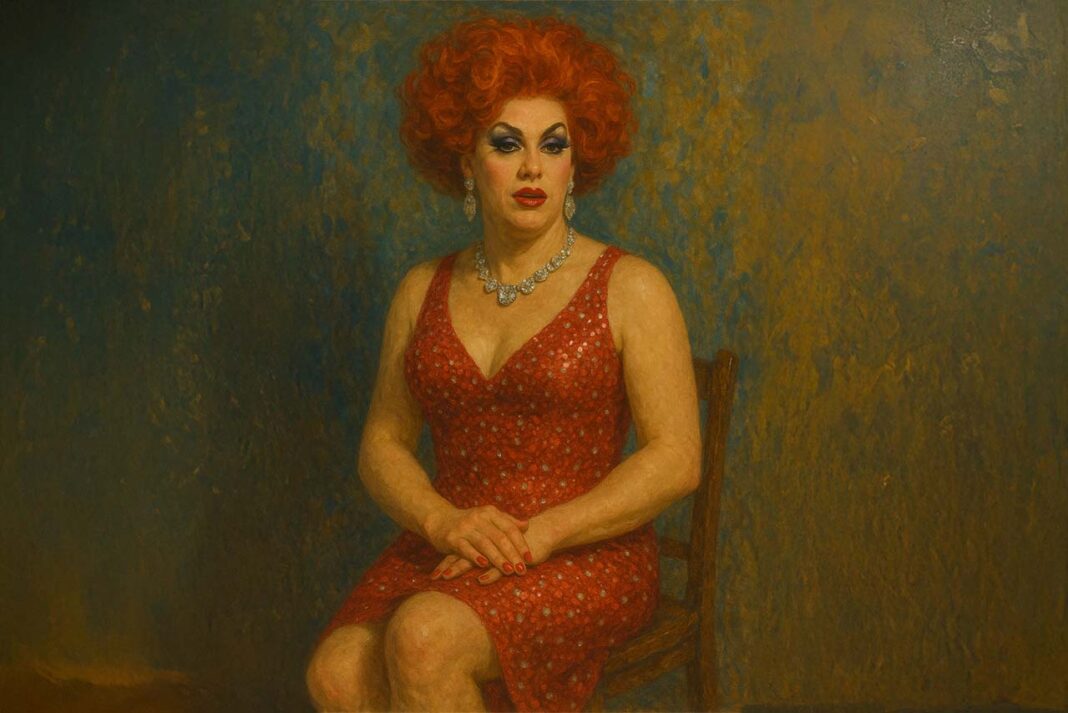
In any society, we all wear costumes and masks. Sometimes these costumes conceal who we are; sometimes they shout who we wish to be. Transvestism, the desire or need to wear clothes associated with the opposite sex, stands precisely between these two extremes — where identity dances with visibility.
Yet this dance is not merely an act of dressing. It carries psychological depth, desire, prohibition, and the wounds of self-rejection.
In psychiatric literature, transvestism was long categorized as a “disorder.” However, modern psychology increasingly interprets it as an expression of identity, not as a pathological behavior. In DSM-5-TR, the term “fetishistic transvestism” is used only when the act of dressing causes significant distress or impairment in functioning. Within most cases, it is not a mental disorder but a way for the individual to find internal balance.
In early psychoanalysis, transvestism was viewed as a stage for desire and forbidden identity. Freud considered clothing transformation a symbolic expression of repressed sexual drives but overlooked that, at its core, this act could represent an effort to integrate fragmented aspects of the self. Later psychoanalysts, particularly Winnicott, suggested that this behavior could be a way for the “true self” to emerge rather than the “false self.” In other words, through the act of dressing, a person may not be pretending but instead approaching their authentic self.
To wear a dress sometimes means touching not only fabric, but identity itself. Transvestism allows a person to confront repressed parts of their inner world. This contact holds both shame and desire. Winnicott’s concept of the “transitional space” is significant here, because the individual creates a play area between social rules and personal desires. Dressing becomes a form of creation — a redrawing of the boundaries of the self.
Gender As Performance And Identity
From the perspective of gender theory, particularly Judith Butler’s concept of gender performativity, this phenomenon can be understood differently. According to Butler, gender is not a natural state but a repeated performance. Femininity or masculinity is not a biological destiny but a set of culturally reproduced roles.
Transvestism makes the artificiality of these roles visible. It blurs the line between the masculine and the feminine and reminds us that identity exists along a spectrum.
Culturally, transvestism becomes a space where the individual confronts shame and the fear of exclusion. In many societies, this behavior remains taboo. Yet when social judgment suppresses the nature of identity, the self begins to fragment.
Jung’s concept of the “persona” resonates here: the face we present to the world is only a reflection of our inner self. Transvestism makes visible the “shadow” behind the persona — the suppressed gender identity, desires, and vulnerability of the individual.
Clothes are like a language. Desires that cannot be spoken and sensitivities that have been silenced come to life in the texture of a skirt or in the knot of a tie. In this sense, transvestism is a bodily poem. The body becomes a means of expression beyond rigid gender roles. Every garment becomes a declaration: “I am here.”
When society labels this declaration as deviant, it often fails to recognize that its own boundaries are narrow.
Clinical Perspective And Psychological Meaning
Clinical observations demonstrate that transvestism can play a role in reducing anxiety and strengthening self-perception. When repressed parts of identity are not expressed, inner conflicts deepen.
In psychotherapy, the goal is not to “fix” this expression but to understand it. Therapy provides a space where the feminine and masculine aspects of the inner world can reconcile and coexist. In that space, clothing ceases to be a mask and instead becomes a bridge — a bridge to the inner self.
As social norms increasingly recognize that gender cannot fit neatly into rigid categories, perspectives on transvestism are also evolving. Modern psychology acknowledges that identity is multilayered and fluid in essence. This acknowledgment represents not only individual freedom but also societal maturity.
Accepting an individual’s form of self-expression means embracing the richness of human diversity.
Why Is It Found Frightening?
Perhaps the real question is not why transvestism exists, but why it is perceived as frightening.
Because it holds a mirror up to the dual thinking of society. It exposes the artificiality of distinctions such as male–female, right–wrong, and normal–abnormal. In that mirror, society confronts its own repressed desires.
Ultimately, transvestism is not a deviation but a movement toward self-integration. What lies beneath a dress is not shame but truth, freedom, and the courage to exist.
Every self that cannot fit into society’s narrow path is part of human evolution. Transvestism reminds us that identity is not merely biology; it is art. And like all arts, its deepest meaning touches not the visible, but the unseen, the unspoken, and the unheard.
References
Levin, R. N., Erickson-Schroth, L., Mak, K., & Edmiston, E. K. (2023). Biological studies of transgender identity: A critical review. Journal of Gay & Lesbian Mental Health, 27(5), 254–283. https://doi.org/10.1080/19359705.2022.2127042
Levine, S. B., & Abbruzzese, E. (2023). Current concerns about gender-affirming therapy in adolescents. Current Sexual Health Reports, 15, 113–123. https://doi.org/10.1007/s11930-023-00358-x
American Psychological Association. (2023). Understanding transgender people, gender identity and gender expression. https://www.apa.org/topics/lgbtq/transgender-people-gender-identity-gender-expression
Bahari, L. P. J. (2024). The Crossdresser Phenomenon: Between Transgender and Hobbies. An-Nisa Journal of Gender Studies, 17(1), 27–40. https://doi.org/10.35719/annisa.v17i1.222
Research on Images of Cross-Dresser from the Perspective of… (2021). Behavioural Sciences.
Relationships Between Dress and Gender Identity: LGBTQIA+. (2021). SAGE Journals.
Gender Identity Development, Expression and Affirmation in Youth. (2022). PMC – National Center for Biotechnology Information.
Attitude Towards Cross-Dressing of LGBTQI+ Community among Senior High School Students. (2024). International Journal of Research and Innovation in Social Science, 8(11), 1786–1799. https://doi.org/10.47772/IJRISS