


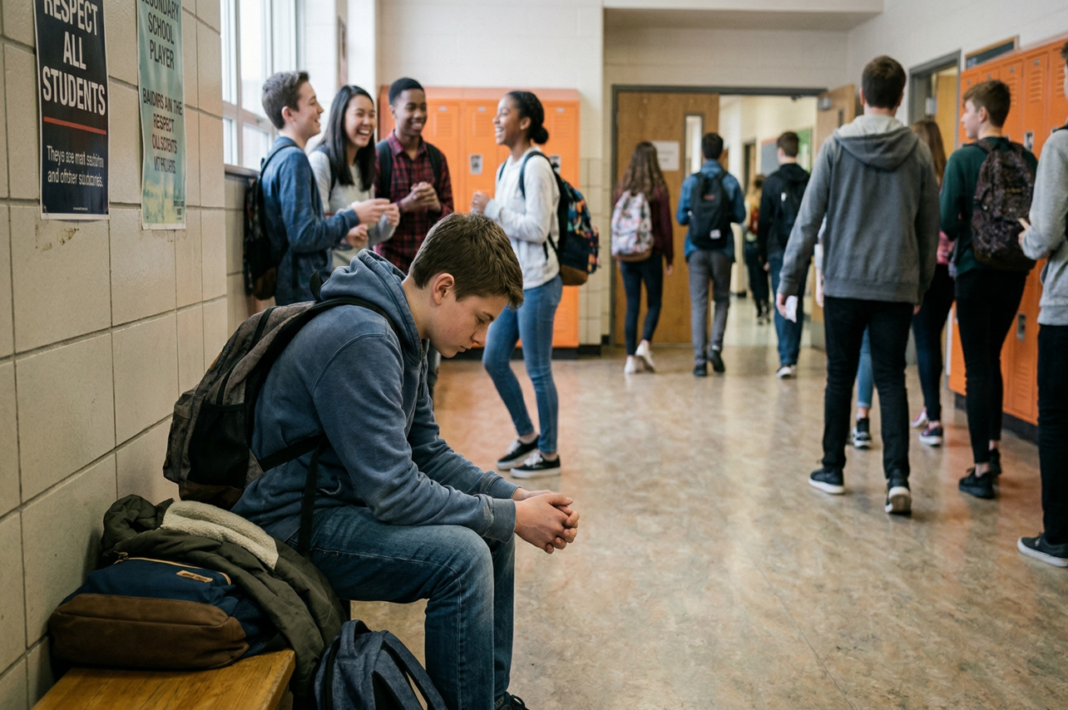

School is not only a place for studying and getting grades; it is also where students build friendships, explore themselves, and develop social skills. But what happens when this safe space is overshadowed by peer bullying? How does it affect students’ mental health, social relationships, and academic performance?
How Does Bullying Affect Students’ Mental Health and Emotional Balance?
Peer bullying is one of the most serious psychological threats students face in their educational life. Manifesting as physical violence, verbal harassment, or cyberbullying, these behaviors directly impact students’ mental well-being. Research shows that students who experience bullying are more likely to suffer from anxiety, depression, and low self-esteem (Smith, 2016). These individuals not only cope with momentary sadness and stress but also face a higher risk of developing long-term psychological problems.
Students subjected to bullying often remain constantly alert and feel the need to protect themselves, which increases stress hormone levels and can lead to physical symptoms such as sleep disturbances (Espelage & Swearer, 2003). This situation reduces their overall quality of life and fosters negative attitudes toward school. Especially during adolescence, bullying can negatively affect identity development, leaving lasting traces on social relationships and emotional regulation later in life.
How Are Social Relationships Disrupted and Friendships Weakened?
The effects of bullying are not limited to the individual’s inner world; social relationships are deeply affected as well. Students who are bullied often lose their sense of trust and may become isolated from their peer groups. This isolation increases social anxiety and feelings of loneliness, limiting group interactions and weakening friendship bonds (Juvonen & Graham, 2014).
After experiencing bullying, students may struggle to express themselves in social settings or feel constant shyness. This reduces both in-school collaboration and social support mechanisms. Lack of social support decreases students’ psychological resilience, further intensifying the effects of bullying. Consequently, students not only experience individual trauma but also miss out on social learning and peer interaction opportunities.
How Does Bullying Impact Academic Performance and Motivation To Learn?
Bullying directly affects students’ academic life. Increased stress and anxiety can lead to attention difficulties, loss of motivation, and lower school performance (Swearer et al., 2010). Students who experience bullying may struggle to focus on lessons and may frequently skip classes or show absenteeism. This threatens not only short-term success but also long-term educational goals.
Declines in academic performance are closely linked to the psychological burden caused by bullying. A student subjected to bullying may feel inadequate and worthless, which undermines academic confidence and reduces interest in learning. Therefore, bullying is a complex phenomenon that affects both personal psychological development and educational achievement.
Conclusion
Peer bullying is far more than a simple problem in educational settings; it leaves profound and long-term effects on students’ mental health, social relationships, and academic performance. Psychological consequences include anxiety, depression, and low self-esteem, while social effects manifest as isolation and weakened friendships. Academically, loss of motivation and decreased performance are notable outcomes.
Thus, systematic programs aimed at preventing bullying in schools are critically important for enhancing students’ psychological resilience and strengthening social support mechanisms. Raising awareness about peer bullying is a fundamental step in protecting students’ mental well-being and academic development.
References
-
Espelage, D. L., & Swearer, S. M. (2003). Research on school bullying and victimization: What have we learned and where do we go from here? School Psychology Review, 32(3), 365-383.
-
Juvonen, J., & Graham, S. (2014). Bullying in schools: The power of bullies and the plight of victims. Annual Review of Psychology, 65, 159–185.
-
Smith, P. K. (2016). Bullying in schools: Lessons from two decades of research. London: Routledge.
-
Swearer, S. M., Espelage, D. L., Vaillancourt, T., & Hymel, S. (2010). What can be done about school bullying? Linking research to educational practice. Educational Researcher, 39(1), 38-47.