


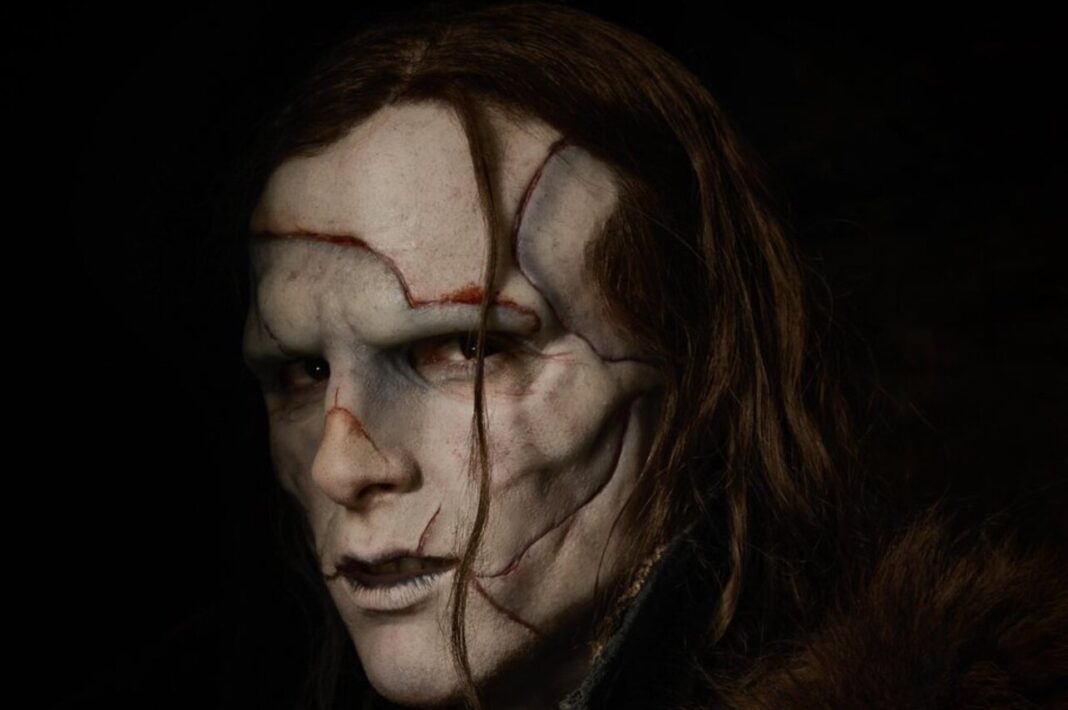

I recently watched the newly released and highly acclaimed film Frankenstein. At first glance, the film appears to be a classic horror and science fiction narrative, but as it progresses, it becomes clear that it offers a much deeper, multi-layered story. During the viewing, I felt that the narrative wasn’t solely based on chilling scenes or pushing scientific boundaries; rather, it contained powerful allusions to the dark, repressed, and contradictory aspects of the human soul. The characters’ reactions to events, their decisions, and especially their moments of emotional breakdown were elements that highlighted the film’s psychological depth.
At this point, the most striking relationship was undoubtedly the dynamic between Victor Frankenstein and the creature he created. As the film progresses, it becomes increasingly clear that the bond Victor forms with his creation is not merely the result of a scientific experiment; it is a complex psychological relationship interwoven with identity search, ego conflict, guilt, and repressed aspects. This creator–creature dynamic offered a striking narrative that made us reflect on how a person confronts their own creations, the kinds of internal conflicts they might experience when avoiding responsibility, and how sometimes their greatest fears stem not from the outside world, but from their own inner world.
Frankenstein’s Motivation: Power, Control, And Inner Emptiness
When we examine Mary Shelley’s work from a psychological perspective, we see that Victor Frankenstein’s motivations are not limited to scientific curiosity alone. His desire to “create a perfect living being” can be read as a combination of narcissistic tendencies, a need for control, and a fantasy of achieving godlike power. Victor tries to compensate for his own shortcomings and fill his inner emptiness through the act of creating life.
At this point, the being he creates is not merely an organism resulting from an experiment; it is like the embodiment of Victor’s repressed fears, flaws, and vulnerabilities. Carl Gustav Jung’s concept of the shadow archetype gains meaning precisely here. According to Jung, the individual pushes aspects of themselves that they find difficult to accept into the unconscious; however, these repressed contents do not disappear, but rather reappear in a threatening form in the outside world.
Rejection As A Mirror Of Inner Fear
Victor’s intense horror and immediate rejection of his creature during their first encounter is a symbolic reflection of his fear of confronting his own inner world. The creature’s physical “imperfection” is an expression of Victor’s inability to accept his own inner flaws. In this context, it is possible to consider the creature not only as a scientific failure but also as the embodiment of Victor’s unconscious.
The creature’s need for attachment to Victor is reminiscent of a child’s fundamental search for trust and acceptance from their parents. However, as this bond remains unmet, the feelings of loneliness, worthlessness, and exclusion experienced by the creature gradually transform into intense anger. In psychological literature, this process can be explained by the concepts of attachment trauma and post-rejection aggression.
Guilt, Avoidance, And The Superego’s Punishment
Victor’s story is also intertwined with a strong psychology of guilt. As he realizes that his creature is causing harm, Victor’s avoidance behaviors increase; as he distances himself from taking responsibility, his mental breakdown deepens.
At this point, Freud’s structural model becomes significant. When a person refuses to confront their actions, the psychological projection of responsibility intensifies. The superego punishes through anxiety, self-criticism, and psychosomatic symptoms. Victor’s physical illnesses, mental exhaustion, and increasing anxiety are a dramatic reflection of this self-punishment mechanism.
The Creature’s Need For Acceptance And Identity
The most fundamental thing the creature demands from Victor is “acceptance.” This demand reflects one of the most basic psychological needs of a human being: to be seen, understood, and affirmed. From the moment of birth, the creature is positioned as an “other”; rejected through glances, words, and avoidance. This rejection directly shapes their sense of identity and self-worth.
In Maslow’s hierarchy of needs, when belonging and love are unmet, it becomes impossible for an individual to achieve higher psychological function. The creature becomes trapped within an unmet need for attachment.
How Society Creates The Monster It Fears
The creature’s process of “learning evil” is not an innate destructiveness, but the result of social exclusion. Constant rejection leads a person to define themselves according to the reflection given to them by others. The creature gradually internalizes the “monster” identity projected onto it by society.
In social psychology, this is explained through labeling theory and the self-fulfilling prophecy. When an individual is repeatedly assigned a negative identity, they eventually begin to behave in alignment with it. The creature’s turn to violence becomes the last available form of expression for an existence denied acceptance.
Existential Loneliness And The Demand For Recognition
The creature’s anger is rooted in profound existential loneliness—an internal void created by being misunderstood, unseen, and unacknowledged. Its demand is not merely companionship, a spouse, or a home; its true demand is recognition as a human being whose emotions are legitimate.
Victor’s refusal to acknowledge this need symbolizes a deeper evasion of human responsibility. By denying the creature, he denies the responsibility of creation, empathy, and repair. The story suggests that evil often arises not from innate nature but from broken relationships, emotional neglect, and prolonged rejection.
No individual is born evil; more often, what we call “evil” is the silent shadow left behind by unmet emotional needs, isolation, and persistent emotional abandonment.