


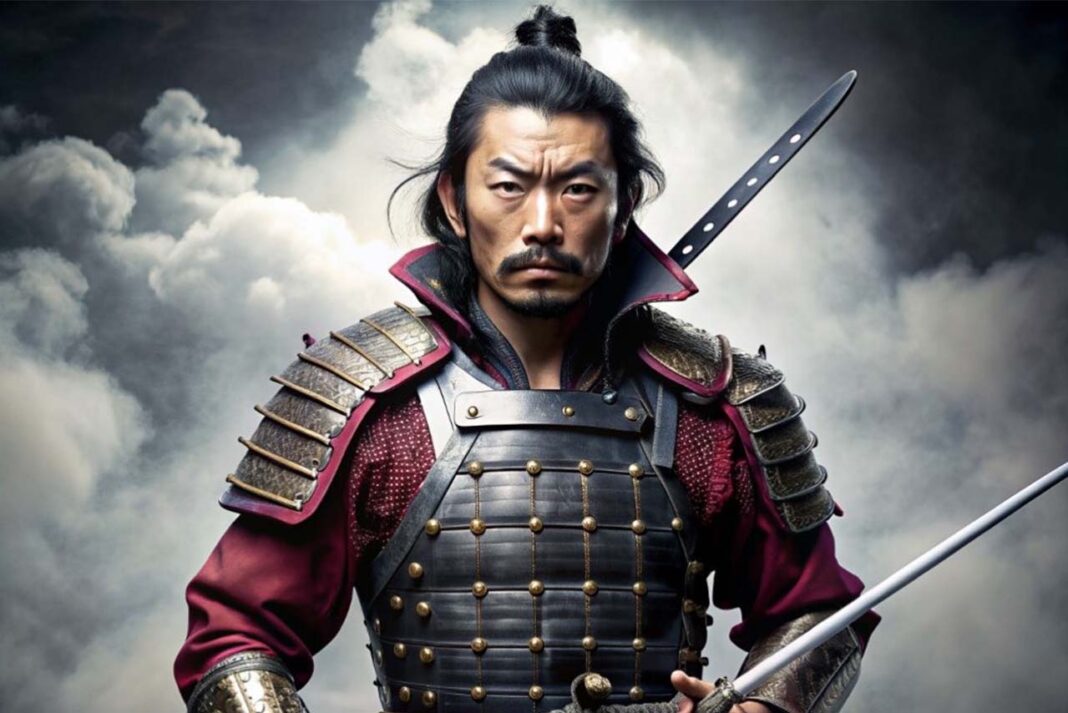

Dedicated to my brother, Medic Military Officer Barış Berk, who embodies the coexistence of life and death, like Yin and Yang. Those whose existence is as fleeting as the beauty of a flower, yet as steadfast as the strength of a mountain—these are the samurai. Recognized as the elite members of Japan’s feudal military class, they made their mark on history sometimes through their skills and tactics in battle, and sometimes through their conduct and depth in times of peace. Living disciplined lives under simple yet strict rules, samurai were responsible not only for themselves but also for their lords, the families into which they were born, and the communities in which they lived. Their shame and pride were not theirs alone; they were inseparable from the events and feelings of those around them.
Consequently, they were expected to fight exceptionally well, be literate and productive, and demonstrate high-level moral and ethical behavior as exemplary individuals. They had to honor the past and educate the future. And they did. Much like John Locke or Thomas Jefferson, who advocated liberty and equality while refraining from participating in the slave trade, samurai directed many societies and philosophical currents according to their principles, initiated deep ontological inquiries, and when necessary, sacrificed their lives for the spiritual values they defended and upheld through seppuku, a form of ritual suicide. The question arises: what was the key to carrying and sustaining such a weight across generations?
Bushido: The Way of the Warrior
Bushido, literally translated as “the way of the warrior,” is a philosophy of life and honor. Bushido served as an ethical code guiding every aspect of samurai life, from daily routines to battlefield decisions, acting as both an individual and societal compass. Salvation and peace reside within the individual. Like yin and yang, samurai sought balance in life, strengthening their power not only physically but also internally. It is this foundation of deep values that enabled Bushido to leave a mark not only through samurai as warriors but also as teachers of humanity. While the principles vary according to sources, their fundamental essence is as follows:
1. Loyalty
Samurai were deeply devoted to their lords, clans, families, the country they lived in, and to Bushido itself. This loyalty was not limited to physical service; it also meant moral and intellectual commitment. Such loyalty constituted the very purpose of a samurai’s existence and, when necessary, extended to their own death through seppuku. However, loyalty was not blind. If their lord pursued a wrongful path, a loyal samurai would have the virtue to criticize and attempt to correct it. Loyalty also included rational commitment, such as using a rifle to achieve superiority in battle, even while the sword remained sacred.
2. Honor and Reputation
If a samurai were compared to an airplane, honor and reputation would be its two wings. An airplane without wings cannot fly, and one that cannot fly has no purpose. For samurai, these values were so powerful that they not only guided the entire life of the individual but also remained evident in their death. An honorable and reputable life was not enough; if necessary, they would preserve it through seppuku, making even death honorable and reputable. But what are honor and reputation? Though often used interchangeably, fundamentally, honor is related to the individual, and reputation to societal respect. As Yamamoto Tsunetomo stated: “Reputation is doing the right thing at the right time; honor is the constant will to do what is right.”
3. Integrity and Justice
Integrity in Bushido is not merely about telling the truth; it is also about sincerely desiring to live rightly. A samurai’s words and actions should be harmonious and consistent, never appearing contradictory. A samurai’s integrity is such that promises are unnecessary; breaking a promise or lying is inconceivable. This prevents empty speech, imposes responsibility, and encourages analytical thinking and the pursuit of knowledge. In this philosophy, integrity can also be considered a form of strength or determination—doing what must be done without hesitation or trembling. To die when required, to fight when necessary.
4. Courtesy
For a samurai, courtesy is not merely a matter of etiquette but a moral disposition and a behavior that permeates all areas of life. It entails deep respect for oneself and for others, manifested externally with extraordinary grace. This is evident in speech, gaze, behavior, and even combat. Courtesy based merely on fear of disapproval is a weak virtue. Genuine courtesy reflects sincere respect for others’ feelings.
5. Courage
The samurai class is a warrior class, making military service their profession. As Shakespeare called the “valiant fool,” leaping into every danger blindly, sacrificing without thought, or exhibiting reckless fearlessness is not courage. For a samurai, courage is the capacity to take risks to do what is right; to act appropriately when necessary. According to Confucius, a lack of courage is failing to act even when one knows the right course. Courage must sometimes be shown toward enemies and sometimes toward friends. However, the greatest courage for a samurai is toward oneself. Otherwise, as Prince Mito noted, plunging into the chaos of battle and dying within it is easy; even the least intelligent can do this. True courage is surviving when necessary and risking death only when required.
6. Willpower and Self-Discipline
In Bushido, willpower represents determination and resilience. A samurai must continue toward their goal with inner resolve. Persisting in the face of challenges and obstacles is the samurai’s honor. Maintaining this honor requires both physical and mental strength. The key to this is self-discipline. Self-discipline allows a samurai to continually improve themselves in all aspects. Training physically and mentally, surpassing personal limits, is part of their responsibility to themselves and society.
7. Compassion
In Bushido, compassion is neither a personal emotion nor passive weakness; it is a way of serving society. A samurai is strong, and this strength should not be used solely for combat. A samurai aims to benefit others and society. Compassion is directed not only to oneself but also to community members and even enemies. The combination of strength and compassion defines a truly noble warrior. Compassion is rooted in human creation; to show it is to be human. The samurai’s goal in battle is not merely victory but justice. Thus, a samurai does not celebrate conquest; each victory represents a loss. Compassion alleviates the suffering of war and provides inner peace.
References
-
Nitobe, I. (1905). Bushido: The soul of Japan. Tokyo: Kodansha International.
-
Kanno, H., & Sasaki, S. (2015). The influence of Bushido on modern Japanese society. Journal of Japanese Studies, 41(2), 305–325.
-
Carter, R. E. (1996). Japanese ethics in focus. Albany: SUNY Press.
-
Ohnuki-Tierney, E. (2002). Militarization of aesthetics in Japanese history. Chicago: University of Chicago Press.
-
Suzuki, D. T. (1970). Zen and Japanese culture. Princeton University Press.