


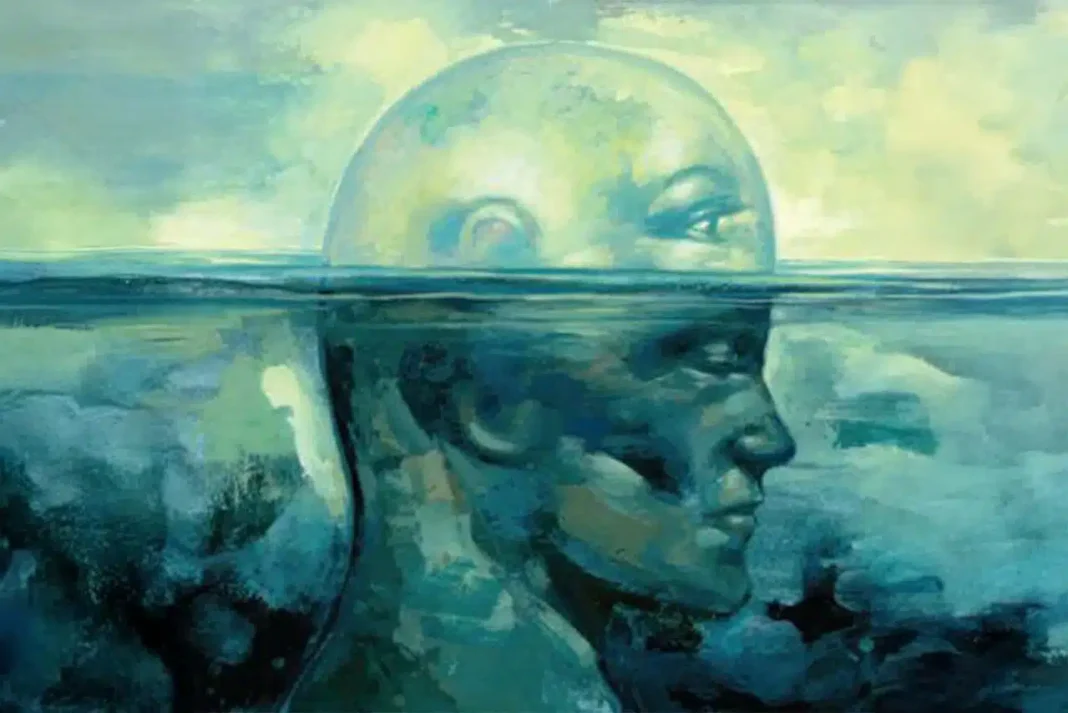

Sometimes a memory from our past appears out of nowhere; a scene we were not even aware existed, quietly waiting in some corner of the mind, suddenly surfaces before us. A face we do not recall, a place, a sentence… As if a door that has long been shut opens without our intention, the memory fills us all at once. We try to hold it for a while, to understand where it belongs. But sometimes it arrives like a slip of the tongue and disappears just as quickly. We can neither grasp it nor completely deny it. It is like the lines of a file opened by mistake; once closed, we can no longer find where it was.
Some memories are even stranger. We do not remember having lived such a scene at all; in fact, we are certain we did not. Yet others describe it to us with such detail, as though we had truly been there with them. A glance, a word, a gesture… All offered to us as if they belonged to us, yet nothing within recognises them. It is as though our hafıza never recorded that moment. Or perhaps it did, and we simply cannot access it.
Whether they appear suddenly and vanish, or stand before us as though never lived at all — these memories force a question upon us: Why do we forget? Why do some things require no effort at all to recall, while others withdraw the moment we approach them? Why do certain feelings sit heavily within us as if entirely intact, yet we cannot find the memory they belong to?
Forgetting is not as simple an absence as we imagine. The mind does not let go because something is lost, but because it sometimes cannot bear to hold it. Memory is not obliged to process every detail. Some scenes are too sharp, too tangled, too exposed; too difficult for the mind to keep as they are. Unutma, then, is not a weakness but the psyche’s way of protecting itself.
Time passes, the details of certain events fade; yet the feeling they leave behind remains, settling within us like a weight that appears without warning. The tone of a conversation, the tightness caused by a glance, the unease left by an argument we cannot fully recall… None of this is memory abandoning us. Rather, it is the unconscious remembering in a language that does not use words.
What troubles us most is not failing to remember, but carrying the effect of what we cannot recall. The unconscious does not always place emotions before the mind; instead, it leaves them in the body. The word is lost; the feeling stays. We may not know why something hurts, but the place it touches is unmistakably familiar.
The memories we struggle most to hold onto are often those that have weighed on us without our noticing. Even something that once made us happy may feel heavy. What feels “good” is not always easy to carry. Perhaps a small embrace, or a long-awaited conversation, may comfort us in the moment yet still be forgotten. A memory may once have nourished us, yet its residue is not always simple to bear. When the mind cannot hold the intensity of a feeling, it edges towards forgetting. For forgetting is less about pain, and more about the emotions we cannot yet make sense of. When we do not quite understand what we feel, the mind chooses to make it unseen for a while.
Sometimes what we believe we have forgotten is merely something we cannot name. A feeling that finds no place within us finds none in memory either. So we appear to have “forgotten,” when in truth it is not the memory that is lost but the place it could not hold. The mind pulls aside what it cannot yet comprehend. This is not denial; it is a delay.
When a memory shifts its place, it never completely disappears. It hides beneath a word, slips into a gesture, waits behind a moment’s trigger to surface again. A scent, a sentence, an inexplicable tightness… The memory we thought forgotten approaches but never fully reveals itself. We cannot recall it; yet it is not unfamiliar. Something within whispers, “this belongs to you,” without ever telling us from when.
The unconscious does not treat repression as disposal. To repress is not to cast something away, but to store it in a room the mind does not enter. The door closes; we may not know what lies inside, yet we feel its presence. The unease that rises when we near certain subjects is often the trembling of that door.
Perhaps the most surprising part of forgetting is that we continue living with what we believe we have forgotten. Its source is unclear; its effect anything but. Sometimes silent, barely noticeable; sometimes emerging in the plainest moment of the day as a sudden weight. Even if we cannot name the memory, its trace can shape our thoughts, responses, even the smallest steps we take. What we think we have forgotten often works most deeply — invisible, yet holding us from the most visible places.
The heaviness of the past does not always come from what we remember, but from what we cannot. A strange sense of incompleteness moves within us. A part of us knows something has been left unresolved, yet we cannot tell what it is. This uncertainty is not the mark of missing memories, but the empty space left by emotions that have never been processed.
And sometimes, in a quiet moment of the night, when the mind loosens its guard, an echo rises from that space. Neither the image becomes clear, nor the feeling fully formed. There is only a brief contact. The unconscious reveals itself in such moments — without speaking, drawing us closer with a subtle heaviness.
Forgetting is not an ending as we imagine. It is merely the temporary disappearance of what has not yet settled. A silence belonging to feelings that have not found their place within us. We do not truly try to forget; we simply wait, unsure of what would happen if we were to remember.
Perhaps the most tiring part of forgetting is accepting that some things cannot truly be forgotten. Not because they persist, but because they have never been given meaning. The mind does not always store the past; it stores the state the past left within us. That state does not need remembering; it needs time to loosen.
And then we realise: forgetting is not absence; it is not yet being able to touch something — until the moment comes when we finally can. Remembering is not returning; only finding the place of a feeling that has long remained in the dark.
Until the moment we are ready to face and bear what we have forgotten, we continue to keep them safe, like a quiet guardian standing watch over what we are not yet able to approach.