


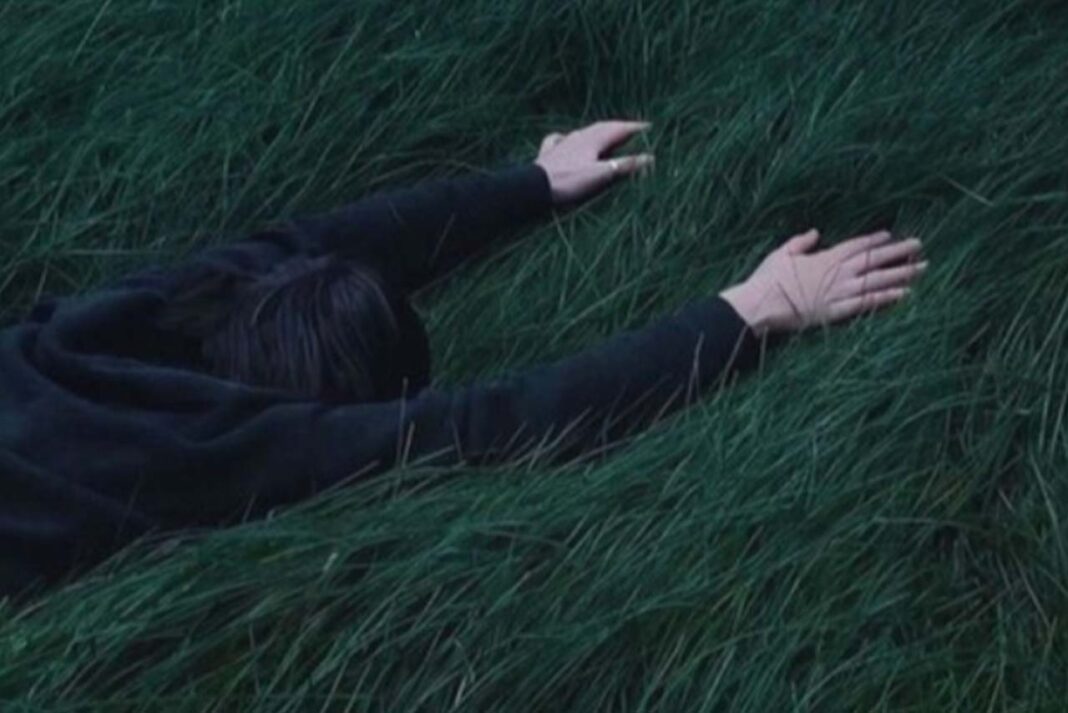

In our daily lives, we often create scenarios in our minds where different versions of ourselves exist, comparing them with our current reality. At the same time, influenced by external stimuli, we tend to idealize the lives of others—whether familiar or unknown—and may feel the urge to make radical changes in our own lives to become someone different.
These radical changes, while fueled by the illusion of another life and accompanied by regrets, in fact, reflect our need to find meaning and transformation within our current existence. In psychology, this phenomenon is referred to as the Grass-Is-Greener Syndrome.
How the Grass-Is-Greener Syndrome Manifests
The Grass-Is-Greener Syndrome manifests when individuals, influenced by external factors, constantly compare themselves within their romantic relationships, careers, or other domains of life, and construct alternative scenarios.
While imagining these scenarios, the individual struggles to take pleasure in or feel satisfaction from their present life, instead shaping personal goals in relation to idealized external influences. In this process, one may attempt to cope with dissatisfaction by wrestling with persistent thoughts that begin with “if only” or “what if.” Such thoughts hinder the ability to recognize the value and beauty in one’s current life, work, and relationships.
The Role of Social Media in Strengthening the Illusion
When considering the mechanisms that trigger and reinforce this syndrome, social media’s selective presentation plays a prominent role. These platforms highlight only the most “enjoyable” moments of people’s lives, thereby reinforcing the illusion that “the grass is greener.”
Yet, it must not be forgotten that behind the seemingly joyful portrayals of life—both online and offline—there is always another side of the coin, often unseen. No idealized life can fully deliver happiness, for life itself has never been solely about emotions. The miracle and adventure of life lie precisely within this truth.
Hedonic Adaptation and the Pursuit of Another Life
Hedonic adaptation refers to the process in which a person, after achieving something desired or enjoyable, experiences diminishing happiness from it over time, as it loses its impact on well-being.
In this sense, hedonic adaptation fuels the Grass-Is-Greener Syndrome by leading us to become accustomed to the sources of satisfaction in our lives, rendering them ordinary. As a result, individuals may develop a tendency to pursue radical decisions that overturn their lives or relationships, under the illusion of another life.
This tendency can also be explained by the concept of the focusing illusion, which describes how people overestimate the influence of a single factor on overall life satisfaction, exaggerating its potential to transform their happiness. Noticeable and easily observable differences (e.g., moving to a new city, curated photos, pleasant climates) are disproportionately positioned as determinants of overall well-being. This mechanism explains the cognitive foundation of idealizing another place or person.
Philosophical Insights: Fromm and May
Erich Fromm, in his book To Have or To Be, emphasizes:
“Human happiness lies not in what one possesses, but in one’s power of self-realization.”
This statement points to the essence of the syndrome: by idealizing what others have and devaluing our own lives, the radical decisions we make may push us further into the illusion of another existence. However, recognizing our tolerance for hedonic adaptation can prevent us from reducing the entirety of our lives to the elements we find dissatisfying.
Lasting fulfillment arises not from escaping ourselves through idealized lives or relationships, but from making meaning of and transforming our own existence.
Finding Fulfillment in Everyday Life
Happiness is a state of sufficiency. While it is common to seek happiness in grand moments or extraordinary achievements, sustainable happiness often lies in the small and recurring moments of daily life.
A cup of coffee you prepare for yourself, the time you set aside to rest, or the sense of accomplishment after completing a task—these are moments of awareness that nurture the feeling of sufficiency. Within this syndrome, the dissatisfaction with one’s life is deeply tied to the belief of not being enough.
Rollo May, in The Discovery of Being: Writings in Existential Psychology, underscores that freedom is not merely about making choices, but also about taking responsibility for them.
In other words, when an individual withdraws from idealizing external stimuli and begins to value their own choices, they can attain inner freedom and peace. No life can deliver complete happiness, for life itself has never been solely about feelings. The miracle and adventure of life reside within this reality.
Each individual is unique. When we shift our focus from external influences to personal transformation, we begin to realize that “the grass is green on our own side too.” From where we stand, grass always seems greener. And perhaps, to someone else, we are the greener side.
REFERENCES
Festinger, L. (1954). A theory of social comparison processes. Human Relations.
Schkade, D. A., & Kahneman, D. (1998). Does living in California make people happy? A focusing illusion in judgments of life satisfaction. Psychological Science.
Bosma, H., Groffen, D., van den Akker, M., Kempen, G. I. J. M., & van Eijk, J. T. M. (2011). Better health reports when the grass is greener on your side of the fence?: A cross-sectional study in older persons. International Journal of Public Health.
Resnick, A. (2024, March 22). Why we think the grass is always greener on the other side. Verywell Mind.
Fromm, E. (1995). To Have or To Be (A. Arslan, Trans.). Istanbul: Arıtan Publishing.
May, R. (1997). The Discovery of Being: Writings in Existential Psychology (H. N. Soykan, Trans.). Istanbul: Kabalcı Publishing.