


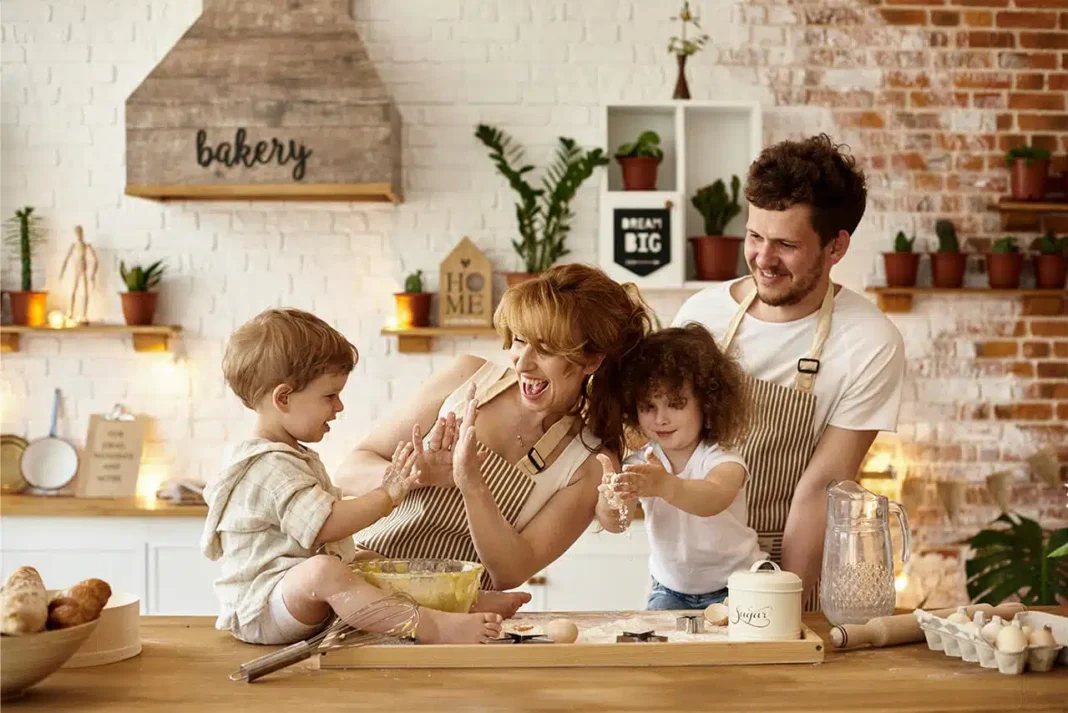

The family is the child’s first window to the world. The development process of an individual is shaped by genetic factors as well as the opportunities offered by the environment and social interactions. The most fundamental building block of this process is the family. The family is not only a structure that meets the child’s basic needs, but also a dynamic system that affects his/her cognitive, emotional, social and moral development. The relationship, attitudes and values that parents establish with the child directly affect many developmental dimensions from the child’s self-perception to his/her social roles. Especially in the early years, the child’s emotional security, learning capacity and social adaptation largely depend on the experiences in the family environment. In this context, the function of the family is of critical importance in the child’s multifaceted development. In this article, the child’s developmental areas will be addressed separately and the effect of interaction within the family on these areas will be examined.
1. Effect on Cognitive Development
The effect of the family on the child’s cognitive development is quite decisive. Cognitive development covers the child’s thinking, problem-solving, learning and language skills. These skills are directly related not only to school but also to interactions in the family environment. Parents reading books to the child, asking questions, providing learning opportunities through play and allowing the child to explore their environment significantly support the child’s mental development.
According to Jean Piaget’s theory of cognitive development, the child learns by actively interacting with their environment. In this context, a home environment where the child is cognitively encouraged from an early age enriches their thinking processes. In addition, Vygotsky’s concept of the “zone of proximal development” emphasizes that the child needs guidance in order to reveal their potential. The family is the first source of this guidance. Therefore, a supportive and participatory parenting approach is effective in many areas, from the child’s academic success to independent learning skills.
2. Emotional Development and Secure Attachment
Emotional development includes the processes of recognizing, expressing and regulating the individual’s emotions and understanding the emotions of others. In this process, the child’s emotional security depends on the bond they establish with the parent. According to John Bowlby’s attachment theory, secure attachment leads to children who are more emotionally balanced. Their anxiety levels are low, they adapt more easily to new environments, and their coping skills in stressful situations are more developed.
A secure bond is established when the parent is consistent, affectionate and sensitive. A child whose emotional needs are met expresses his/her feelings more openly, understands the feelings of others better and develops self-confidence. On the contrary, rejecting or inconsistent parental behaviors can cause negative feelings such as anxiety, insecurity and anger to settle in the child’s inner world.
Emotionally supported children become more successful in social relationships and more psychologically resilient individuals in later ages.
3. Learning Social Behaviors
A child’s social skills begin to develop with interactions within the family from an early age. The family environment is the first model from which the child learns social roles. Relationships established with parents and siblings lay the foundations for skills such as sharing, cooperation, conflict resolution and empathy.
Within the framework of social learning theory, Albert Bandura emphasizes that individuals learn through observation. In this context, the communication style, problem-solving strategies and approach to social values displayed by parents are decisive in the formation of the child’s social behaviors.
Parental attitudes have a direct impact on the development of children’s social behaviors. Children who grow up in families with democratic attitudes are included in decision-making processes, their ideas are listened to and respected. Individuals who grow up in this environment are more successful in respecting the rights of others, taking responsibility and establishing healthy communication. In authoritarian or neglectful family environments, children may exhibit either excessively obedient or socially shy and incompatible behaviors.
4. Moral and Value Development
A child’s moral development and value judgments are largely acquired in the family environment. The behaviors, reactions and boundaries set by parents enable the child to understand what is right and what is wrong. At this point, the family is the child’s first moral guide and the strongest source of value transfer.
Lawrence Kohlberg’s theory of moral development reveals that individuals’ moral thinking styles develop with age; however, this development process is shaped by environmental factors.
Practical experience of values such as honesty, responsibility and justice within the family enables the child to internalize these concepts. Situations where what is said and what is done do not match may create contradictions in the child’s value system. Therefore, the moral consistency of parents is of great importance for the child’s development of conscience.
Conclusion
The development of a child is a multifaceted and continuous process. The family, which is at the center of this process, is not only an institution that meets physical needs; it is also a social learning area where love, trust, knowledge and values are transferred. Individuals who make healthy progress in the areas of cognitive, emotional, social and moral development usually have a secure and supportive family environment at their core.
While the conscious, consistent and sensitive approaches of parents increase the child’s spiritual resilience, they also contribute to the creation of healthy individuals in society. Therefore, child development should be seen not only as the responsibility of educational institutions but also as the joint responsibility of families and society. Supportive policies, trainings and social awareness studies aimed at strengthening family interaction will enable children to realize their potential at the highest level.
References
-
Bowlby, J. (1988). A Secure Base. Basic Books.
-
Piaget, J. (1972). The Psychology of the Child. Basic Books.
-
Bandura, A. (1977). Social Learning Theory. Prentice Hall.
-
Yavuzer, H. (2020). Çocuk Psikolojisi. Remzi Kitabevi.