


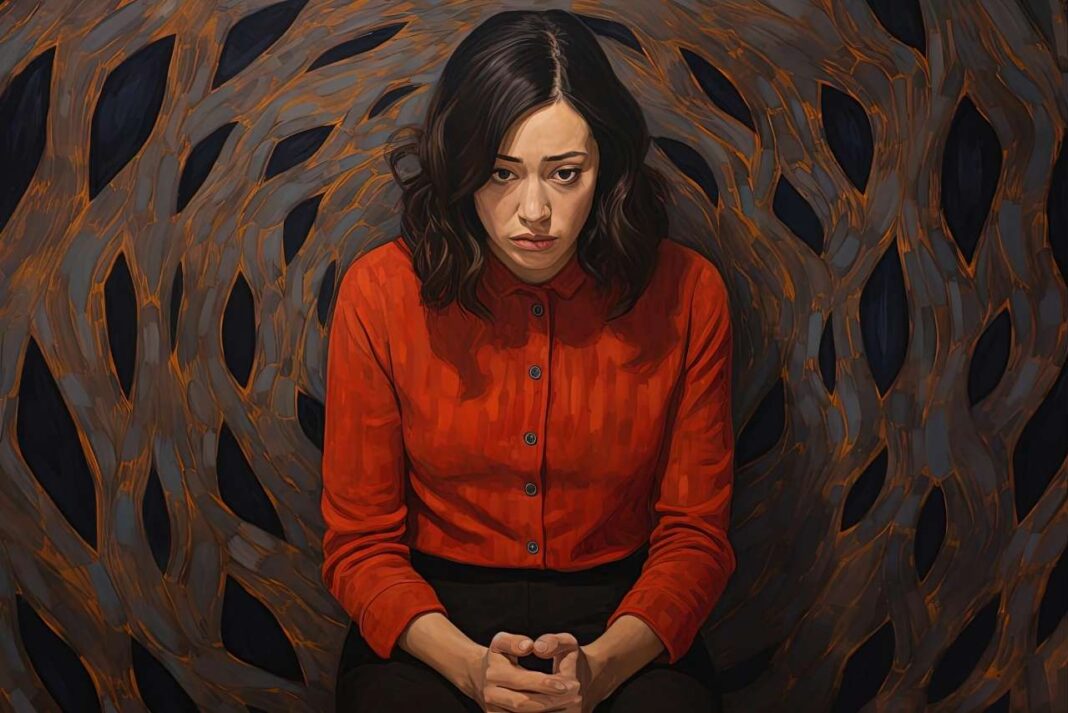

“Life doesn’t always go as planned; but sometimes losing your way is the only path back to yourself.”
The human mind has an odd obsession with order. We tend to label every experience as either good or bad. When we’re sad, we immediately ask, “How can I get over this?” or “How do I pull myself together?” When anxiety strikes, we tell ourselves, “I have to beat this.” Because we were taught that being fine is the goal and feeling bad is a kind of failure. “Smile.” “Don’t cry.” “Think positive.” As if sadness, shame, or disappointment were forbidden territories. Over time, such emotions stopped being shared — they were merely “gotten over.” That’s why saying “I’m fine” has almost become a moral duty. It sounds well-intentioned, but in truth, it silences the functional nature of emotions.
The brain isn’t designed to suppress feelings; it’s designed to process them. Repressed emotions seep into the body, changing our tone of voice and finding ways to speak through our muscles, stomach, and dreams.
But life isn’t a single shade, nor is the human psyche. The diversity of emotions is not a sign of mental instability — it’s proof of vitality. Sadness helps us notice what we’ve lost; anger warns that a boundary’s been crossed; fear protects us from danger. Yet we’ve labeled these as “negative.” Without those so-called negative emotions, we’d never know where we’re hurt, what we value, or when it’s time to change.
Toxic Positivity, then, is a kind of emotional censorship. We try to turn everything into something pleasant, smoothing out the sharp edges of life. Phrases like “Think positive,” “Let it go,” “Bad thoughts bring bad outcomes” have become so common that it feels like we’ve lost the right to grieve. But a person’s capacity to heal expands only as much as their willingness to face painful emotions.
Well-being isn’t just a mindset; it’s a biological process. The amygdala — the brain’s emotional alarm system — sends out anxiety signals to protect us from threats. That’s not malfunction; that’s care. Yet in modern life, even hearing that internal alarm feels intolerable. When emotions are suppressed, the amygdala raises its signal — stress increases. Eventually, we start asking, “Why do I feel like this?” Connecting with emotions regulates the nervous system; suppressing them keeps it on high alert.
This is where Toxic Positivity takes hold. Every emotion we silence leaves an echo in the brain. Saying “I’m fine, it’s nothing” doesn’t lower cortisol in the long run — it can raise it. Cortisol climbs, dopamine drops, and the body stays in emergency mode. In other words, the more you insist that “everything’s fine,” the more your brain insists “nothing is.”
Suppressed emotions manifest as muscle tension, insomnia, and digestive issues. By contrast, engaging with emotions — allowing yourself to feel sadness, anger, and fear as experiences rather than mistakes — helps balance serotonin and oxytocin levels. That biochemical harmony is part of our natural repair system.
But we rarely let it happen, because we’re obsessed with outcomes. We want every experience to lead to meaning, beauty, or victory. “Let this not be for nothing,” we say. “I just want it to be over.” Yet life often calls not for resolution, but for transformation. Pain doesn’t always have to mean something — sometimes it just changes us.
In the modern world, “feeling good” has become a goal, even a form of achievement. Happiness isn’t a state of being anymore; it’s a project. Healing, therefore, isn’t about the result — it’s about who you become along the way.
Sometimes life pulls you from where you are and drops you somewhere you never wanted to be. You resist at first. But over time, you realize you can’t carry your old self into this new place.
True growth often sprouts from the experiences we once called “bad.” We get so fixated on the destination that we miss what the journey is doing to us. Yet often, the road itself is the real teacher. The broken moments, delayed decisions, unfinished conversations, even mistakes — all belong to the path.
Real Emotional Resilience isn’t saying “everything’s fine,” but rather “even if it’s not, I’m still here.” Maturity isn’t measured by how well we avoid pain, but by how gracefully we live with it. Sometimes strength means allowing yourself to collapse for a while. Sometimes moving forward means standing still. And sometimes healing means not wanting the same things anymore. Because healing isn’t always about feeling better — it’s about coming closer to your own shadow.
Perhaps that’s why, throughout every era in which people have tried to understand themselves, similar truths have echoed:
• “You cannot perceive light without darkness. When a man accepts his shadow, he moves toward wholeness.”
(Carl Jung)
• “What does not break, does not grow.”
(Nietzsche)
• “If we cannot find meaning, suffering becomes unbearable. Yet meaning often arises from suffering itself.”
(Viktor Frankl)
• “True healing is not the removal of life’s pain, but building a meaningful life within it.”
(Irvin D. Yalom)
• “Negative emotions don’t weaken us. They reveal where our values are hidden.”
(Susan David)
• “The sea does not fight the waves. It exists with them.”
(Alan Watts)