


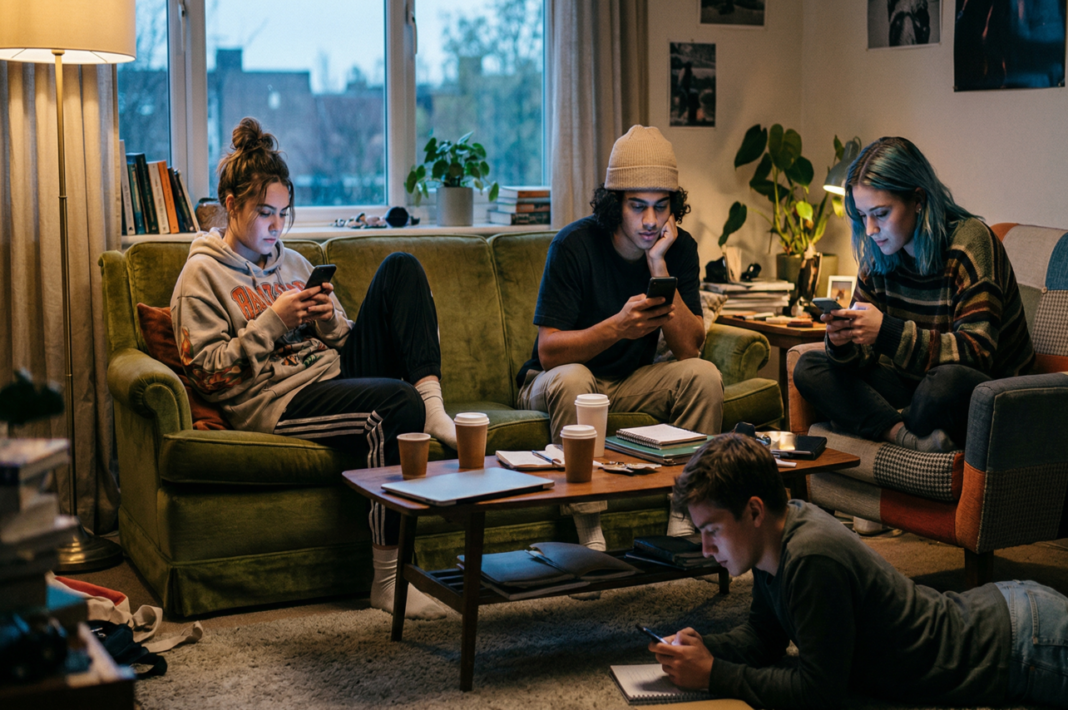

For Gen Z, the internet is not something we “log into” it is something we live in. From waking up to a notification-filled lock screen to falling asleep mid-scroll, digital spaces shape not only how we communicate, but how we think, feel, and see ourselves. While this constant connectivity offers comfort, entertainment, and community, it also raises an increasingly urgent question: what is it doing to our mental health?
Screen time is no longer just a number it is a lifestyle. Recent estimates suggest that young people spend upwards of 7–9 hours a day on screens, much of it on social media platforms such as TikTok, Instagram, and Snapchat. These platforms are designed to keep us engaged for as long as possible, using algorithms that learn our preferences and feed us endless streams of personalised content. The result? Scrolling becomes automatic, almost unconscious.
The Impact Of Comparison and Paradox Of Connection
One of the most significant psychological effects of this “scroll culture” is comparison. Gen Z is constantly exposed to carefully curated versions of other people’s lives perfect bodies, productive routines, aesthetic lifestyles. Even when we know these images are filtered or staged, they can still shape our internal standards. Over time, this can lead to feelings of inadequacy, low self-esteem, and anxiety about not being “enough.”
At the same time, social media creates a paradox of connection. We are more connected than ever, yet many report feeling increasingly lonely. Online interactions, while frequent, often lack the emotional depth of face-to-face communication. A like, a view, or a short reply cannot fully replace meaningful conversations or genuine presence. For some, this leads to a subtle but persistent sense of disconnection.
The Role Of Sleep and Emotional Regulation
Another major factor is the impact of screen time on sleep. Many Gen Z individuals report checking their phones as the last thing they do before bed and the first thing they do upon waking. This habit disrupts natural sleep cycles, both through blue light exposure and cognitive stimulation. Late-night scrolling keeps the brain active, making it harder to wind down. Over time, poor sleep can intensify stress, reduce emotional regulation, and contribute to symptoms of anxiety and depression.
However, it is important not to frame screen time as entirely negative. For Gen Z, digital spaces can also be sources of identity exploration, creativity, and support. Online communities often provide safe spaces for individuals to express themselves, share experiences, and access mental health information. In many cases, people feel more understood online than they do in their immediate offline environments.
Intentional Engagement and Digital Awareness
The key issue, therefore, is not simply how much time is spent on screens, but how that time is experienced. Passive scrolling consuming content without interaction has been linked to more negative outcomes, while active engagement such as messaging friends, creating content, or participating in communities can be more beneficial. Intent matters.
From a psychological perspective, developing awareness around digital habits is crucial. Many Gen Z individuals are not fully conscious of how often they reach for their phones or how certain types of content affect their mood. Small changes, such as tracking screen time, setting app limits, or creating “no-phone” periods during the day, can make a significant difference. Even simple habits, like avoiding screens 30–60 minutes before sleep, can improve both mental and physical wellbeing.
Finding Balance In A Connected World
It is also worth acknowledging the emotional attachment many people have to their devices. Phones are not just tools they are extensions of identity, memory, and social life. This makes reducing screen time less about restriction and more about balance. The goal is not to disconnect completely, but to reconnect with ourselves outside of the digital space.
In conclusion, screen time for Gen Z is complex. It is both a source of connection and a contributor to distress, both a tool for self-expression and a trigger for comparison. The challenge is not to eliminate it, but to navigate it more consciously. As the digital world continues to evolve, so must our ability to set boundaries within it. For Gen Z, protecting mental health in the age of constant scrolling is not about logging off it is about learning when, why, and how to stay on.