


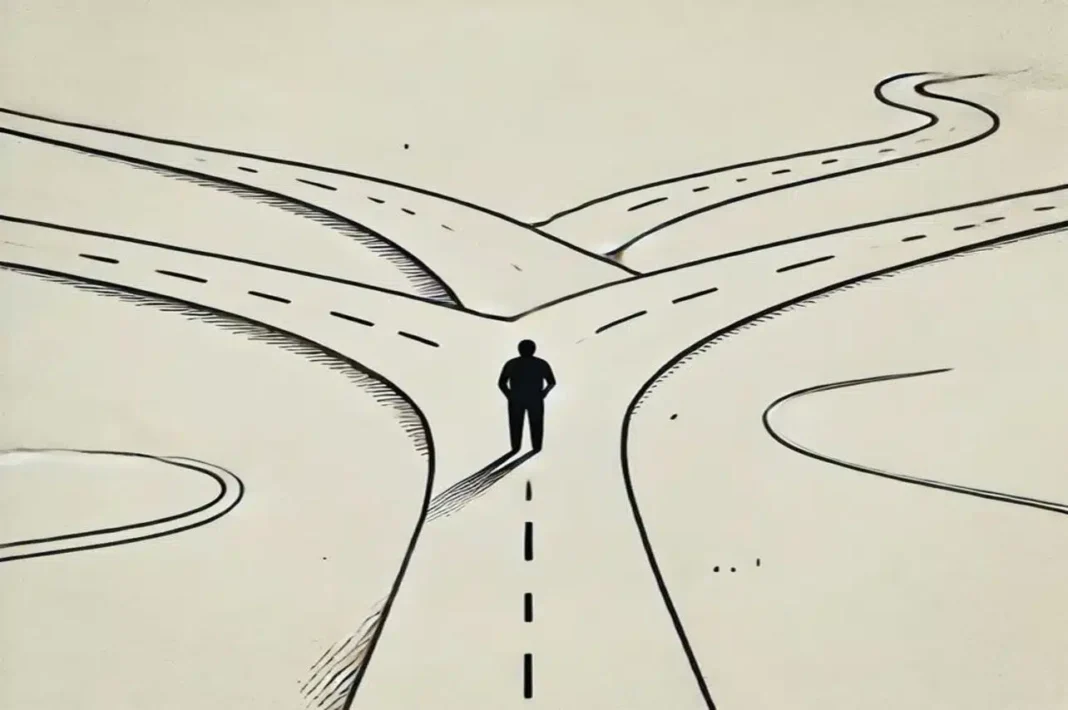

The same client. The same anxiety. Yet when the therapist’s first question changes, the story changes as well.
During my clinical internship, this was one of the most striking observations I encountered: although anxiety initially appears as a single and stable experience, it can transform into different narratives depending on how we choose to understand it. What the client shares may remain the same, yet the psychological meaning that emerges shifts as our way of listening changes. This suggests that anxiety is not only an individual symptom, but also a story shaped through a theoretical lens.
In this article, I aim to explore anxiety not through a single explanation, but through the layers of meaning offered by different therapeutic approaches.
In psychotherapy literature, anxiety is often treated as a problem to be reduced. However, many approaches consider it to be a signal as well. What this signal points to depends largely on the question the therapist begins with.
Consider a client who experiences intense anxiety in social situations — someone who avoids speaking in meetings, fears making mistakes, and harshly criticizes themselves afterward. This same anxiety can take on different meanings across therapeutic frameworks.
CBT Perspective: The Cognitive Basis Of Anxiety
From a Cognitive Behavioral Therapy perspective, the central question becomes:
“What is the client thinking that maintains this anxiety?”
For instance, the anxiety may be linked to an automatic thought such as:
“If I make a mistake, people will think I am incompetent.”
In this framework, anxiety is understood as a result of cognitive distortions that amplify perceived threat. Interpreting uncertainty as danger or exaggerating negative outcomes can help explain the persistence of anxiety. Here, anxiety is primarily conceptualized through the lens of Cognitive Distortions and maladaptive thought patterns.
Schema Therapy: Developmental Imprints
Schema Therapy approaches the same situation with a different question:
“Which unmet emotional need might be activated here?”
If the client grew up in an environment characterized by criticism or conditional acceptance, anxiety may reflect the activation of schemas such as defectiveness or inadequacy — not merely current performance pressure.
Thus, anxiety becomes not just a reaction to the present, but an echo of emotional realities learned in the past. From this perspective, anxiety is closely connected to early experiences and unmet core emotional needs.
Psychodynamic Perspective: A Signal Of Inner Conflict
The Psychodynamic Perspective reframes the question once more:
“What inner tension might this anxiety be expressing?”
Fear of speaking in meetings may represent not only evaluation anxiety, but a deeper conflict between the desire to be visible and the fear of rejection. The tension between striving for success and fearing criticism can manifest as anxiety.
In this sense, anxiety may function as an indirect expression of difficult-to-acknowledge emotions or internal experiences. It becomes a signal of unresolved inner conflict rather than merely a surface-level reaction.
Attachment Theory: A Relational Origin
From an Attachment Theory perspective, anxiety is linked to early relational experiences:
“How did early relationships shape this individual’s sense of safety?”
If the client received inconsistent feedback in early relationships, performing in social settings may feel less like a personal challenge and more like a test of relational security.
Here, anxiety reflects not only individual sensitivity, but also relational learning. It is shaped by internal working models of self and others formed within early attachment relationships.
Trauma Perspective: Unprocessed Experiences
Trauma-focused approaches — such as EMDR — may ask:
“Could this response be linked to an unprocessed past experience?”
A past humiliating or shaming event may become reactivated in present-day social situations. Anxiety, in this case, relates less to the current context and more to the lingering impact of unresolved experiences.
From this perspective, anxiety may represent the activation of memories that have not been fully processed or integrated.
One Anxiety, Many Layers
These perspectives do not compete with one another. Instead, each illuminates a different layer of the same experience:
-
CBT → cognitive meaning
-
Schema Therapy → developmental needs
-
Psychodynamic Approach → inner conflict
-
Attachment Theory → relational learning
-
EMDR / Trauma Perspective → unprocessed experience
This suggests that anxiety is too complex to be reduced to a single cause. Within the broader framework of Anxiety, emotional, cognitive, relational, and developmental dimensions often coexist.
In Conclusion: Anxiety Tells A Story
Emotional, relational, and developmental layers often coexist within anxiety. Understanding anxiety, therefore, is less about finding the correct explanation and more about remaining open to the multiple meanings it may carry.
Perhaps one of the most essential aspects of therapeutic work is seeing anxiety not merely as something to eliminate, but as a doorway into the client’s life narrative.
Because sometimes anxiety is not simply a problem to be solved, but a story waiting to be understood.