



Human beings are social creatures, and therefore are naturally inclined to seek close relationships. Sternberg (as cited in Atak & Taştan, 2012: 521) states that love or romantic relationships are significant because people believe they add meaning to their lives, and because scientific research also emphasizes the functions of love within human life. Love brings with it emotions such as intimacy, attachment, trust, respect, and affection. In Maslow’s hierarchy of needs, the level of belongingness and love highlights the importance of both romantic relationships and social connectedness. The presence and contributions of other people are essential for individuals to maintain psychological well-being throughout their lives.
Flirting has been defined as an emotional relationship in which individuals get to know one another and explore how compatible they are through stages such as friendship, dating, sexuality, and romantic involvement (Hortaçsu, 2002; as cited in Kaçar & Parlar, 2019: 716). Today, in the age of technology—where nearly everything has shifted to online platforms—online dating has also become increasingly widespread.
Online Dating And Impression Formation
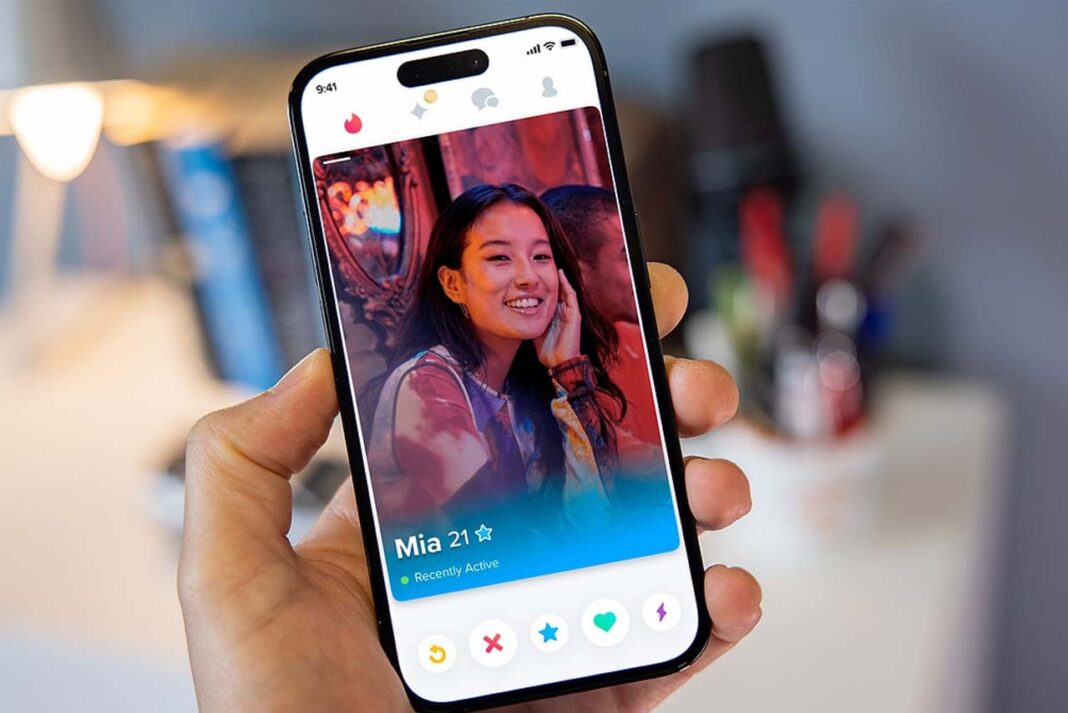
Although online dating has been part of our lives for some time, it represents a new form of meeting people. The earliest form of online dating emerged in 1959, when two students at Stanford University developed a computer-based program that matched participants according to their similarities. One of the most popular online dating applications, Tinder, was launched in 2012. According to a study, approximately 33.9 million users in the United States were using online dating applications in 2018. These applications, according to Tapan (2019: 34), are a cultural reflection of individuals’ pursuit of love or sexuality. In addition to facilitating new friendships and relationships, online dating platforms have also led to marriages.
The foundation of online dating applications relies on impression formation based on the photos people upload to their profiles, optional personal information, and geographic proximity—elements that together generate attraction and enable matches.
In real life, impression formation is one of the core components of social perception and serves as an important preliminary step in the process of developing perceptions about others. When a person meets someone new, they form certain ideas about that individual even if they do not know them; they analyze what the person looks like and how they react, and simultaneously form an opinion about them. The interpretation of information that a person perceives through their senses, processes cognitively, stores in memory, and transforms into a physical or mental response is referred to as perception. The process of perception may vary from person to person, as it encompasses variables such as personality structure, personal experiences, and culture.
First impressions do matter, of course. Clothing, tone of voice, hairstyle, and overall appearance can all lead us to make inferences about a person. When we see someone dressed nicely, with styled hair and a pleasant fragrance, we may find ourselves making judgments not only about their appearance but also about their personality. Yet it may be the very first time we have ever seen that person. In the literature, this phenomenon is referred to as the “Halo Effect.”
The Halo Effect
The concept of the Halo Effect was introduced by Thorndike and can be broadly defined as the influence of general evaluations about a person on the judgments made about that person’s individual traits. For example, imagine meeting a well-dressed, neatly groomed, handsome man at an event. You have known him for only a few minutes and possess information solely about his appearance, yet your mind quickly reaches a conclusion: “How attractive—and probably just as gentlemanly. He seems perfect for me!” A person’s appearance—perhaps just a glance or a warm tone of voice—immediately transforms into a glowing aura that reflects onto their entire personality.
Now let’s consider this: in today’s digital age, where do you think the Halo Effect appears most prominently? I can almost hear you saying online dating applications!
The Halo Effect And Online Dating
With technological advancements, these applications—downloadable on smartphones—can be used anywhere people go. Apps like Tinder typically present a profile containing only a limited amount of information. When forming a potential match, individuals often base their judgments of compatibility on just a few photos and brief introductory details. Upon seeing a profile photo, a person may engage in the physical attractiveness stereotype and develop perceptions such as “what is beautiful is good.”
Studies conducted in 2011 and 2016 found strong correlations between facial attractiveness and perceived intelligence, perceived responsibility, and perceived academic success. Such perceptions may later lead to negative shifts in one’s outlook on romantic relationships, disappointment, and certain cognitive distortions.
Additionally, the Halo Effect developed toward a matched partner on an online dating application can foster rapid trust. However, if this trust is exploited with malicious intent, it may also increase the risk of digital dating violence and cyberbullying.
References
İŞÖZEN, Ö. Ü. H. (2022). Mobil Flört Uygulamaları Bağlamında Yakın İlişkiler. Journal of Social Reserch and Behavioral Sciences, 8(16).
Kartal, B. (2023). Sosyal Çevre ve Davranış Bağlamında Halo ve Horn Etkisi ve Ters Yönlü Bir Algı Yönetimi Denemesi. Gümüşhane Üniversitesi İlahiyat Fakültesi Dergisi, 12(23), 115-129.
Ramaker, A. A. (2020). The impact of the halo effect in online dating (Doctoral dissertation, University of Wisconsin-Stout).
Dion, K., Berscheid, E., & Walster, E. (1972). What is beautiful is good. Journal of Personality and Social Psychology, 24(3), 285-290. doi: 10.1037/h0033731