



Perhaps each of us has heard this sentence from some people in daily life. ‘Am I going to go to a psychologist? Am I crazy?’ Although going to therapy has become a bit more normalized nowadays, this belief is still maintained by some people. The group that thinks the opposite of these people often believes that this belief is wrong and argues that going to a psychologist is important for mental health, that just like the body, the mind can also be ill and that everyone may need it. Especially nowadays, as this perception of ‘madness’ is breaking, the group that still says ‘Am I crazy? I don’t need it.’ May sometimes be exposed to many other criticisms along with being called ignorant by the other group. However, I do not know whether some of them even ask themselves this question. Where did this belief of being crazy come from and how did it spread? In order to understand this, it may be necessary to take a look at the past.
Supernatural Perspectives and The Middle Ages
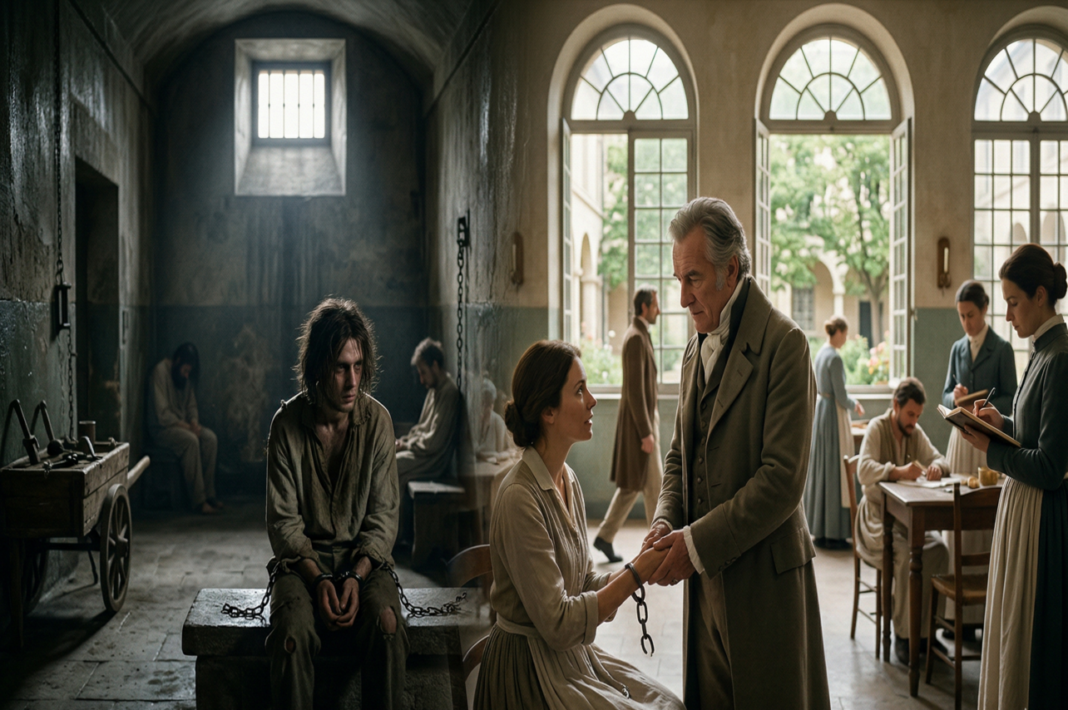
Prehistoric cultures generally approached abnormal behaviors with a supernatural perspective and saw them as the work of evil spirits, jinn, gods or witches that took control of the person, and even this kind of demonic possession usually occurred when the person acted against the religious teachings of that period (Bridley & Daffin, 2022). This situation continued in this way in the Middle Ages. Until the Renaissance and Reformation movements… In these two periods, there was a certain development in every field related to science and psychology was also included in this field. Over time, the fact that the mind could be ill was accepted and mental hospitals were built and put into practice for patients to receive treatment. However, things did not progress so perfectly of course. If we examine many sources on this subject, it is possible to encounter the following fact; in the early times when these hospitals were first established, sick people were exposed to poor conditions. Not only were they not treated like humans, but they were chained and exhibited to other people ‘like an animal’. In addition, it is also known that screams were rising from the places where they stayed.
The Shift Toward Humane Treatment and Biological Views
This situation did not remain like this. Starting with Pinel, and after him some others argued that these patients should be in more humane conditions and that they should be treated kindly. They thought that with this method at least some patients would show a certain improvement. And so it happened, in those times some patients showed improvement in a positive way. In later times, research continued to be conducted in the field of psychology and an old biological view came to the agenda again; that the cause of mental illnesses is also physical. The first form of this view emerged in the Roman period before the Middle Ages. In that period, Hippocrates divided mental disorders into three main categories as melancholy, mania and phrenitis (brain fever) and stated that there are four main fluids that guide normal brain function and personality, namely blood coming from the heart, black bile coming from the spleen, yellow bile or choler coming from the liver and phlegm coming from the brain, and defined humor (Bridley & Daffin, 2022). Mental disorders occurred when the humors were in an imbalanced state; for example, excessive yellow bile caused madness, and too much black bile caused melancholy or depression (Bridley & Daffin, 2022).
The Evolution Of Psychological Science
Although this definition and other studies conducted at that time are in the category that can show that the cause of mental illness is physical, like every source of information in that period before moving to the Middle Ages, access to these findings was eliminated for people living in the Middle Ages and forgetfulness became inevitable for future generations. The re-emergence of a similar view took so long with the effect of these reasons as well. However, this time psychology was not shelved and it continues to be researched and developed scientifically.
When we look at today, now therapy is conducted regularly with people for a known psychiatric diagnosis or an unknown problem or drug treatment is applied depending on the situation, but psychology is a field of science that has undergone sharp changes throughout history and although it is a late-developing field, new discoveries are inevitable even today. This development affects the individual as well as societies and cultural structure, therefore there is a possibility that development continues at a different pace in each region.
Understanding Conflicting Belief Patterns
There is also a group of people in this world who hold the view of ‘Am I crazy?’ when they are advised to go to a psychologist, and there is also a group that calls this view ‘ignorance’. All of them have different thoughts shaped in this ‘psychology’ confusion that has come throughout history. Can we know exactly under what conditions these two opposite belief patterns were formed or shaped? Before holding on to a thought or criticizing a thought that seems wrong to us, it should not be forgotten that: The human mind is also prone to misunderstanding and being misunderstood. Who knows, maybe there is no correct belief at all or both opposite beliefs are correct. Therefore, if some of us can get rid of prejudices and stereotypical beliefs and open more space for discovery, it may shed light on many more unknown aspects of ‘psychology’ which always has the potential for progress.