


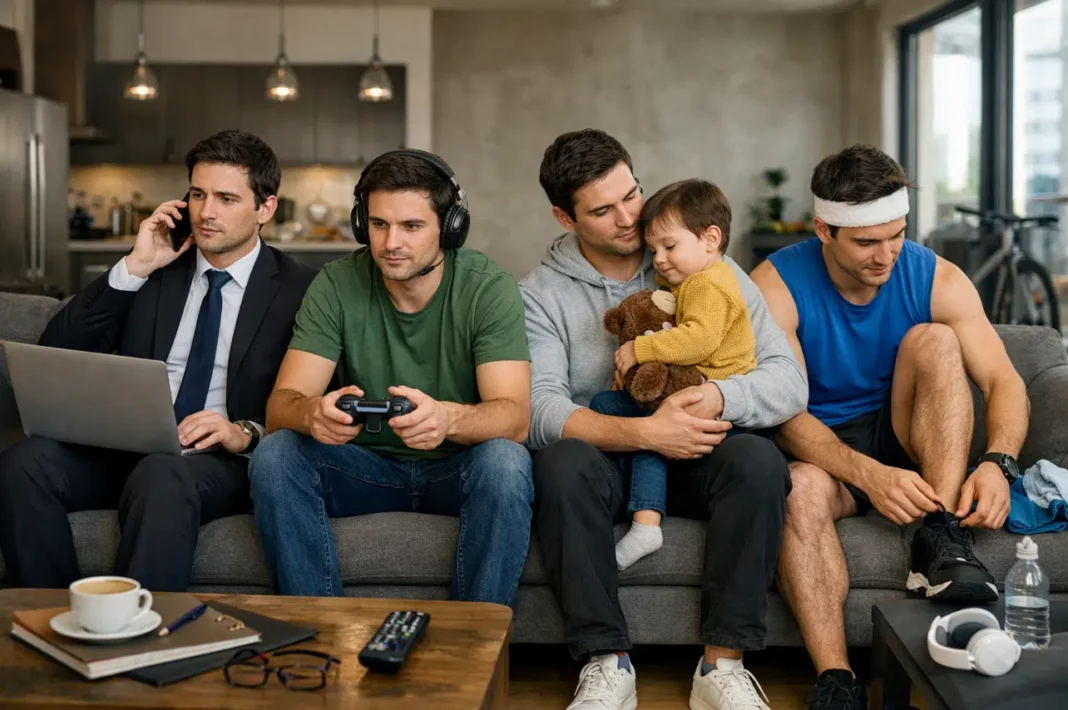

Micro-Identities: The Selves We Unconsciously Divide In Modern Life
Do you ever feel like one person when you go to work in the morning and another when you come home in the evening?
At work, you might be a more serious, controlled, and “professional” version of yourself; while when you meet with friends, you might be more relaxed, humorous, and even a little disheveled. You might adopt a more compliant or protective role with your family, while on social media you might present a more confident or powerful version of yourself.
So what do these changes mean?
Are we fake?
Are we acting?
Or are we truly multiple “selves” throughout the day?
A concept increasingly discussed in popular psychology offers a different answer to this question: micro-identities.
Not One Person, But Many Small Selves
It used to be thought that a healthy identity needed to be consistent. The idea of “being the same everywhere” was considered a sign of a strong self.
But modern life no longer works that way.
Throughout the day:
• We talk to our colleagues
• We communicate with our family
• We are present on social media
• We join different social groups
And each environment demands a different version of us.
This is where micro-identities come into play.
Micro-identities are small versions of ourselves that emerge in different environments.
For example:
-
At work: planned and serious
-
At home: emotional and gentle
-
With friends: fun
-
On social media: chosen and idealized
These are not false identities.
These are natural psychological responses to the environment we are in.
Modern Life Multiplies Us
In the past, people interacted with more limited social circles during the day.
Now, within the same hour:
• We write a work email
• We send a message to a group of friends
• We make a post on social media
Each requires a different tone, a different emotion, and a different “self.”
In other words, it is almost impossible to live with a single identity anymore.
Modern life multiplies us without us realizing it.
Is This A Bad Thing?
Actually, no.
Micro-identities allow us to adapt.
For example:
We can be compassionate as a parent,
Competitive as an employee,
Supportive as a friend.
This diversity makes our social lives easier.
It allows us to exist in different environments.
So, in a sense, it’s an indicator of our psychological flexibility.
But There’s A Price
The problem is:
Constantly switching identities is tiring.
Adjusting to the “appropriate” self in every environment requires mental energy, even if we do not realize it.
At the end of the day, sometimes:
• Even if we have not done much physically,
• We feel a strange tiredness.
This is not just workload.
This is the fatigue from the invisible identity transitions we make throughout the day.
When Does It Become A Problem?
If the connection between these micro-identities breaks.
So, if a person:
Feels different at work,
At home,
And completely different on social media…
And these versions do not know each other,
then an internal disconnect can begin.
The person starts asking themselves:
“Which one is the real me?”
At this point, multiplicity can cease to be richness and turn into alienation.
The Real Issue Isn’t Consistency
Perhaps mental health is not about being the same person everywhere.
The real issue is:
That our different versions are not strangers to each other.
If the person you are at work and the person you are at home know each other,
if there is a bridge between the person you are on social media and the person you are in real life…
Then this multiplicity is not fragmentation.
This is the psychological flexibility required by modern life and an expression of healthy identity integration.
Conclusion: How Many People Are We?
Perhaps the right question is not:
“How many people are we during the day?”
The real question is:
“Do these people know each other?”
Because the point is not to have a single self,
but to be able to feel that our different selves belong to the same story.
In the modern world, we are all a little bit plural.
But this plurality does not have to mean we have lost ourselves.
Sometimes, it is simply the most human response we give to the complexity of life.