


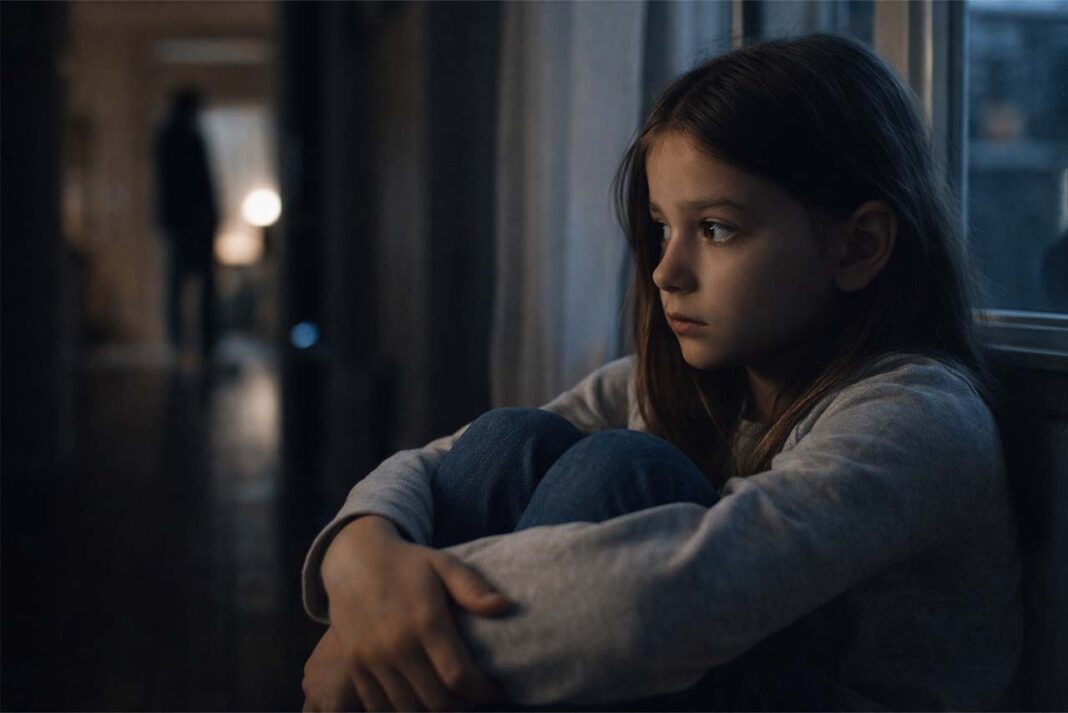

We sometimes notice that certain children observe their surroundings not with curiosity, but with caution. They tend to know at what hour the neighbor’s footsteps echo, how doors are usually closed, and where their friends’ voices rise during conversations. For these children, the world is less a place to explore and more a sea of possibilities to monitor.
Until recently, I had not realized that this experience had a psychological counterpart. Even without a dramatic past, the persistent tension of feeling watched, a subtle and difficult-to-name unease, is not something uniquely mine. It reflects an experience shared by many.
Psychology refers to this constant state of alertness as hypervigilance. Even in the absence of any real threat, the mind and body may place themselves in anticipation of danger. What initially appears harmless can gradually give way to a continuous perception of being observed.
Why would a child choose to live as if constantly visible, rather than simply remaining in their own space?
Persistent feelings of this kind rarely arise from a single moment. More often, they emerge from repeated relational experiences and the consequences they carry. When children grow up with an unpredictable caregiver, they may struggle to anticipate how their emotions will be received. In an environment where mistakes attract attention while achievements are overlooked, being seen may not register as a safe experience.
Performance-based forms of acceptance can create a quiet association in the child’s mind: attention is not always safe. When attention does not consistently result in warmth, the child may gradually approach visibility with caution. Over time, they begin to notice which behaviors draw more attention and how mistakes alter the atmosphere of a room, forming silent connections between action and response. In the end, being visible becomes linked less with the possibility of being understood and more with the likelihood of being noticed. Being noticed no longer feels inherently comforting.
As time passes, this dynamic no longer depends solely on an external gaze or spoken words. The eyes that once moved through the house begin to exist within the child’s own mind. The child no longer only tries to predict what others might think. Their internal voice begins to mirror a similar evaluative tone. External judgments transform into an inner critic. As a result, the feeling of being watched no longer depends on someone actually observing the child. It continues even when no one is looking.
This transformation occurs as children, natural observers, begin to detect patterns. They become sensitive to specific glances, tones, and facial expressions. At first, this sensitivity may facilitate adaptation and seem like a helpful relational skill. But when such attentiveness is not grounded in safety, curiosity gradually gives way to control. Visibility shifts from a neutral state to a possibility that must constantly be weighed.
The body accompanies these mental calculations. Even in the absence of real danger, the nervous system may choose to remain alert. Small sounds and subtle shifts in the atmosphere become more noticeable. What we call hypervigilance begins to extend inward, leading the person to continuously scan not only the environment but also their own inner world. Ultimately, the issue has never been visibility itself, but the conditions under which one becomes visible.
It is important to remember that this experience is not always connected to a dramatic past. Sometimes the issue is less about trauma and more about prolonged uncertainty. When a person repeatedly has to predict how their emotions will be received, the mind learns caution. Carried into adulthood, this cautious stance changes form but does not disappear. An individual may no longer track the rhythm of footsteps, yet they might replay something they said during a meeting over and over again. After sending a message to a friend, they may reread it multiple times to adjust its tone. In order to avoid being misunderstood, they attempt to sense the atmosphere. In adulthood, hypervigilance often appears as heightened sensitivity to evaluation.
Such individuals may constantly try to anticipate what others are thinking. From the outside, this may look like strong empathy and acute observational skill. Yet when combined with a persistent inner critic, it becomes exhausting.
“Was that too much to say?”
“Did my tone sound harsh?”
“Perhaps they will misunderstand me now?”
These sentences often reflect the voice of that internal gaze. On their own, they may seem harmless, but repeated over time, they can become mentally and emotionally draining. Experiencing that visibility does not always mean being evaluated may help soften this internal tension.
The problem is not visibility. It is the meaning attached to it. In the absence of secure mirroring, being seen can become confused with being measured. Some children do not choose to hide. They simply remember a time when being visible felt heavy.