


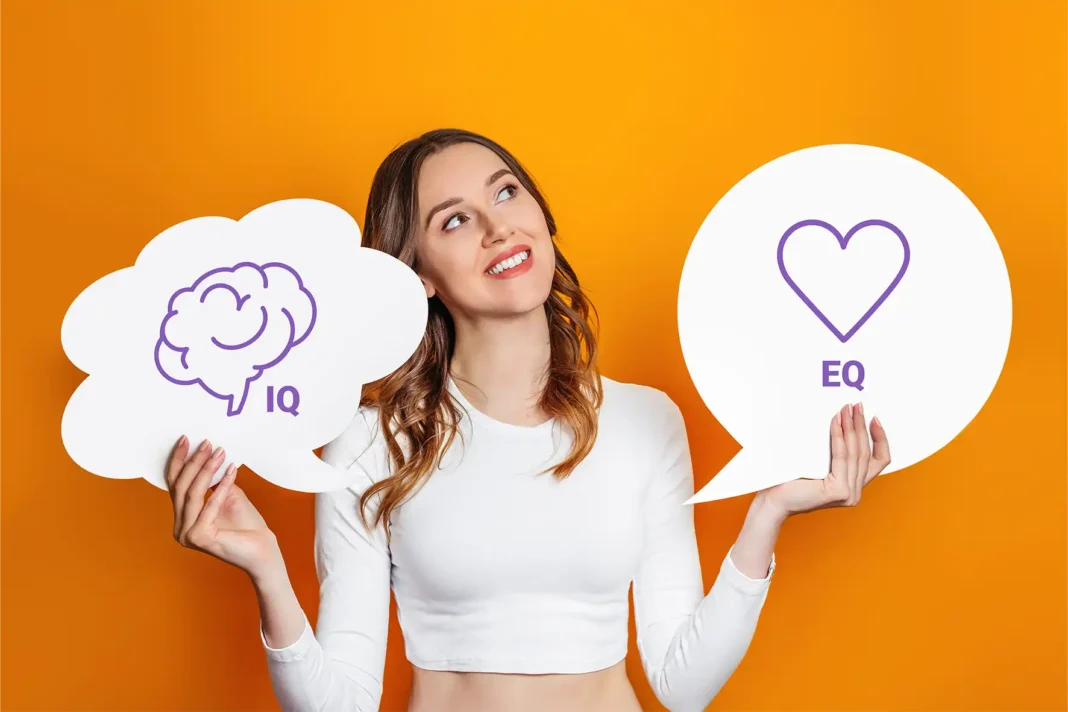

In today’s world, our understanding of the factors that determine success and happiness is undergoing a significant transformation. For many years, when people heard the word intelligence, the first concept that came to mind was IQ—cognitive intelligence. Skills such as mathematical ability, logical thinking, memory, and rapid problem-solving were seen as the primary indicators of how successful a person would be in life. However, behavioral and neuropsychological research conducted over the past two decades shows that the power behind genuine happiness and long-term success is largely emotional intelligence (EQ). So why is EQ more decisive than IQ? The answer lies in both definitions and real-life reflections.
What Is Emotional Intelligence?
Emotional intelligence is the ability to accurately understand, express, regulate, and effectively use one’s own emotions and the emotions of others. Popularized by Daniel Goleman, the concept consists of five core components:
-
Self-awareness: Recognizing one’s own emotions
-
Self-regulation: Managing emotions and adapting to situations
-
Motivation: Being driven by internal goals
-
Empathy: Understanding the emotions of others
-
Social skills: Building and maintaining healthy relationships
These components directly influence quality of life. Because by their nature, humans are social beings, and most of daily life is shaped by emotional interactions.
What Does Iq Measure And How Effective Is It?
IQ tests primarily measure cognitive abilities: logical reasoning, pattern recognition, numerical thinking, and verbal fluency. While these skills are important for academic success, they alone are insufficient to explain life satisfaction, relationship quality, professional success, or coping skills.
Many individuals with high IQ scores struggle with social communication, empathy, or emotional regulation. In other words, IQ measures the ability to “know and understand,” whereas EQ measures the ability to “live and connect.”
Why Is Eq More Determinative For Happiness?
1. Happiness Is An Emotional Experience, Not A Cognitive Problem
Happiness depends on emotional components such as satisfaction, peace, connection, and meaning. If a person cannot properly interpret their emotions, having a high IQ will not make them happier. Happiness emerges from the regulation and management of emotional processes.
2. Stress Management Is Directly Connected To Eq
The complexity of modern life, fast work routines, and social pressures increase stress levels. People with high EQ:
-
can regulate their emotions,
-
stay calm during crises,
-
avoid personalizing problems,
-
focus on solutions.
This strengthens resilience and increases happiness.
3. Relationship Quality Is The Strongest Predictor Of Happiness
Research shows that the quality of a person’s relationships influences life satisfaction more than money, status, or academic achievement. Individuals with high EQ:
-
can empathize,
-
communicate openly,
-
resolve conflicts constructively,
-
build trust.
As a result, their relationships are stronger, more harmonious, and more fulfilling.
4. Self-Acceptance And Self-Compassion Are Part Of Eq
The ability to accept oneself, embrace imperfections, and offer inner support is a core outcome of emotional intelligence. People with high self-compassion:
-
have lower rates of depression,
-
higher self-esteem,
-
and greater resilience after failure.
These directly contribute to happiness.
What Happens When Eq Is Low?
Low emotional intelligence is often associated with:
-
Frequent anger outbursts or emotional instability
-
Communication problems and misunderstandings
-
Fragile relationships and difficulty bonding
-
Poor stress management
-
Low self-awareness
-
Social isolation due to lack of empathy
Each of these factors decreases happiness significantly. When EQ is low, individuals struggle in many areas of life—making happiness harder to achieve.
How Can Eq Be Developed?
While IQ is largely genetic and solidifies early in life, EQ is learnable and can be developed throughout one’s lifetime. Effective methods include:
-
Name your feelings: Ask, “What am I feeling right now?”
-
Keep an emotional journal: Writing strengthens emotional regulation.
-
Practice empathy: Try to understand what others might be feeling.
-
Use active listening: Listen without judgment and with full attention.
-
Try mindfulness exercises: Highly effective for emotional control and stress management.
-
Seek and evaluate feedback: Essential for improving social skills.
These strategies help individuals build a more balanced and satisfying inner and outer life.
Conclusion: The Key To Happiness Lies In Eq
IQ is undoubtedly valuable—it enables learning, analyzing, and understanding. But happiness—which involves meaning, fulfillment, connection, and peace—is an emotional process, not a cognitive one. Emotional intelligence is the primary tool for managing this process. Individuals who can recognize and regulate emotions, show empathy, and maintain healthy relationships enjoy both greater happiness and greater success.
Thus, one of the most emphasized truths today is:
In life, what you feel and what you make others feel matter just as much as what you know. And most of the time, EQ is the true determinant of happiness.