


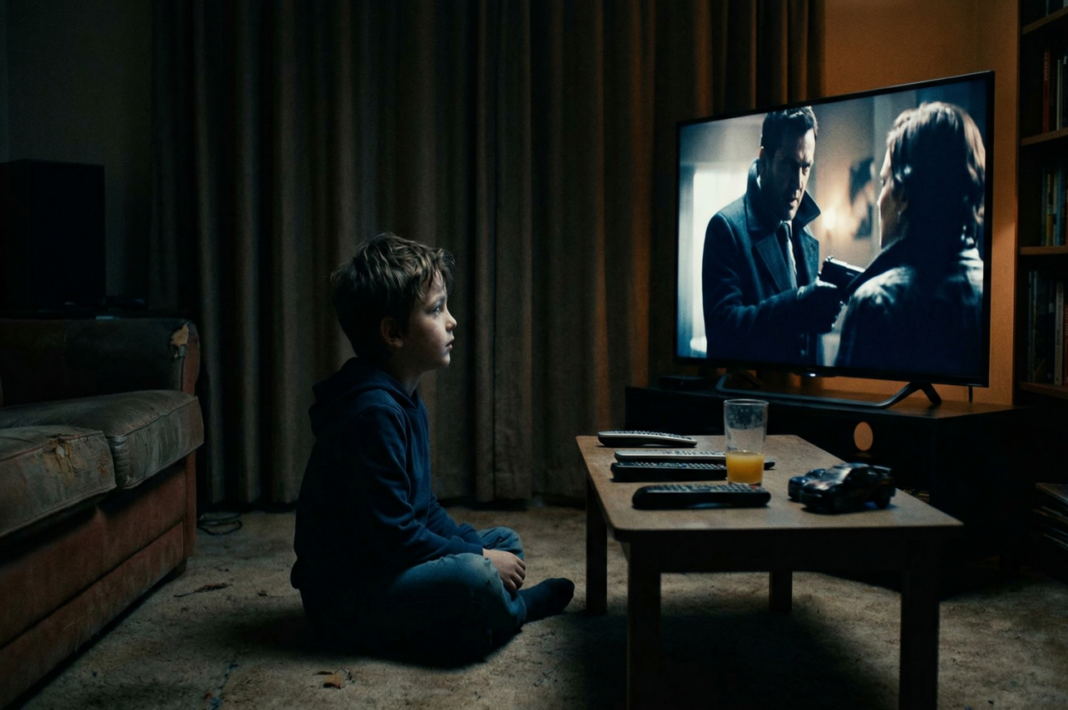

Actually, it all begins in the early years of childhood, within the comfort of our homes, under the cold light of the screens at the heart of our living rooms. The “aestheticized” criminal profiles we encounter today on television or digital platforms are not just fictional characters; they are dangerous seeds planted in the minds of society and especially children. This process, which forensic psychology defines as the Contagion of Crime, leads to a serious erosion of conscience during that fragile stage before the individual has completed their Superego development. Crime becoming a culture does not only mean that streets become unsafe; it is the silent harbinger of a social decay that codes violence as a “show of strength” and a “tool for seeking justice” during the very first years when the human soul begins life in its purest form.
From a clinical perspective, the increase in cases of Conduct Disorder observed especially in children cannot be considered independently from these “heroized” criminal models on screen. The fake glamour in these productions withers a child’s empathetic skills, while the distorted sense of justice presented disrupts the delicate balance required for healthy moral development. In this article, we will discuss how violence has been turned into a “status” and the psychological destruction created by this transformation in an era where the line between fiction and reality is becoming increasingly blurred.
The Eroding Threshold Of Violence and Desensitization
The hours we spend in front of the screen are, without us realizing it, shattering that sensitive “violence threshold” in our minds. In psychology, we call this Desensitization; in other words, the scenes that horrified us the first time we saw them start to feel like ordinary news by the hundredth time. This is exactly where the danger begins to grow. For a child who has not yet reached the moral maturity to distinguish right from wrong, violence becomes the shortest and most “cool” way to solve problems. Crime becoming a culture is precisely this: a young person seeing holding a gun instead of a book as a “status” is the most concrete evidence of how deeply our collective soul has been wounded.
In fact, we are not just talking about an individual deviation here, but a mental shift occurring across society. Popular culture polishes crime so much that the search for justice is replaced by a desire for revenge. Young minds aspire to that fake prestige gained overnight with a weapon, rather than a character built with patience and merit. To understand how devastating the consequences can be, one only needs to look at the James Bulger case, one of the most shocking events in the history of forensic psychology. In 1993, two ten-year-old boys ended the life of a much younger toddler by inflicting unimaginable violence. The most striking detail was the allegation that the children were inspired by a violent film they had watched. This case remains a heart-wrenching example showing the world how media can create a destructive role model in a child’s mind.
The Psychological Cost Of Glorifying Crime
The lack of empathy seen in individuals diagnosed with Conduct Disorder, which we study in our clinical psychology classes, does not appear out of thin air; it develops as a result of this “crime-glorifying” culture. If we continue to portray crime as charismatic and the criminal as a “system-victim hero” in TV series, we cannot prevent the rise of a generation that mistakes mercy for weakness. Because when a child seeks justice in the shadow of a gun rather than in courtrooms, social decay becomes an inevitable end. This decay leads to the snapping of the invisible moral fibers that hold society together and the total destruction of human trust. In the end, what we are left with is nothing but a soul-robbed silence where only brute force prevails.
So, what is all of this actually whispering to us? I believe the issue is not just what we watch, but the path those images take within our own inner worlds. When violence begins to be coded as “cool” and mercy as “weakness” in the minds of children, that social decay we fear so much quietly seeps into our homes. Crime becoming a culture is actually our collective loss. As psychology students, we know very well that those virtual weapons held by tiny hands can turn into real clinical cases of Conduct Disorder years later. Every desensitized mind and every heart that loses its empathy means one more snap in the invisible human bonds that connect us.
The solution lies not just in pulling the plug on the television, but in creating a “shield of awareness” within ourselves. Families, the media, and most importantly, we as young people, need to loudly remind everyone that true strength lies not in brute force, but in character and conscience. We can only reach that higher level of the soul by stepping out of the dark shadow of violence. Let us not forget that the quality of a society is measured not by the admiration it feels for its criminals, but by how well it can protect its innocent. We must lead our future out of these dark corridors and into those bright days where children look for their heroes within the pages of books and in the heart of kindness.