


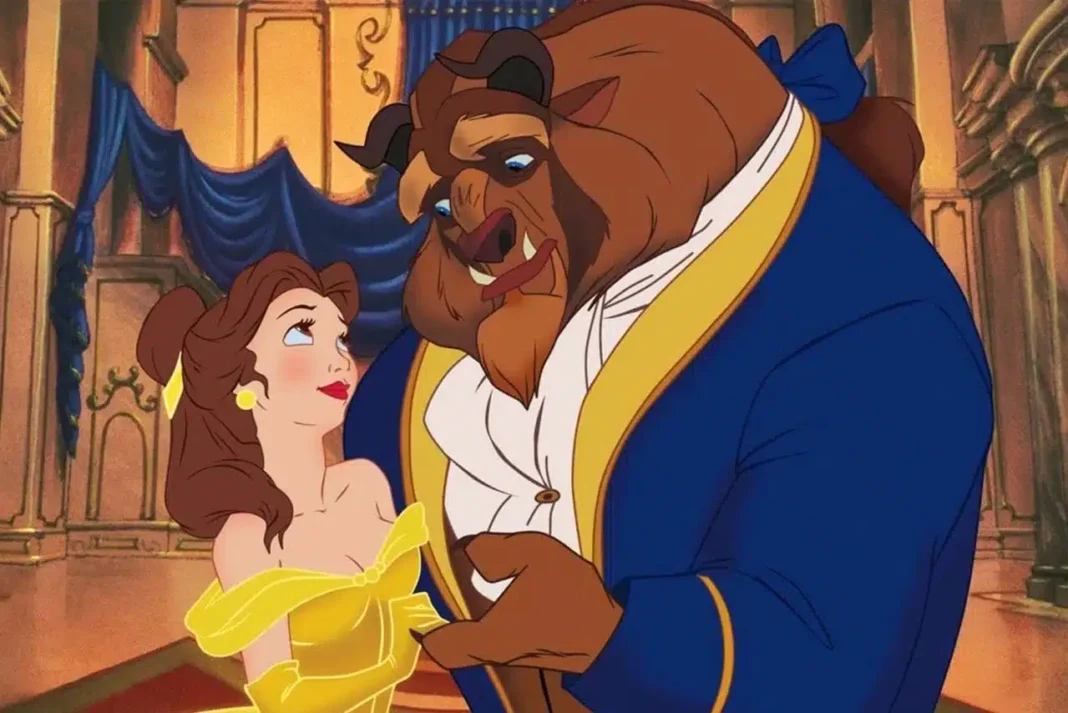

Disney’s Beauty and the Beast (1991) presents not only a magical world, but also two contrasting relationship dynamics: Gaston’s excessive, controlling pursuit and the gradually developing, mutually respectful bond between Belle and the Beast. These two models offer a rich psychological example for understanding the difference between “overwhelming attention” and “genuine intimacy,” which frequently appears in romantic relationships.
Although Gaston’s interest in Belle may seem romantic at first, a closer look reveals that his behaviors align clearly with the concept of love bombing. Love bombing can be described not as an act of love, but as a strategy of intense idealization and control used to quickly overpower the other person (Smith, 2022). Gaston does exactly this: he showers Belle with attention without considering her personality, boundaries, or emotional needs.
Let’s look at what he says to Belle in front of everyone:
“Belle, every girl in town wants to be in your shoes right now. Today is the day your dreams come true.”
Belle responds: “What do you know about my dreams, Gaston?”
Instead of answering, Gaston describes his ideal wife and life he has imagined for himself. His perspective is superficial: “Belle is the most beautiful girl in town, which makes her the best. And I deserve the best!”
When we examine the events, behaviors, and communication patterns, it becomes clear that Gaston has absolutely no interest in Belle’s individuality, thoughts, or dreams. As Jung (1953) explains in his discussion of the persona, “When a person becomes trapped in the image seen by others, they risk losing their true self.” The image Gaston imposes on Belle is such a confinement, exactly like this: a beautiful, silent, compliant partner.
His refusal to hear Belle’s repeated “no,” and his increasingly aggressive reactions to rejection, are among the core signs of toxic relationships. This behavioral pattern frequently appears when one partner disregards the sınırlar of the other.
The Contrast: Mutual Growth In Belle And The Beast
On the other hand, the relationship between Belle and the Beast offers a completely different example. Let’s remember the scene where the Beast saves Belle from the wolves and is injured in the process. While helping to tend his wounds, Belle says, “Thank you for saving my life,” the Beast seems surprised to have his action acknowledged and appreciated.
Despite his initial anger and hurtful behavior, as their communication dynamic begins to settle, one of the key components of sağlıklı ilişkiler—taking responsibility for one’s actions—emerges as an important marker of his transformation.
The bond between Belle and the Beast develops not through superficial attraction, but through mutual learning and emotional closeness over time. The Beast gifts the library to Belle. This is not just a romantic gesture; it signifies that her interests are understood and honored.
When Belle enters the library, she says: “This is the most amazing place I’ve ever seen!”
The Beast simply smiles and expresses his respect for Belle’s inner world in one sentence:
“It’s for you.”
This simple statement represents a much deeper emotional collaboration than the exaggerated romantic behaviors associated with love bombing. His gift honors Belle’s individuality; it does not attempt to change, possess, or reshape her. This moment highlights the foundation of genuine connection between two people: being seen, heard, and accepted.
The Role Of Boundaries And Autonomy
The Beast’s willingness to give Belle space to make her own decisions reminds us that sınırlar play a crucial role in secure attachment. When Belle needs to rescue her father, the Beast reflects:
“I love her… therefore, I must let her go.”
According to Bowlby (1988), secure attachment develops not through clinging but by supporting the other person’s autonomy.
This support demonstrates once again that the Beast’s feelings for Belle have shifted from possessive to genuinely supportive.
Belle’s Self-Identity As A Model For Young People
Belle’s persistence in following her own path, even though all town see her as “odd,” directly relates to identity development in children. According to Jung (1953), in the individuation process, a person moves closer to their true self when they listen to their inner voice. Belle refuses to abandon her love of reading, curiosity, and imagination; she is not afraid to be herself. This stance represents a fundamental component of sağlıklı ilişkiler: knowing and loving oneself first.
Rogers (1961) argues that self-understanding and self-acceptance are critical for developing boundaries, self-respect, and empathy in relationships. Belle’s commitment to the things she loves, rather than shaping herself according to others’ expectations, allows her to maintain a healthy balance in her relationship with the Beast. A person who remains true to themselves is more capable of offering a relationship rooted in mutual growth and respect, rather than pressure.
Guidance For Parents: Teaching Healthy Relationship Messages
From this perspective, Belle’s personal story reminds children and young people of the following:
Before entering relationships, friendships, or emotional bonds, we must first know ourselves, our values, and our boundaries. Listening to our inner voice is the first step in preserving our identity against external expectations. Belle’s dedication to her curiosity and passion for learning creates a relationship space in which the other person can also freely express their differences and inner world.
This animation delivers a powerful message to children and parents: Real love does not control—it allows growth. Love bombing does not promote growth; it creates dependency.
For parents, Beauty and the Beast offers a valuable perspective for teaching children healthy messages about relationships:
• Teach that saying “no” is natural. Children who can set boundaries recognize controlling relationships more easily in the future.
• Provide realistic feedback instead of exaggerated compliments. This helps children avoid seeing intense idealization as a normal form of affection.
• Model apologizing. Children learn from their parents that every action has a consequence and brings responsibility.
• Support the protection of personal interests. Respecting Belle’s love of reading is an example of nurturing a child’s uniqueness.
• Name and normalize emotions. Saying “It makes sense that you feel this way” supports emotional awareness and regulation.
• Show that real love relies not on one-sided effort, but on mutual growth.
References
Bowlby, J. (1988). A Secure Base: Parent-Child Attachment and Healthy Human Development. Basic Books.
Jung, C. (1953). Two Essays on Analytical Psychology. Princeton University Press.
Rogers, C. (1961). On Becoming a Person: A Therapist’s View of Psychotherapy. Houghton Mifflin.
Smith, A. (2022). Love bombing: Narcissistic manipulation in romantic relationships. Journal of Social and Interpersonal Dynamics, 14(2), 45–62.