


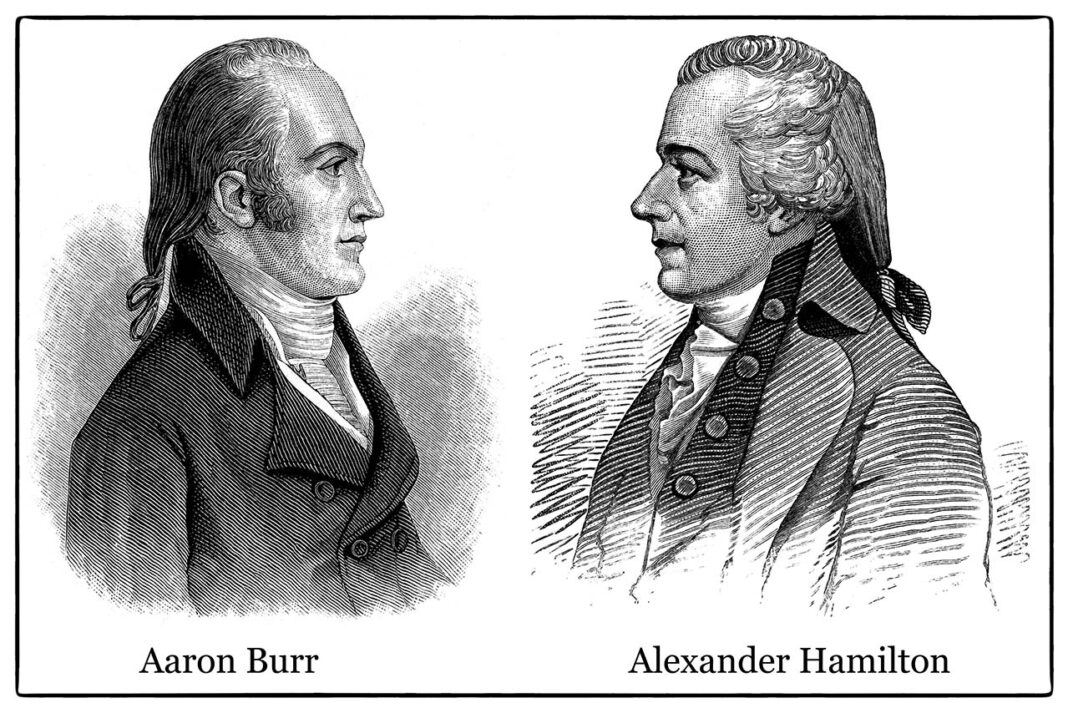

Some historical events are significant not just because of what happened but also because of who was involved and why. Alexander Hamilton and Aaron Burr, two significant figures in early American history, participated in a deadly duel in 1804, which served as both a personal conflict and an important illustration of how personal psychology can influence political outcomes. Through a psychoanalytic lens, this article explores the psychological profiles of Hamilton and Burr, looking at how their inner lives shaped their political behavior and eventual demise.
Hamilton: The Superego in Politics
As the first Secretary of the Treasury and one of the founding fathers of the United States, Alexander Hamilton was a man of principles, organization, and moral conviction. According to Freudian perspective, Hamilton represents a powerful superego, which is the aspect of the psyche that upholds morals, laws, and internalized values. In addition to political strategy, his vision for a centralized government and a regulated financial system expressed a deep-seated demand for harmony and order.
Despite his intellectual and personal disagreements with Thomas Jefferson, Hamilton’s strong opposition to Aaron Burr’s presidential aspirations was probably the clearest example of his commitment to principle over popularity. Hamilton’s reasoning was straightforward: he believed that Jefferson, despite being an opponent, at least had a distinct vision, while Burr had any coherent convictions. Although admirable, this moral rigidity also displays a pathological edge, a perfectionism and inflexibility that inflamed enemies and alienated allies.
Internally, Hamilton may have masked repressed aggressiveness and a deep fear of chaos behind his emotional control and unwavering idealism. Overdeveloped superegos might display an almost moral authoritarianism, which may have contributed to Hamilton’s inability to negotiate the gray areas of political compromise.
Burr: The Unintegrated Shadow
Aaron Burr, on the other hand, can be interpreted as the embodiment of what Carl Jung referred to as the “shadow“—the aspects of the personality that are suppressed, rejected, or underdeveloped. Burr was infamously cautious about his political identity. Despite his intelligence, charisma, and ambition, he was regarded as opportunistic due to his unclear ideological position. Burr was seen by many of his peers as a symbol of unpredictable behavior rather than leadership.
Burr’s hesitation in expressing strong political opinions could be seen as a defensive tactic, with the purpose of shielding a weak ego from criticism. But in the end, this avoidance led to mistrust. Although he was known for being self-centered, it’s possible that his public persona concealed more serious fears and a fragile sense of self.
Over years of political rivalry and personal slights, Hamilton and Burr’s long-standing friction intensified. Burr believed that Hamilton’s constant attacks on his character were unacceptable damage to his reputation. From a psychoanalytic perspective, this might be viewed as a narcissistic injury, a wound to one’s self-image in the eyes of others rather than to one’s ideals.
The Duel: Psychological Climax and Political Catastrophe
The fatal duel between Hamilton and Burr can be read as the result of not just political rivalry, but intense internal conflicts. According to reports, Hamilton walked into the duel with a sense of fatalism and was unwilling to fire his weapon. Whether out of resignation or moral principle, his decision to not shoot might be seen as a last surrender to the superego’s command: preserve the greater code at all costs, even if it means your death.
Burr, however, did fire, killing his opponent in the process. According to some accounts, he acted impulsively, motivated by long-simmering resentment and unresolved rage, while others believe he behaved coldly and deliberately. Either way, Burr’s psychological shadow—the aspect of the self that erupts destructively when unexamined—took over. According to Jungian theory, this was a disastrous integration failure since Burr’s darker impulses uncontrollably erupted because he was unwilling or unable to face and accept them.
Psychopolitical Legacy
The aftermath of the duel reveals the long-term political and psychological outcomes of unresolved internal conflicts. Hamilton became a martyr for Federalist principles, and his legacy still shapes American politics and finances today. Burr, however, lived the rest of his life in disgrace and was essentially banished from politics.
One significant takeaway from their narrative is that psychological dispute is not private. It appears in public when neglected, frequently with disastrous results. In addition to being a personal reckoning, the duel was a political tragedy with psychopolitical dynamics: one man was driven by inflexible idealism, while the other was driven by a fragile ego and suppressed rage.
Conclusion
The rivalry between Alexander Hamilton and Aaron Burr is more than a historical anecdote; it is a profound illustration of the human psyche’s role in shaping political fate. In their story, we witness the eternal tension between principle and ambition, control and impulse, persona and shadow. By examining these figures not just as political actors but as psychological beings, we are reminded that the personal is always, in some form, political — and that the greatest battles often begin within.
References
Chernow, R. (2004). Alexander Hamilton. Penguin Press.