


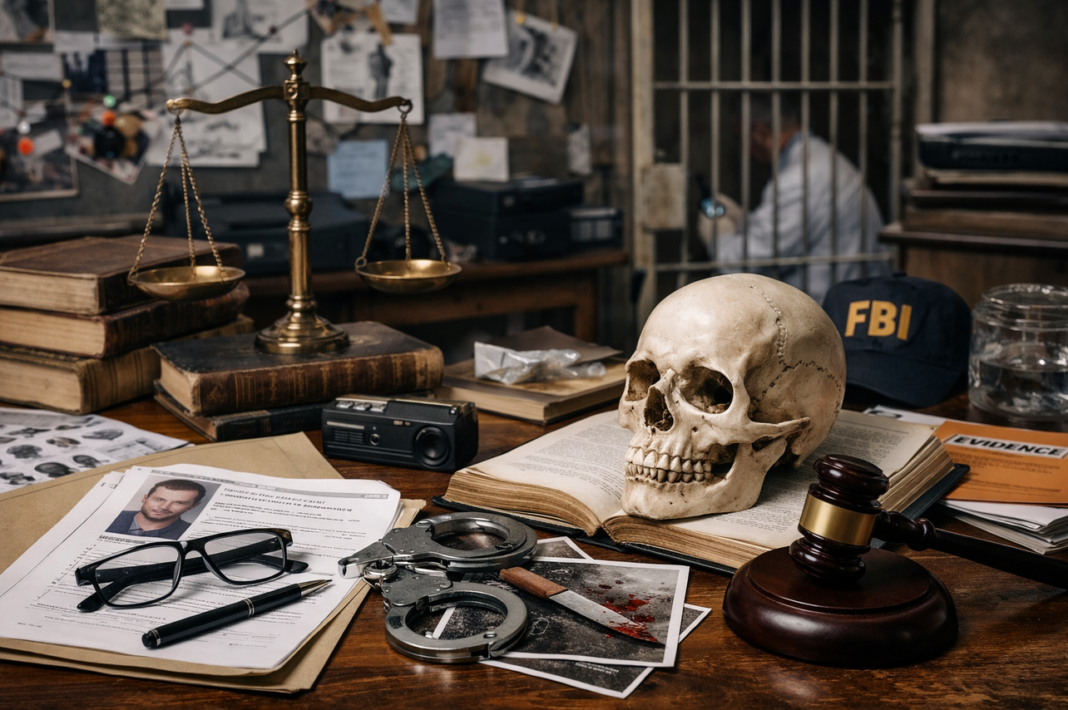

Psychology is not only a multifaceted field but also one that is interpreted through various lenses. One of these interpretative domains is Forensic Psychology.
Forensic Psychology is one of the fastest-growing and evolving specialized areas of psychology worldwide. While psychology has been intertwined with the law since ancient times, it only became an official academic discipline with the establishment of the first psychology laboratory at Leipzig University. The highly-equipped psychologists trained in this lab dispersed across Europe and later to America. Research conducted in subsequent laboratories has been utilized at various stages of the judicial system. The relationship between law and psychology, which initially focused on the link between mental illness and criminal responsibility, has deepened over time by examining the reliability of eyewitness testimony.
As psychologists took on more roles in courtrooms, they began providing expert opinions on diverse issues. Following the war periods, their presence in courts became significantly more frequent. Forensic psychology gained major momentum after the 1970s, and finally, in 2010, it was recognized as an official specialty branch by the American Psychological Association (APA). This study explores the emergence of the “McNaughten Rules,” which form the foundation of forensic psychiatry and forensic psychology, alongside the influential figures who contributed to the judicial process, their psychological research, and the formal recognition of the field.
In the last decade, Forensic Psychology in Turkey has progressed in parallel with global developments, becoming a focal point for both practitioners and researchers. Because the concept of “crime” is dynamic and transformative, forensic psychology is handled with a similarly dynamic and multifaceted approach. Policies developed to combat crime have enabled numerous applications of forensic psychology during the investigation, prosecution, and execution phases.
Professional Duties and Responsibilities
Forensic psychology is a serious and disciplined profession. Its core duties include:
-
Evaluation and Interviewing: Assessing individuals involved in criminal or civil cases, documenting these interviews in reports, and presenting them to the court when necessary.
-
Expert Consultation: Providing expert opinions and advice to police officers, lawyers, judges, and prison officials. Analyzing the psychology of the offender and conveying this perspective to authorities.
-
Competency Evaluations: Determining and analyzing whether an individual is psychologically fit to stand trial and communicating this to officials in a formal capacity.
-
Risk Assessment and Well-being: Evaluating the level of risk a convict poses to society in the future and ensuring the individual maintains healthy psychological well-being during and after the judicial process.
Contrary to its portrayal in television series, forensic psychology is a much more comprehensive branch that ensures judicial and legal systems are handled through a professional psychological lens.
A Historical Perspective On Forensic Psychology
While Forensic Psychology is considered a relatively new specialty within the field, its roots stretch back to the earliest days of psychological history. Philosophers and scientists have long sought to understand what causes individuals to commit crimes, act aggressively, or engage in antisocial behavior.
Although psychology’s recognition as an independent science dates back to the late 19th-century Leipzig laboratory, it is one of the oldest existing scientific disciplines. As early as the 4th and 5th centuries BC, Greek thinkers explored topics psychologists still study today, such as memory, learning, motivation, perception, and irrational behavior. The paradox expressed by Hermann Ebbinghaus — “Psychology has a long past, but only a short history” — perfectly elucidates the historical development of forensic psychology.
From the investigation of mental illness and its effects on criminal sentencing to the reliability of eyewitness accounts, the application of psychological research within the law has a history spanning from Ancient Greece and Rome to the present day.
Forensic Psychology In The Justice Mechanism
In this study, with the participation of academics and practitioners, the following themes were discussed within the context of the “Justice Mechanism“:
-
Victims of crime and psychological support.
-
Conflict resolution, forensic mediation, and reconciliation practices.
-
Rehabilitation of convicts in penal institutions and social reintegration.
Victims Of Crime And Psychological Support
Victimology is a branch of science that has gained significant importance in recent years due to increased awareness of victim rights and needs. Its aim is to examine the victim in psychological, social, and legal contexts; determine conditions to prevent victimization; identify risk factors; and develop social support programs. Victimology utilizes theories that focus on individual actions, the role of social structure/environment, and the influence of social learning, media, and cultural norms.
Discussion and Conclusion
Forensic Psychology is a complex field that is rapidly gaining the value it deserves. It is a domain where the concepts of Crime and Justice meet and nourish one another. Countries like Germany, the USA, and the Netherlands are currently increasing applied fields and focusing on the prevention of juvenile delinquency.
Career Opportunities: Professionals in this field increasingly work in:
-
Courthouses
-
Forensic Medicine Institutes
-
Penal Institutions (Prisons)
-
Probation Offices
-
General Directorate of Security (Child Protection Units)
-
Gendarmerie Child Units
References
-
American Psychological Association. (2010). Specialty guidelines for forensic psychology. Washington, DC.
-
Borum, R., & Otto, R. K. (2003). Handbook of Forensic Psychology. John Wiley & Sons.
-
Ebbinghaus, H. (1908). Psychology: An elementary text-book. New York: D. C. Heath & Co.
-
Gültekin, M. (2020). Adli Psikoloji: Kuram ve Uygulama. Ankara: Nobel Akademik Yayıncılık.
-
Kassin, S. M., & Wrightsman, L. S. (2013). The American Courtroom: A Psychological Perspective. Oxford University Press.
-
Melton, G. B., et al. (2018). Psychological Evaluations for the Courts. Guilford Publications.
-
Schultz, D. P., & Schultz, S. E. (2016). A History of Modern Psychology. Kaknüs Yayınları.
-
Republic of Turkey Ministry of Justice. (2021). Directorate General for Judicial Support and Victim Services Reports.
-
Wrightsman, L. S., & Fulero, S. M. (2008). Forensic Psychology. Belmont, CA: Wadsworth.