


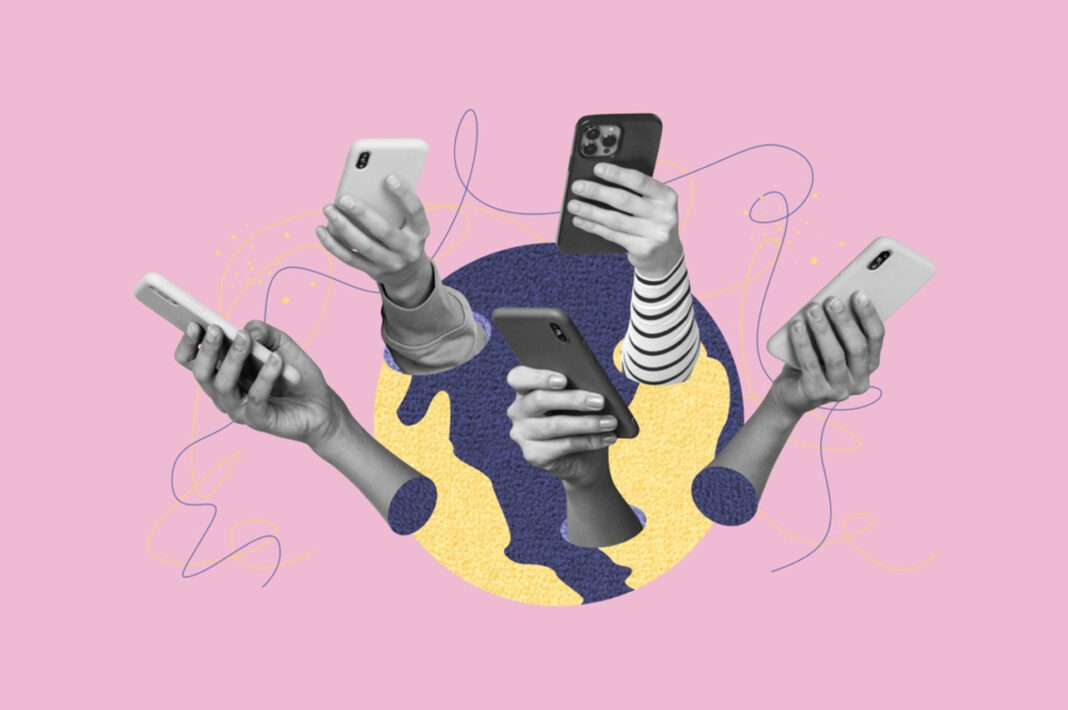

Do you remember what you used to do in your free time ten years ago? How do you spend those moments now? It feels as though we are trapped within a system that ‘steals’ our remaining minutes, even hours. Our screen times have skyrocketed, and we find ourselves exhausted from endless scrolling. Recently, the term ‘Brain-rot’ has frequently surfaced in internet jargon. While it may initially seem like a mere ‘Gen Z’ joke, it has evolved into a term that describes the cognitive overload created by the digital age.
‘Scroller-Coaster’: Context Collapse
Thanks to platforms like Instagram Reels, the variety of content we can access within a split second has reached a spectrum we couldn’t even imagine a few years ago. One moment, we might be watching a video of a stranger’s happiest memory, and exactly ten seconds later, we are exposed to graphic images of war. I personally call this state of scrolling which causes such sharp emotional ups and downs within seconds: the ‘scroller-coaster.’ This phenomenon, which exhausts the mind by tossing it from one emotion to another, paves the way for what is known in literature as ‘Context Collapse.’ Under normal circumstances, our brains evaluate every social interaction within a specific context (a funeral, a celebration, the news hour, etc.). However, when these boundaries vanish in the digital flow, the mind faces an intense cognitive load as it tries to reset and rebuild its emotional regulation every 15 seconds. In short, we cram a mountain of information into our brains that it isn’t accustomed to processing and then expect it to function optimally. But of course, it doesn’t. After scrolling through Reels for a long time, we can feel our brains becoming heavy, as if the ‘computer’ is overheating. Is it possible to think that this ‘computer,’ which we have gradually overheated, can function at an optimal level in the normal flow of life?
The Time Paradox
We often talk about how much time developing technologies save us, but is that really the case in the long run? Are we gaining time thanks to this accelerating technology, or is time being stolen from our lives? In just a one-hour social media session, we witness people’s happy, traumatic, terrifying, and shocking moments; we see people living our ‘dream’ lives, encounter AI-generated content of questionable reality, face depressing political news, and learn about ‘get-rich-quick schemes’ (the most common content lately). How do we feel when we finally look up from the phone after all this content has been poured over us? Heavy, hopeless, and perhaps inadequate. These are things we all know and have experienced firsthand. So, while we question why we feel so ‘heavy’ (even though we know exactly what is weighing us down) why can’t we stop ‘scrolling’?
The Reward Trap: The Dopamine Loop
Some content we encounter on social media actually meets a need at that moment. For instance, a funny video can make us smile when we’re feeling down, or depending on our algorithm, some content can be inspiring or even eye-opening. Let’s call these ‘bullseye’ contents. We can view these as rewards. This mechanism is similar to the effect slot machines have on the brain. The frequency of exposure to these rewards fundamentally alters the working mechanism of our dopamine system. Normally, we get a sense of humor by putting in social effort while chatting with a friend; now, we can get that same feeling in 30 seconds just by using our data. Or, we find the inspiration we might have spent hours brainstorming for at a desk in a very short time on Instagram. Thus, the brain sees that it can receive the reward without putting in the effort. Does this effortless reward erode our will to exert effort over time? Yes, it does, because our dopamine system begins to take shape according to this ease. Eventually, this ‘reward’ is no longer enough; it fails to provide sufficient dopamine, and as a result, we scroll even more.
Social Comparison Mechanism
We mentioned seeing content that inspires us. Does the inspiration we get from these posts actually move us to action, or does it, on the contrary, ‘paralyze’ us? When we see people sharing the best moments of their lives, or decorating their experiences within a certain frame, don’t we inevitably find ourselves comparing our lives to theirs? Does social comparison always produce a negative effect? No. Social comparison is an evolutionary mechanism and has many positive outcomes in our social lives, such as the ability to empathize. However, when we expose ourselves to the ‘unreal’ lives of hundreds of strangers every day, our social comparison mechanism begins to be used outside its intended purpose, sending the message: ‘They can do it, but you aren’t.’ Consequently, the individual begins to feel inadequacy and even guilt instead of inspiration. If this situation persists and becomes a general state, individuals may start to feel dissatisfaction and discontent with their own lives.
Slow Down And Notice
So, what should we do? Being aware of this cycle is a great starting point. As a further step, we can lower the value we assign to the content we expose ourselves to and view them as mere distractions. This is perhaps why ‘social media detoxes’ and the popularity of nature activities are steadily increasing. Ultimately, the digital world may have promised us infinite content; however, stepping off this ‘scroller-coaster’ and returning to the slower but deeper rhythm of the real world seems to be the only way to return our minds to their ‘optimal’ settings. Sometimes, the first step to take against the fast pace of life is to slow down and re-evaluate the things we attribute value to.