


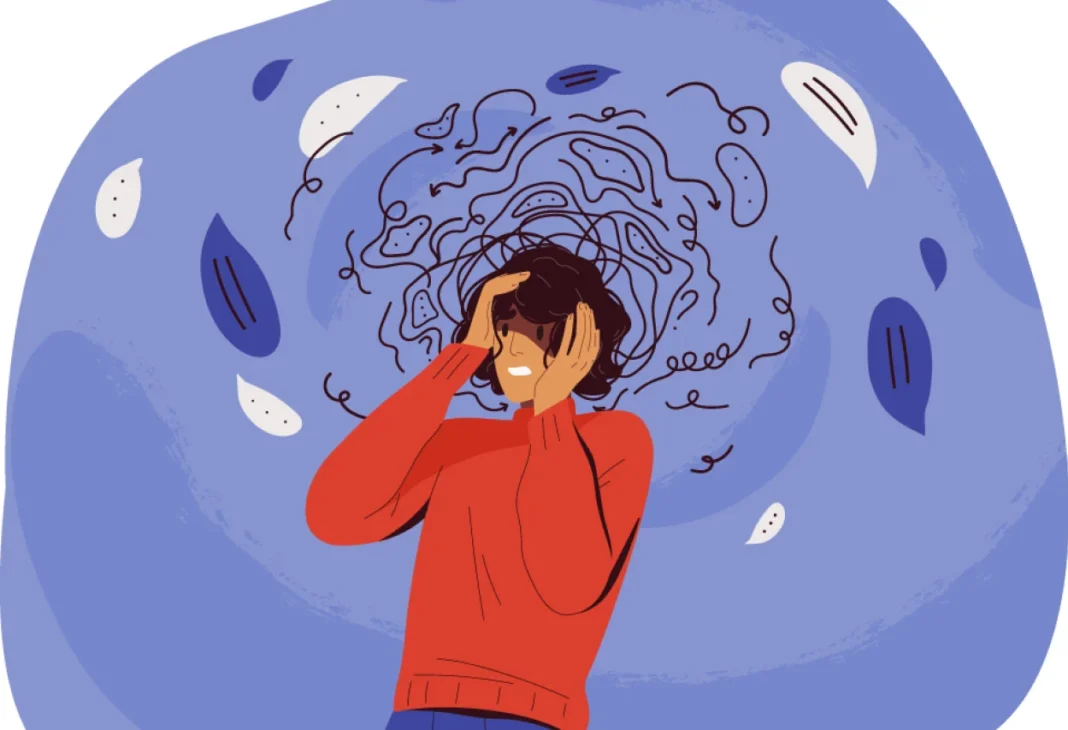

Sometimes your heart starts racing even when nothing has actually happened. You begin to look for different meanings behind an ordinary message you receive on your phone. You replay a conversation that has not even happened yet in your mind, thinking in advance about what you will say. When you go to bed at night, instead of thinking about what happened during the day, you find yourself thinking about what might happen tomorrow. There is no actual problem yet; however, your body has already begun preparing as if something is about to happen. One of the most exhausting aspects of anxiety is precisely this: it can make you feel as though something that has not happened yet is already happening.
The human mind is a system that tries to predict the future. When faced with uncertainty, it wants to evaluate possible outcomes, anticipate risks, and prepare itself. For this reason, the question “What is going to happen?” often lies at the core of anxiety. When the mind cannot find an answer to this question, it continues to generate possibilities. After a while, thinking stops being a way of finding solutions and turns into a cycle in which the same thought is repeated in different forms.
Within this cycle, a person may begin seeking certainty without even realizing it. Thinking about the same issue repeatedly, seeking reassurance from others, checking messages over and over again, researching symptoms online, or trying to calculate every possible outcome may provide temporary relief. However, this relief does not last. After a while, the mind asks the same question again; “What if this happens?”.
This is one of the points where anxiety can begin to reinforce itself. In an attempt to reduce anxiety, a person may unknowingly engage in behaviors that contribute to keeping the anxiety going. The mind may learn to associate the thought, “If I do not control this, something bad will happen.” For this reason, coping with anxiety is not always about thinking more. Sometimes, quite the opposite, it requires learning to stop following every thought.
When a thought arises, simply noticing it instead of immediately trying to solve it can be an important starting point. Saying, “My mind is thinking about the worst possible outcome again,” may not change the content of the thought, but it can change the distance between the person and the thought. Not every thought that passes through the mind is a reality or a prediction. Some are simply responses of the mind to uncertainty.
Anxiety is not experienced only through thoughts. The body often reacts before the mind does. Tension in the shoulders, faster breathing, tightness in the stomach, sweaty hands, or the urge to keep moving can all be examples of this. In such moments, simply telling yourself to “calm down” is often not enough. First, it may be necessary to send the body a message that it is safe.
Slowing down, regulating your breathing, noticing your surroundings, or engaging in brief physical movement can therefore be important. Sometimes, even taking a short walk, washing your face, or directing your attention toward the sounds and objects around you can help the mind return from future scenarios to the present moment.
However, coping with anxiety is not limited to techniques used during moments of crisis. The way everyday life is structured also matters. Constant exposure to stimulation, insufficient rest, irregular sleep, or being continuously occupied throughout the day can cause the body to remain at an already elevated level of arousal. Therefore, working with anxiety sometimes means learning not to do more, but to reduce certain things.
Another important issue is avoidance. Moving away from a situation that causes anxiety can be extremely relieving at first. Not attending an event, postponing a difficult conversation, giving up on giving a presentation, or constantly needing to be around someone else may provide a person with a short-term sense of safety and relief. However, each time a person avoids something, there is a risk of sending the mind the message: “So I really cannot do this.” Yet anxiety does not always decrease because the situation itself disappears. Sometimes, when a person takes a step despite feeling afraid, the mind begins to learn from a new experience. The experience of “I felt anxious, but I was still able to do it” can gradually replace the belief that “If I feel anxious, I cannot do this.” Therefore, when appropriate and while considering the individual’s own limits and needs, gradually approaching anxiety-provoking situations can be important.
Another side of anxiety is the attitude a person develops toward themselves. Someone experiencing anxiety may begin struggling not only with the situation itself but also with themselves. Thoughts such as “Why can’t I control this?”, “I did the same thing again,” or “There is something wrong with me” add another burden to anxiety and can reinforce it.
Yet experiencing anxiety is a natural part of being human. Not every experience of anxiety is a disorder, and not every form of anxiety needs to be eliminated. What matters is being able to evaluate how anxiety affects a person’s life and what kind of relationship they have developed with it.
In some cases, however, anxiety can go beyond the boundaries of everyday life. Persistent hypervigilance, intense avoidance, sleep difficulties, withdrawal from social life, or a significant decline in functioning may indicate a need for professional support. In such situations, the goal is not only to reduce symptoms but also to understand the cycle of thoughts, emotions, and behaviors underlying the anxiety.
Perhaps the most realistic way of coping with anxiety is not to expect that it will never return. Anxiety may come back. What matters is knowing what to do when it does. Because psychological strength does not mean that the mind never produces worst-case scenarios. Sometimes, it means being able to tell yourself, in a moment when your mind asks, “What if it happens?”, “Even if it does, I can handle it.” When our relationship with anxiety changes, the uncertainty of the future does not disappear completely. But uncertainty no longer has to stand in the way of living.
Kaynakça
- Barlow, D. H. (Ed.). (2014). Clinical handbook of psychological disorders: A step-by-step treatment manual (5th ed.). Guilford Press.