



For some people, travel means going from one place to another. For others, it is the most elegant way of seeing the world through a different lens.
Watching cities grow smaller as an aircraft rises from the runway, approaching a coastline that has never been seen before, waking up in an unfamiliar city… The magic of travel often lies not in the destination itself, but in the ability to step outside the boundaries of an accustomed life. Perhaps this is why humanity has wondered for centuries what lies beyond the horizon. Yet in the modern world, it is no longer only where we go, but how we get there and how we experience that journey that matters.
This is precisely where luxury travel emerges.
For me, the desire to travel has never meant simply adding the name of another country to a list. Seeing different cities around the world, experiencing the rhythm of other cultures, and discovering the effect that architecture and ways of life can leave on a person have become some of the most personal ways of understanding the world. My travels to Vienna, Spain, and Italy were therefore not simply journeys spent in beautiful destinations, but experiences that each left behind an entirely different emotional impression.
Vienna was one of the places that made me feel the difference between admiring a city and imagining a life there.With its elegant architecture, historic character, sense of order, and restrained aesthetic, the city can evoke not only admiration but also a sense of belonging. Some cities are visited; others remain in the mind as a possibility for a life. For me, Vienna was the latter. Seeing how the aesthetic character of a city can influence even one's dreams and preferences for the future made the psychological dimension of travel even more meaningful to me.
Spain, on the other hand, left an entirely different impression. The country, where I experienced one of the most beautiful holidays of my life, reminded me that travel is not only about discovering; it is also about feeling life more intensely. The vibrancy of its streets, the character of its architecture, the length of its meals, and the rhythm of everyday life draw a person away from familiar habits and into another way of living. Sometimes the strongest trace a journey leaves in our minds is not a monument we have seen, but the way we felt while we were there.
Italy, meanwhile, remains one of the places I believe should be experienced at least once. With its art, architecture, history, cuisine, and timeless aesthetic, Italy is one of those countries that demonstrates how beauty can become part of everyday life. From the traces of the Renaissance to cobblestone streets, from magnificent squares to intimate cafés, it is possible to encounter a different layer of beauty in every detail. Traveling through Italy can feel like more than discovering a new geography; it can feel like walking through an understanding of beauty shaped over centuries.
These experiences made me realize that the psychology of travel is actually far deeper than the destination itself. Sometimes a person does not travel somewhere simply to see it; they travel to discover something new about themselves. One city may make you feel peaceful, another may make you feel free, while another may make you reflect on the kind of life you would like to have in the future. From this perspective, travel becomes a way not only of rediscovering the world, but also of rediscovering one's own inner world.
Yet I do not believe that the desire to travel and the pursuit of comfort have to contradict one another. On the contrary, for me, the combination of discovery with aesthetics, comfort, and elegance makes the experience even more meaningful. At this point, luxury becomes more than an expression of extravagance; it becomes a feeling.
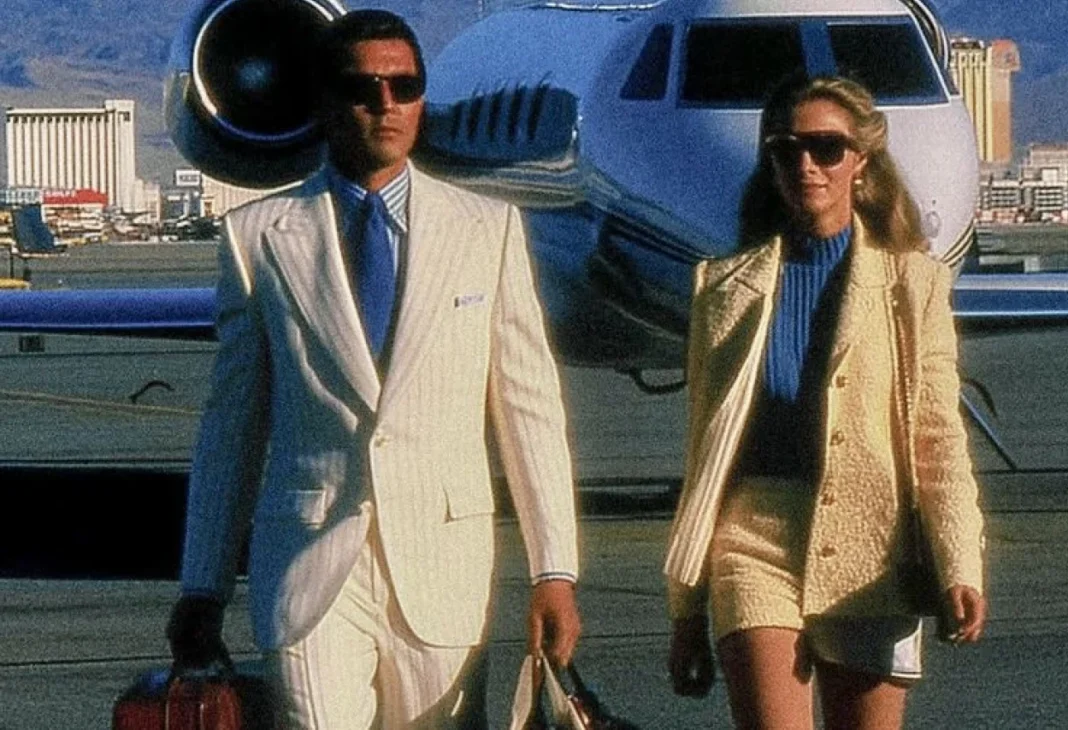
Traveling in the serenity of a private jet, moving away from crowded terminals, having the freedom to determine one's own schedule, or preserving one's privacy throughout the journey all help explain why modern luxury travel continues to attract attention. Within the world of business aviation, what is being purchased is not simply a flight. It is time, freedom, and control over one's own rhythm of life.
This distinction is particularly significant in the psychology of modern luxury. In the past, luxury was often defined through the objects one possessed, whereas today it is increasingly defined through experience. Being able to reach another part of the world, staying in a secluded hotel away from the crowds, receiving personalized service, or simply stepping outside the boundaries of everyday life for a few hours can leave a far more lasting impression on the mind than a material possession ever could.
Destinations such as Monaco represent one of the most elegant examples of this understanding. This small principality on the Mediterranean, with its marinas, haute couture atmosphere, prestigious hotels, and international jet set culture, has become more than a travel destination. It has become a symbol of a particular way of life. Monaco's appeal lies not only in its physical beauty, but also in the feeling of belonging to an exclusive world.
Concepts such as Status Consumption and Social Identity in psychology demonstrate that when people choose certain products, places, and experiences, they may be expressing not only their functional needs but also the social identity with which they feel connected. Yet reducing luxury travel to a symbol of status would be incomplete. In today's more refined understanding of luxury, one of the most valuable things is not showing others what one possesses, but being able to decide how one wants to live one's own life.
Perhaps this is the greatest freedom that travel can offer.
Turning into an unfamiliar street in a new city, spending several days immersed in another culture, allowing a different form of architecture to move you, or simply changing the place beneath the sky… All of these experiences take the mind beyond its familiar boundaries. When a person steps away from the repetition of everyday life, they gain the opportunity to see themselves from a different perspective. For this reason, travel can sometimes be not an escape, but a way of returning to oneself.
For me, the desire to explore the world finds its meaning precisely here. Seeing new places, witnessing different ways of life, and returning from every journey with a different feeling are among the most valuable experiences life can offer. Yet my appreciation for aesthetics, comfort, and elegance is also an inseparable part of the way I understand travel. Because I do not believe that one has to choose between discovering the world and experiencing it in a refined way.
Seeing the world also means having the freedom to choose how we wish to see it.
Ultimately, luxury travel is not merely about expensive aircraft, prestigious hotels, or exclusive destinations. Beneath all of these lies a much more human desire: to be free, to use our time as we choose, to exist within beauty, and to experience the world offered to us as deeply as possible.
Because true privilege is not simply having more.
It is having the time to discover the beauty of the world, the curiosity to recognize it, and the freedom to experience that journey with the elegance of your own choosing.