


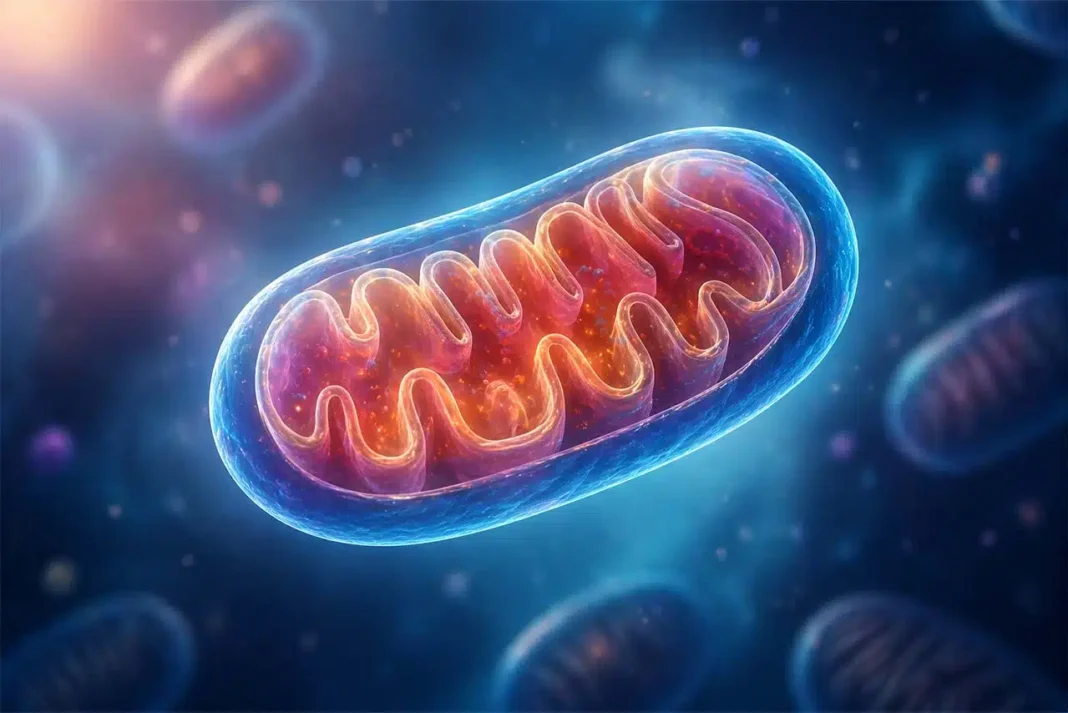

A phrase we often remember from science classes is: “Mitochondria are the energy centers of the cell.”
For most of us, this piece of information remained a detail learned during school years that does not seem particularly relevant to everyday life. However, these tiny structures may be much more closely related than we think to the feeling of chronic fatigue that we often cannot fully explain during the day.
A Demanding Organ
Although it accounts for only a small fraction of total body weight, the brain is responsible for a significant portion of overall energy consumption, highlighting just how metabolically costly it is. At the core of this high energy demand lies neurotransmission, the continuous electrical communication between neurons. This highly energy-intensive process is particularly sensitive to metabolic changes (Poff et al., 2021).
Fuel Sources
The brain meets most of its high energy demand through glucose. Glucose is a primary fuel source directly used by cells for energy production. For an organ that remains continuously active, such as the brain, a constant energy supply is essential. For this reason, glucose plays a central role as the brain’s main energy source.
However, the brain is not solely dependent on a single fuel; under certain conditions, it can also utilize alternative energy sources such as ketone bodies and lactate (Poff et al., 2021).
The Center Of Production: Mitochondria
What is critical, however, is not only which fuel is used, but how these fuels are converted into energy within the cell. Mitochondria lie at the center of this process, converting glucose and ketone bodies into ATP. For this reason, mitochondrial health determines not only energy production but also how efficiently the body can sustain daily functioning (Pizzorno, 2014).
Disruption Of Energy Balance: Insulin Resistance
The efficient use of glucose by cells does not always occur without disruption. One important condition affecting energy utilization in this context is insulin resistance. Insulin resistance is defined as a reduced cellular sensitivity to insulin, which leads to impaired entry of glucose into cells (Reaven, 1988). In simple terms, the fuel is available, but the cells are unable to fully benefit from it.
The development of this metabolic imbalance is also thought to be influenced by changes in lifestyle and dietary habits. In particular, increased fructose consumption in modern diets has been reported to disrupt glucose metabolism and contribute to metabolic processes associated with insulin resistance (Basciano et al., 2005).
Such metabolic disturbances are not limited to a single system and may lead to broader effects that influence the body’s overall energy balance. However, the most critical consequence of these changes emerges at the level of mitochondria, which lie at the center of cellular energy production.
Protecting The Energy Factories
Mitochondrial function is known to be closely related not only to processes of damage, but also to mechanisms of protection and repair. Nutrition plays an important role in this process. In particular, ellagitannins found in polyphenol-rich foods such as pomegranates, strawberries, and hazelnuts are metabolized by the gut microbiota into a compound called urolithin A (Düdükçü, 2023).
Urolithin A has been shown to have positive effects on mitochondrial health, particularly by supporting the removal of damaged mitochondria and enhancing cellular quality control mechanisms (Hou et al., 2024). This process occurs through mitophagy, a mechanism that selectively eliminates dysfunctional mitochondria (D’Amico et al., 2021).
Similarly, regular physical activity has also been shown to activate mitophagy, supporting mitochondrial renewal and increasing the formation of new mitochondria (Balan et al., 2019). In this way, the cell not only produces energy but also continuously renews its own energy-producing capacity.
Conclusion
Taken together, all of these findings suggest that the health of mitochondria, the central components of our energy production system, is more closely related to our everyday feelings of energy metabolism than we might assume.
What we often interpret as simple tiredness may, in fact, reflect a deeper imbalance at the cellular level. Understanding this connection provides a more comprehensive perspective on fatigue—not merely as a temporary state, but as a signal of how efficiently the body is able to produce and manage energy.