


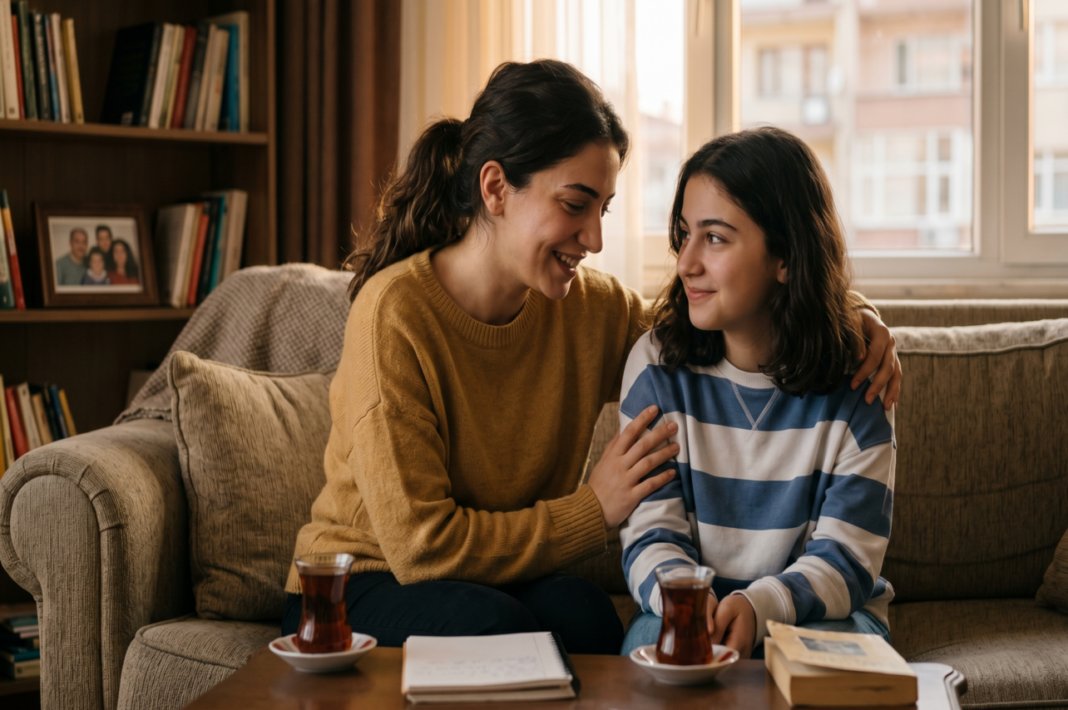

Sibling relationships are among the earliest and most enduring bonds formed in a person’s life. Growing up in the same household, sharing experiences, and developing together contribute significantly to an individual’s development. In particular, growing up with an older sister can transform this relationship from a simple sibling bond into a more instructive and supportive experience. Older sisters are often more than just siblings; they can be confidants, guides, and a source of security for their younger siblings. In this context, it can be said that the relationship formed with an older sister has deeper and more lasting effects on an individual’s emotional and social development than we might assume.
Loneliness
The presence of an older sister often represents an unseen yet powerful form of support for the younger sibling. Especially during the emotional fluctuations of childhood and adolescence, having someone to talk to provides a great sense of relief. Compared to parents, an older sister can be a more approachable and relatable figure, which helps the younger sibling express themselves more comfortably and share their feelings.
Sometimes, simply being in the same environment can create a sense of “I am not alone.” This feeling has a strongly protective effect psychologically. In a way, a person finds their closest friend within the home they were born into. Indeed, studies on sibling relationships indicate that individuals who have sisters tend to experience lower levels of loneliness and negative emotions (Padilla-Walker & Coyne, 2010). This finding supports the idea that the older sister–younger sibling relationship can create a secure attachment space for the individual.
Being A Role Model
Older sisters often become strong role models for their younger siblings, often without even realizing it. Their daily behaviors, the way they form relationships, and how they respond to events are carefully observed. Younger siblings frequently imitate their older sister’s behaviors without conscious effort. This process is one of the most natural ways of learning. How to speak, how to react in the face of a problem, or how to communicate with others are all shaped through this kind of observation.
At times, we all notice ourselves using our older sisters’ familiar expressions or even repeating their jokes in our own lives. These small details actually reveal how strong this influence can be. At this point, Sigmund Freud’s statement is meaningful: “Childhood experiences form the foundation of adult personality.” Indeed, the time spent with an older sister is an important part of these experiences and can shape behavioral patterns later in life.
Social Skills and Self-Confidence
Growing up with an older sister also provides a natural and warm environment for the development of social skills. In everyday life, often without even realizing it, we learn how to communicate, set boundaries, share, and cope with problems. Older sisters usually do not teach these skills directly; instead, they demonstrate them through their actions. Perhaps it is making up after a disagreement, or reaching a compromise over something small… All of these are among the most sincere and lasting ways of learning.
The presence of an older sister also instills a quiet but powerful sense of confidence. Knowing that there is someone who understands and supports you makes it easier to try new things. Feeling that you are not completely alone when you make a mistake makes a person both more courageous and more resilient. Over time, this sense of security helps individuals stand on their own feet and make their own decisions more confidently. The younger sibling eventually begins to shape their own path, drawing both from what they have learned from their older sister and from their own experiences.
Conclusion
Growing up with an older sister is often an experience that quietly settles into one’s life and shapes a person without being fully noticed. This relationship can appear as support, as an example, or simply as the comforting feeling of knowing someone is there for you. The small things learned in everyday life—a glance, a word, a behavior—gradually become part of a person’s character.
This bond, which leaves its mark on many areas from emotional support to empathy, from social skills to self-confidence, contributes to the individual forming healthier relationships both with themselves and with others. Perhaps the most beautiful aspect is that even though this relationship may change over time, it never completely disappears; instead, it continues to make itself felt in different ways at different stages of life. Sometimes in a memory, sometimes in a habit, and sometimes in the most unexpected moment, it reappears and gently reminds a person that they are not alone.