



Introduction
We often define Alzheimer’s as forgetfulness. However, this disease is not just about fading memories; it also involves small disconnections in the flow of time, slower initiation of daily tasks, difficulty in decision-making, and fluctuations in mood. Some days are more alert, some days more withdrawn… The most challenging aspect for loved ones is having to wonder whether their loved one is still the “same person.” As a clinical psychologist working with families, I always say this: The person is not lost; the paths have changed. Some of those paths may no longer be accessible through words; however, the shortcuts opened by emotions and senses still exist.
Development
In Alzheimer’s, cell loss increases in the temporal lobe and hippocampus regions of the brain, which are critical for memory; this process can eventually spread to the frontal regions associated with planning and attention. Fluency of speech and the ability to record and retain new information become difficult; in contrast, the networks underlying emotional memory can be preserved relatively longer. The feeling of a song or the meaning attached to a color can therefore remain intact. It is precisely at this point that music and painting become powerful and safe tools in the hands of loved ones: not to remind, but to connect.
Music activates the brain’s emotional networks and reward system, while rhythm supports step length, sustained attention, and initiation skills. Painting increases cooperation between visual areas and frontal regions; rhythmic brush strokes send a “I am safe” signal to the nervous system. We call this regulation. When regulation is achieved, more flexibility appears both in the person’s inner world and in the caregiving relationship. The restlessness and resistance we call agitation can be meaningfully reduced with small but sustainable steps.
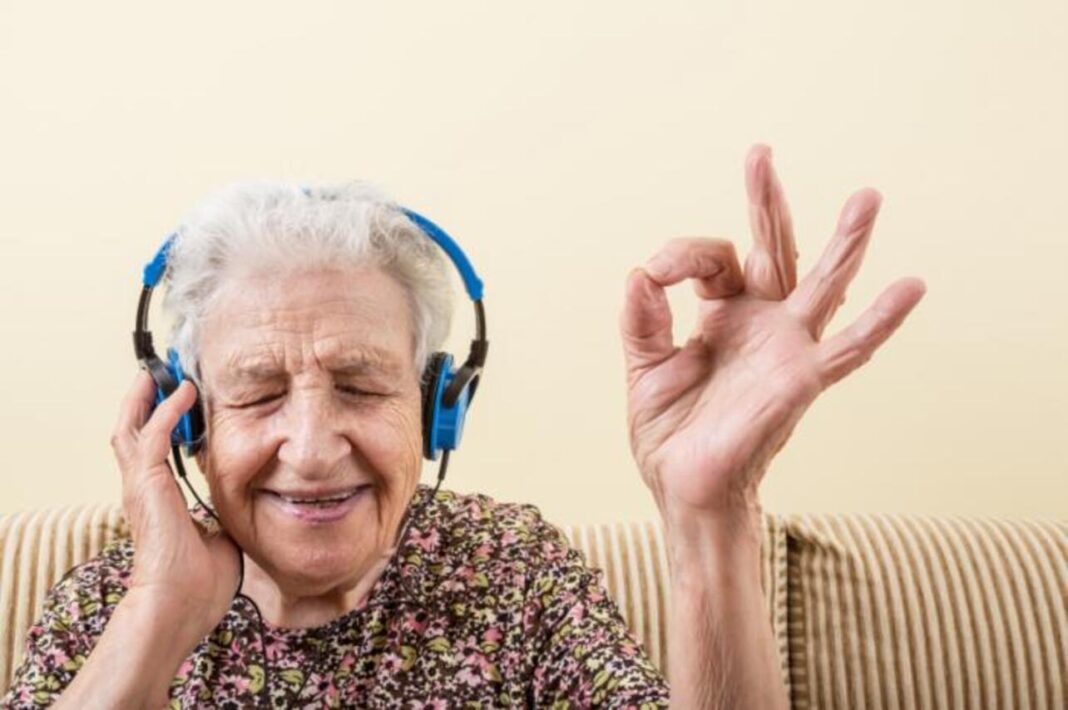
I remember 78-year-old Mr. A. in a group session. For several weeks, he had spoken very little, his gaze fixed on the floor, his sentences limited to single words. We opened the session with familiar melodies. When a song by Zeki Müren began, he first tapped his fingertips to the rhythm, then began to hum. When the song ended, he lifted his head and said, “This was my first dance with my wife.” Until that day, he had not mentioned his wife’s name. At that moment, I saw once again that music may not bring back words, but it evokes the warmth of connection. The emotional networks we call the limbic system are activated by familiar melodies; the expression on a person’s face softens, and their body organizes itself to the rhythm. This small adjustment visibly facilitates a simple conversation afterwards, sharing a cup of tea together, or even transitioning to daily tasks like eating or bathing.
After this window opened by music, it makes sense to support the same regulatory effect through the visual channel. The goal in painting is not to create a “beautiful picture,” but to open up a safe space for expression. Free coloring is often safer than drawing figures; it does not require copying and does not trigger judgment. Short 20-30 minute sessions establish a calm rhythm with slow, repetitive brush strokes. If you want to ask a question, instead of saying “What did you draw?”, choose expressions that open up space for feelings, such as “How does this color make you feel?” Keeping no more than two colors on the table to reduce visual clutter and choosing odorless, non-allergenic materials are simple but effective details. Moving on to a routine task after the session—such as getting dressed or taking a short walk—carries the organizing effect of the painting into daily life.
Conclusion
For loved ones, the answer to the question “So what can we do?” is often hidden in simpler steps than you might think. Let’s start with music. The most effective songs are those the person loved during their youth, especially between the ages of 15 and 30. Listening together instead of using headphones, humming along to the song, and supporting the rhythm with physical movements—such as clapping or lightly tapping your knees—significantly increases communication. It helps to keep the listening time to 10–15 minutes and schedule the activity for a critical moment of the day, such as before a meal. It is important to adjust the volume so that it is not loud enough to drown out the noise of a crowded environment, but enough to allow for conversation. Some songs may unexpectedly evoke sad feelings; in such cases, it is best to gently change the song and approach the emotional tone that the person is ready for at that moment.
Just as important as the activities at home is the caregiver’s own well-being. Remind yourself that you are doing the activity not to “keep them busy” but to “share a moment together.” You don’t have to get results when a piece ends; our goal is to build a safe bridge through a moment. When you recognize your own limits and fatigue, it is appropriate to take a break, invite another family member to provide support, or seek professional counseling. Referencing the person’s past and cultural world when selecting music lists and visual materials increases both emotional closeness and participation.
Of course, none of this replaces medical follow-up and medication. Our effort is not to stop the biological process; it is to multiply meaningful, warm, and as autonomous as possible moments within that process. What we observe in the clinical setting is this: Short, regular, personalized, and uncluttered music and art sessions both soften the person’s day and visibly lighten the burden on their loved ones. The revival of the gaze and the rhythm created with colors in a song by Zeki Müren actually leads to the same conclusion: The self finds its way through emotion and feeling, even where words struggle.
Alzheimer’s can be a journey woven with loss; however, there is light on this journey. Music and art magnify what we can feel together, much more than what we try to remember. This is often the most valuable compass for loved ones. When you have questions or want to share how the steps you’ve tried at home are going, contacting clinical teams makes the journey easier for both you and your loved ones. Because ultimately, the goal is not to bring back what is lost, but to connect more with what remains.
References
Alzheimer’s Association. (2024). 2024 Alzheimer’s disease facts and figures. Alzheimer’s & Dementia, 20(3), 320–405. https://doi.org/10.1002/alz.13089
Baird, A., & Samson, S. (2015). Music and dementia. Progress in Brain Research, 217, 207–235. https://doi.org/10.1016/bs.pbr.2014.11.028
Cuddy, L. L., & Duffin, J. (2005). Music, memory, and Alzheimer’s disease: Is music recognition spared in dementia? Brain, 128(11), 2533–2540. https://doi.org/10.1093/brain/awh589
Ueda, T., Suzukamo, Y., Sato, M., & Izumi, S. (2013). Effects of music therapy on behavioral and psychological symptoms of dementia: A systematic review and meta-analysis. Ageing Research Reviews, 12(2), 628–641. https://doi.org/10.1016/j.arr.2013.02.003
Zaidel, D. W. (2010). Art and brain: Insights from neuropsychology, biology, and evolution. Journal of Anatomy, 216(2), 177–183. https://doi.org/10.1111/j.1469-7580.2009.01160.x