


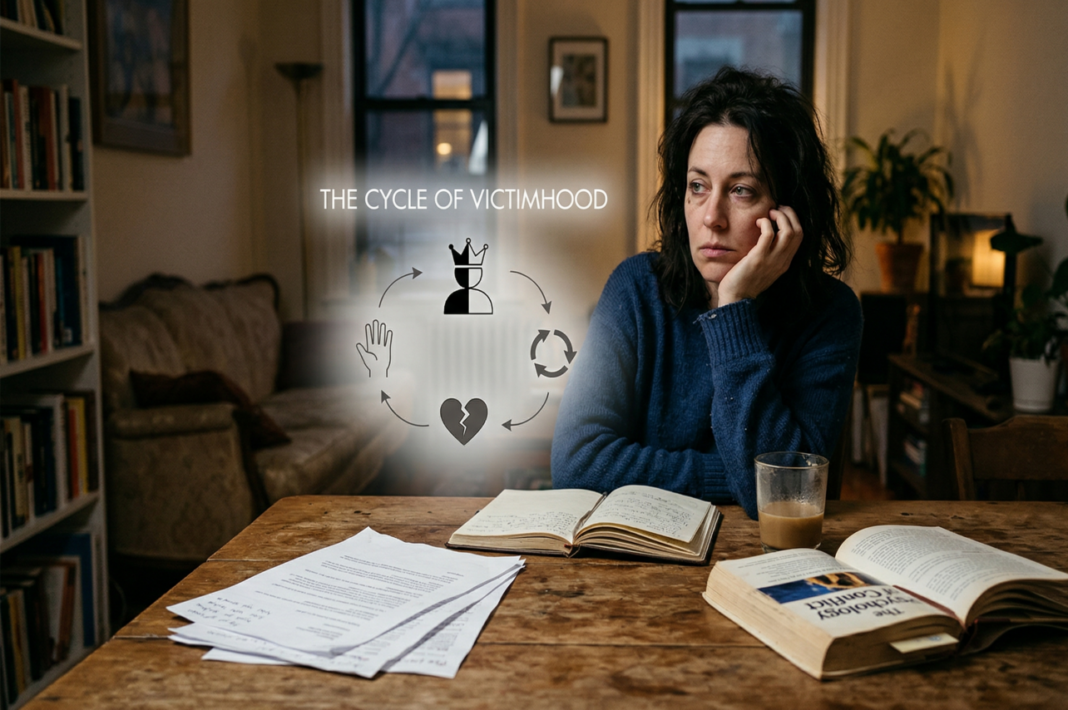

Victimhood is a negative experience resulting from an external event, such as an individual suffering physical, psychological, or social harm or injustice. However, this experience can take on a subjective dimension depending on how the individual perceives and interprets events. In daily life, we often see examples where some individuals evaluate themselves as victims in the face of the same event, while others do not. This suggests that victimhood may not be explained solely by the event experienced. Psychologists R. Gabay and colleagues start from this very question and investigate whether this difference has a systematic structure. This is where the concept of Tendency for Interpersonal Victimhood (TIV) comes into play.
The Tendency for Interpersonal Victimhood, studied by Gabay and colleagues, refers to individual differences in the tendency to perceive interpersonal situations as threats and injustices and to respond with a consistent sense of victimhood (Gabay et al., 2020). This involves a persistent feeling that the self is a victim, which is generalized across many types of relationships. Consequently, victimhood becomes a central part of the individual’s identity. Individuals with a higher TIV feel victimized more frequently, more intensely, and for longer durations in their interpersonal relationships (Gabay et al., 2020).
However, there is a point that should not be confused. Gabay and colleagues argue that while actual trauma and victimization can lead to harmful psychological consequences for individuals and groups, the development of a victimhood tendency may also depend on other variables such as context, socialization, and attachment styles. In other words, the critical distinction is that victimization is an event-based situation, whereas the tendency for victimhood is a continuous trait based on the individual’s cognitive and emotional patterns.
Gabay and colleagues define four psychological components that encompass the tendency for interpersonal victimhood as a whole:
-
The need for recognition and acknowledgment of one’s suffering
-
Moral elitism
-
Lack of empathy and sensitivity
-
Rumination
These four components work together to transform victimhood from a temporary experience into a permanent part of the individual’s identity.
The Need For Recognition
The pain and trauma we experience can make us feel that the world is an unjust and unsafe place. For this reason, individuals need their victimization to be recognized by both the perpetrator and others, and they need to feel empathy. Recognition helps reaffirm positive core assumptions about oneself, other people, and the world (Gabay et al., 2020). However, an individual with a high tendency for victimhood does not only want to be understood; they also expect their righteousness to be constantly validated from the outside. This situation causes the individual to focus on seeking recognition rather than resolving the event.
Moral Elitism
Moral elitism refers to the perception of one’s own impeccable morality and the immorality of the other party (Gabay et al., 2020). From a psychoanalytic perspective, this can be explained by Klein’s “splitting” mechanism. The person positions themselves as absolute good and the other party as absolute evil. The world and people are not evaluated as a whole with all their complexity. This perception justifies and strengthens the person’s victimhood. At the same time, it helps the individual maintain a positive moral image of the self (Gabay et al., 2020). Furthermore, this situation manifests itself in groups in conflict. Individuals portray the pain they have experienced in history as greater than the pain of the other group. While their own violence and aggression are seen as morally justified, the aggression committed by the out-group is seen as unjust and morally wrong.
Lack Of Empathy
Lack of empathy generally refers to an indifferent response and desensitization toward the suffering of the other party. Occupied with their own pain, victims lack the willingness to direct their attention, interest, or concern to the pain they cause others and to take responsibility for it (Gabay et al., 2020). This situation reduces the feeling of guilt resulting from the harm caused to the other party or group. It becomes difficult to understand the perspective of the other side, and the wall between them becomes insurmountable. Interpersonal relationships become increasingly one-sided.
Rumination
Rumination is also called the process of “mental chewing.” It is defined as the constant repetition of negative thoughts, past mistakes, or traumatic memories in the mind. In individuals with a high tendency for victimhood, the person focuses on the possible causes and consequences of the problem instead of its possible solutions. Stressors remain constantly active, and the person continues to suffer psychologically long after the event. This leads to the triggering of aggression and the desire for revenge, and the continuation of anger. Victimhood is constantly reproduced over and over again.
Conclusion
In conclusion, the study conducted by Gabay and colleagues (2020) reveals that the tendency for interpersonal victimhood is not only an external tendency but also a stable personality construct. Having a low level of victimhood tendency provides a constructive flexibility and capacity for forgiveness in social relationships. However, the study emphasizes that the lack of empathy and the desire for revenge seen in individuals with a high tendency for victimhood are major obstacles to establishing healthy relationships. Gabay and colleagues also state that anxious attachment and the influence of early childhood parent-child relationships are effective in high victimhood tendency.
A person’s state of constantly feeling victimized imprisons them in their past pain. In such a situation, trying to look at events from a different perspective will pave the way for building peaceful relationships.
References
Gabay, R., Hameiri, B., Rubel-Lifschitz, T., & Nadler, A. (2020). The tendency for interpersonal victimhood: The personality construct and its consequences. Personality and Individual Differences, 165, 110134. https://doi.org/10.1016/j.paid.2020.110134
Gabay, R., Hameiri, B., Rubel-Lifschitz, T., & Nadler, A. (2020). The tendency to feel victimized in interpersonal and intergroup relationships. In J. R. Vollhardt (Ed.), The social psychology of collective victimhood (pp. 319–338). Oxford University Press. https://doi.org/10.1093/oso/9780190875190.003.0017