


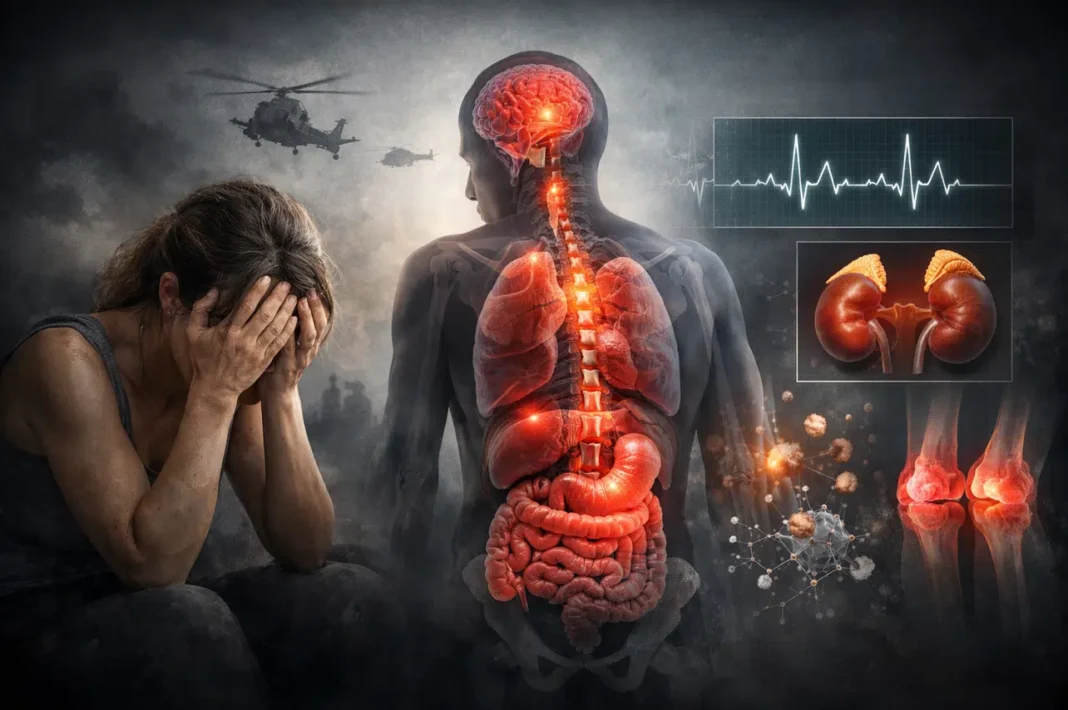

Traumatic life experiences can leave lasting psychological and physical scars on an individual. Clinical observations show that individuals who have experienced traumatic events are more likely to experience somatic symptoms such as chronic pain, gastrointestinal problems, muscle tension, and dizziness (Felitti et al., 1998; van der Kolk, 2014). This indicates that trauma has not only cognitive and emotional effects but also a biopsychosocial impact.
Trauma And Physical Burden
One study showing that traumatic experiences in early childhood are closely related to both psychiatric and physical health problems in later life is the Adverse Childhood Experiences (ACE) study. According to this study, situations such as abuse and neglect in childhood are associated with cardiovascular diseases, chronic pain syndromes, and somatic symptom disorders in later life (Felitti et al., 1998).
One disease group in which somatic complaints are prominent is post-traumatic stress disorder (PTSD). Somatic symptoms are particularly frequently observed in these individuals. According to data, there is a close relationship between inflammatory markers and autonomic nervous system dysregulation in individuals experiencing PTSD (Passos et al., 2015). Thus, it is understood that psychological traumas also produce significant physical effects.
Neurobiological Mechanisms: Autonomic Nervous System And HPA Axis
The autonomic nervous system plays a crucial role in the emergence of somatic symptoms of trauma. Following a traumatic experience, the sympathetic nervous system becomes hyperactive. Furthermore, parasympathetic tone may be reduced. As a result of this imbalance between the two systems, symptoms such as changes in heart rate, gastrointestinal sensitivity, and muscle tension can be observed (Thayer & Lane, 2000).
The hypothalamic-pituitary-adrenal (HPA) axis can be reorganized after trauma. When exposed to chronic stress, irregularities occur in the cortisol response. Thus, both the immune system and inflammatory processes are significantly affected (Yehuda, 2002).
Neuroimaging studies have demonstrated amygdala hyperactivity and reduced prefrontal cortex regulation following trauma (Shin & Liberzon, 2010). Considering the relationship between neurobiological structures, threat perception, and physiological arousal, it is possible that chronic vigilance contributes to the persistence of post-traumatic stress disorder (PTSD)-related somatic manifestations.
Body Memory And Somatic Experience
The concept that early trauma may be stored in the body has long attracted attention and debate. Van der Kolk (2014) argued that if traumatic experiences are not processed in verbal memory, they may later reappear as bodily symptoms. Furthermore, traumatic events and triggers can reactivate physiological responses in a person’s body without conscious awareness.
Somatic symptoms occurring in the body are often labeled as “medically unexplained symptoms.” However, when examining the growing body of research on this subject, it becomes evident that these symptoms are closely related to alterations in stress response systems (Bremner, 2006).
Clinical Implications And Intervention
It is important to address and evaluate somatic symptoms that arise after traumatic experiences holistically using a biopsychosocial approach. Trauma-focused cognitive behavioral therapy and emotion regulation-based approaches have been found effective in reducing these symptoms (Cloitre et al., 2012).
In addition, mindfulness-based interventions and body-focused practices have been shown to reduce physiological overstimulation and improve autonomic nervous system regulation (Price & Hooven, 2018). Therefore, evaluating trauma at both the psychological and bodily levels is crucial for comprehensive treatment planning.
Conclusion
Neurobiological mechanisms, such as autonomic nervous system dysfunction, play a significant role in the emergence of somatic symptoms following trauma. In particular, chronic activation of the sympathetic nervous system due to triggers and weakening of parasympathetic regulation can increase the frequency of symptoms such as gastrointestinal sensitivity, heart rate variability changes, and muscle tension. Furthermore, dysfunctions in the HPA axis and increased inflammatory processes may contribute to the persistence of post-traumatic physical complaints.
Therefore, focusing solely on symptoms such as cognitive distortions and mood changes may not be sufficient in trauma assessment. Clinical evaluations should consider the effects of traumatic experiences on the nervous system, taking into account the physiological responses of the body, and incorporate these findings into the case formulation. In this regard, future studies examining the interaction between physiological regulatory systems and psychological trauma in greater depth are essential for obtaining more reliable and integrative findings.
References (APA 7)
Bremner, J. D. (2006). Traumatic stress: Effects on the brain. Dialogues in Clinical Neuroscience, 8(4), 445–461.
Cloitre, M., et al. (2012). The ISTSS expert consensus treatment guidelines for complex PTSD. Depression and Anxiety, 29(8), 716–727.
Felitti, V. J., et al. (1998). Relationship of childhood abuse and household dysfunction to many of the leading causes of death in adults. American Journal of Preventive Medicine, 14(4), 245–258.
Passos, I. C., et al. (2015). Inflammatory markers in post-traumatic stress disorder: A meta-analysis. Molecular Psychiatry, 20, 1002–1012.
Price, C. J., & Hooven, C. (2018). Interoceptive awareness skills for emotion regulation. Frontiers in Psychology, 9, 798.
Shin, L. M., & Liberzon, I. (2010). The neurocircuitry of fear and anxiety disorders. Neuropsychopharmacology, 35, 169–191.
Thayer, J. F., & Lane, R. D. (2000). A model of neurovisceral integration. Biological Psychology, 54, 187–211.
van der Kolk, B. A. (2014). The Body Keeps the Score. Viking.
Yehuda, R. (2002). Post-traumatic stress disorder. The New England Journal of Medicine, 346(2), 108–114.