
Space And Mind: The Therapeutic Effect Of Architectural Design On Human Psychology

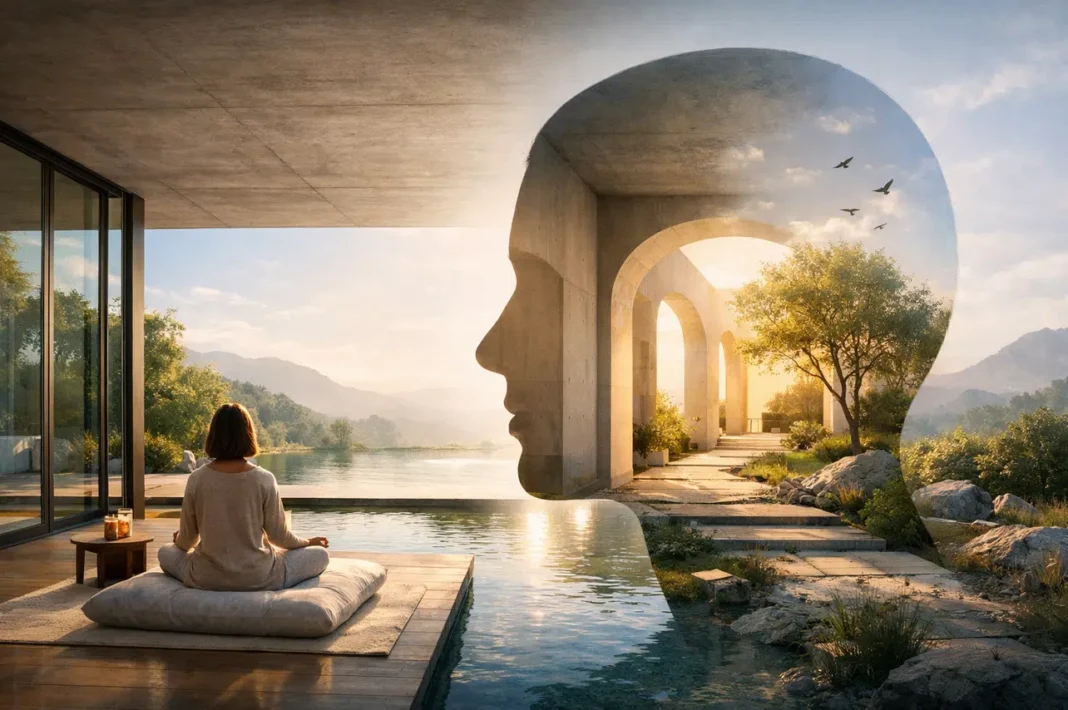
Humans can sometimes be seized by a distinct feeling upon entering a space, even before anything has happened. While some areas make an individual feel at ease, others create a vague sense of unease in the mind, even if they harbor no apparent threat. The reason for this often goes unnoticed; the psychological impact of a space is not visible enough to draw immediate attention, yet it is too deep to be ignored. The human mind does not perceive its surroundings only visually; it also reacts emotionally to the softness of light, the distance of walls, the presence of nature, and even the shape of emptiness. Therefore, architecture is more than just creating a physical space; it is a hidden factor that shapes the individual’s psychological experience.
Research in the field of psychology reveals that a person’s environment has a direct impact on their mood, stress levels, and general psychological health. In particular, natural light, the layout of the space, and visual interaction with nature play a regulatory role in the individual’s nervous system, helping to reduce stress and re-establish emotional balance. Because the human brain evolved in harmony with its natural environment, spaces integrated with nature evoke a sense of security. On the other hand, unnatural, closed, and artificial environments can increase psychological pressure. In this framework, it is possible to evaluate architectural design not just as a visual or functional area, but as a therapeutic tool that can influence individual psychology. Especially in healthcare buildings, considering that an individual’s psychological state is directly related to the physical healing process, the spatial design’s restorative potential becomes even more evident. This study aims to examine the therapeutic effect of architectural design on human psychology and addresses the role of spatial features in mental health from a psychological perspective.
The Neuropsychology Of Space And Environmental Psychology
The relationship between humans and their environment is not merely a physical interaction but a neuropsychological process. The brain constantly analyzes the space it occupies, evaluating light levels, spatial depth, visual contact with nature, and even color tones. This evaluation does not require conscious awareness. However, its results are felt significantly in the individual’s stress levels, emotional balance, and overall mood. Therefore, architectural design is not just a set of aesthetic decisions; it is an environmental factor directly linked to environmental psychology and mental processes.
One of the most striking scientific proofs of this relationship was presented in 1984 by Roger Ulrich, a prominent figure in environmental psychology, through a hospital study. In this study conducted on patients in post-operative recovery, patients who could see a natural landscape from their window were compared with those who looked only at a wall. The results showed that patients in rooms with a view of nature were discharged sooner, required fewer painkillers, and received fewer negative psychological evaluations in nursing notes.
Similarly, another important study conducted by Ulrich in 1991 examined the effect of natural environments on stress. Participants were presented with a stress-inducing stimulus, after which some were exposed to images of natural landscapes while others saw urban scenes. Those viewing nature images showed a faster decline in physiological stress indicators and a quicker emotional recovery.
Studies examining the effect of daylight on mental health reach similar conclusions. It has been established that natural light regulates the biological rhythm, and the balance of this rhythm is associated with a reduction in depressive symptoms. In recent years, research on biophilic design has further supported these findings. The use of natural materials, the inclusion of plants in interiors, and the creation of openings that allow a visual relationship with nature have been linked to decreased stress levels and increased psychological well-being.
When all these studies are evaluated together, it is clear that the impact of the architectural environment on human psychology is not coincidental. A human is not just a user of a space; they are a being affected and shaped by its psychological atmosphere.
Architecture As A Therapeutic Tool For Mental Health
Human psychology, often without being noticed, is in constant interaction with the environment it occupies. An individual’s sense of peace, tension, or relaxation is not only a result of internal processes but also a reflection of the effects created in the mind by environmental factors. Research indicates that architectural design plays a significant role in an individual’s stress levels, emotional balance, and even the physical healing process. The presence of natural light, visual contact with nature, and the quality of spatial layout can support psychological well-being by creating a regulatory effect on the nervous system.
This situation reveals that architecture is not just a practice of creating a physical environment, but also a field that can interact directly with the human mind. This relationship between space and mind shows how deep and sensitive the bond between humans and their surroundings truly is. A person does not just experience a space; they are emotionally shaped by it, often without realizing it. Therefore, architectural design has the potential to determine not only where an individual is but also how they feel.
This is perhaps why some spaces provide an inexplicable peace while others leave a heavy feeling even in silence. Architecture does not consist only of walls and voids; it produces an invisible but deeply felt experience that touches the human mind. And sometimes, a person’s healing process begins not just with the treatment they receive, but with how the space they are in makes them feel.