
An Examination Of Vision Boards As A New Year’s Ritual From A Psychological Perspective

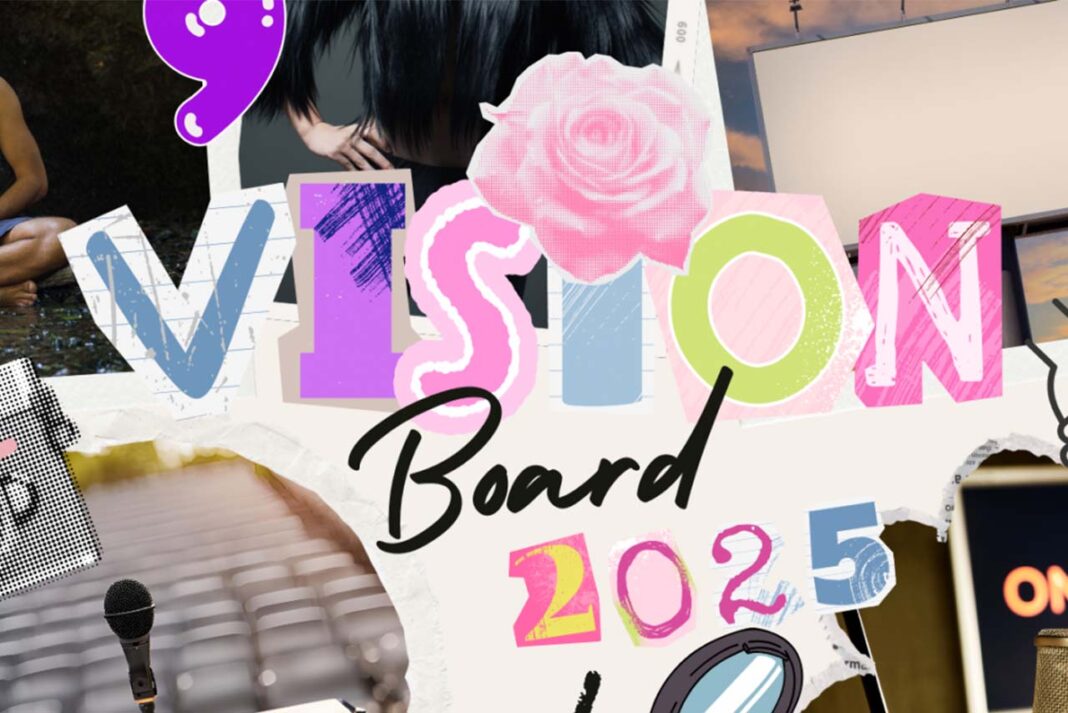
As we enter the final month of the year, the excitement of the new year has embraced many of us. What we will do in the new year, what we want to change in our lives, our expectations from the new year, and many similar thoughts create a sweet sense of excitement and hope. On some social media platforms, I have observed various rituals related to the new year. One of the most popular among them is vision boards. I would like to briefly explain what vision boards are. In Turkish, they can be referred to as “hayal panosu” (dream board). These boards are generally prepared in the last months of the year. On a vision board, individuals select images, symbols, motivational quotes, and similar elements that represent the goals and dreams they want to achieve in the new year. They then paste these elements onto a board in any size and arrangement they wish, creating a collage. Essentially, vision boards are a type of visual motivation tool that constantly reminds individuals of what they want to achieve in their lives and keeps these goals visible.
Psychological Mechanisms Behind Vision Boards
There are many psychological mechanisms underlying vision boards. The first is the psychological effect of visualization. At the core of vision boards lies mental imagery. It has been observed that not only thinking about goals but also visualizing them has an effect on motivation and behavior. Visualization creates activation in the brain’s motor cortex similar to real behavior (Kosslyn, 1994). As a result of this activation, a person’s level of motivation increases compared to before. Frequently seeing the goals on a vision board strengthens behavioral tendencies through priming. Therefore, a vision board is not merely a board that reminds one of goals, but a tool that shapes behavior through mental repetition. In short, visualization shapes both motivation and behavior.
Another psychological mechanism is self-efficacy and hope psychology. The purpose of these boards is to increase the sense of attainability by visualizing goals, to reinforce hope, self-efficacy, and confidence about the future, and to strengthen the belief of “I can do it.” According to Snyder’s hope theory, visuals increase both goal motivation and pathway thinking (Snyder, 2002). The aim of vision boards aligns exactly with this theory: both defining the goal and finding the path.
Another psychological mechanism is its relationship with goal-setting theory. According to Locke and Latham’s goal-setting theory, clear, specific, and attractive goals increase the likelihood of success. Based on this theory, when preparing a vision board, goals become concrete, abstract wishes turn into visual goals, and an emotional connection with the goal is established. Making goals clearer and more attention-grabbing increases the probability of success. According to this theory, a person’s success in reaching goals increases.
Another psychological mechanism is positive psychology. From the perspective of positive psychology, vision boards are said to produce positive emotions, provide meaning, reduce future anxiety, and enhance a sense of control. Vision boards are also seen as tools for emotional regulation.
Finally, the last psychological mechanism we will address is the future self effect. Vision boards help the future self to be visualized in the mind. By visualizing it, a person can form a connection with the future, which positively affects sustainable behavior. Additionally, visualizing the future self contributes to maintaining present behaviors in line with long-term goals.
Is Preparing A Vision Board Beneficial?
Vision boards can be considered a psychologically grounded tool. They make use of the mind’s power of visualization, the concretization of goals, and the ability to form an emotional bond with the future. This tool makes goals feel more vivid and attainable in the mind. Research shows that the human brain processes concrete images more easily than abstract thoughts, and vision boards facilitate this process. Vision boards help keep internal motivation current and high. This motivation becomes stronger through visibility and repetition. Seeing goals every day increases behavioral commitment, making the board a psychological reminder that regulates self-discipline. By concretizing goals, the board makes them more realistic and achievable. Realistic goals positively affect a person’s sense of self-efficacy. As self-efficacy increases, the steps taken toward goals also increase. Vision boards can also be seen as a kind of future contract a person makes with themselves. This contract helps free the individual from uncertainty and strengthens their will to direct their life.
Overall, we observe that vision boards can positively influence individuals and be beneficial. However, when it comes to vision boards, people are generally divided into two groups: those who see them as necessary and useful, and those who consider them useless and a waste of time. So, which group do you belong to?
Kaynakça
Kosslyn, S. M. (1994). Image and Brain: The Resolution of the Imagery Debate. MIT Press.
Snyder, C. R. (2002). Hope theory: A member of the positive psychology family. Handbook of Positive Psychology.
Robbins, T. (1991). Awaken the Giant Within. (Visioning teknikleri üzerine popüler yaklaşım).
Canfield, J. The Success Principles – Hedef görselleştirme ve vision board bölümleri.
Oettingen, G. (2014). Rethinking Positive Thinking. Penguin Books.
Hershfield, H. E. (2011). Future self-continuity: How conceptions of the future self transform intertemporal choice.