



In the middle of the day, there comes a moment: your hand reaches for your phone, and you realize you’ve forgotten why you opened it. A beam of light falls through the window, a warm scent rises from your mug, a sound drifts in from the street…
I’ve learned that in those moments, the mind can shift from “autopilot” to “manual control.” Big goals and big transformations are wonderful; but I want to start by accepting that what saves most mornings is often just a short pause.
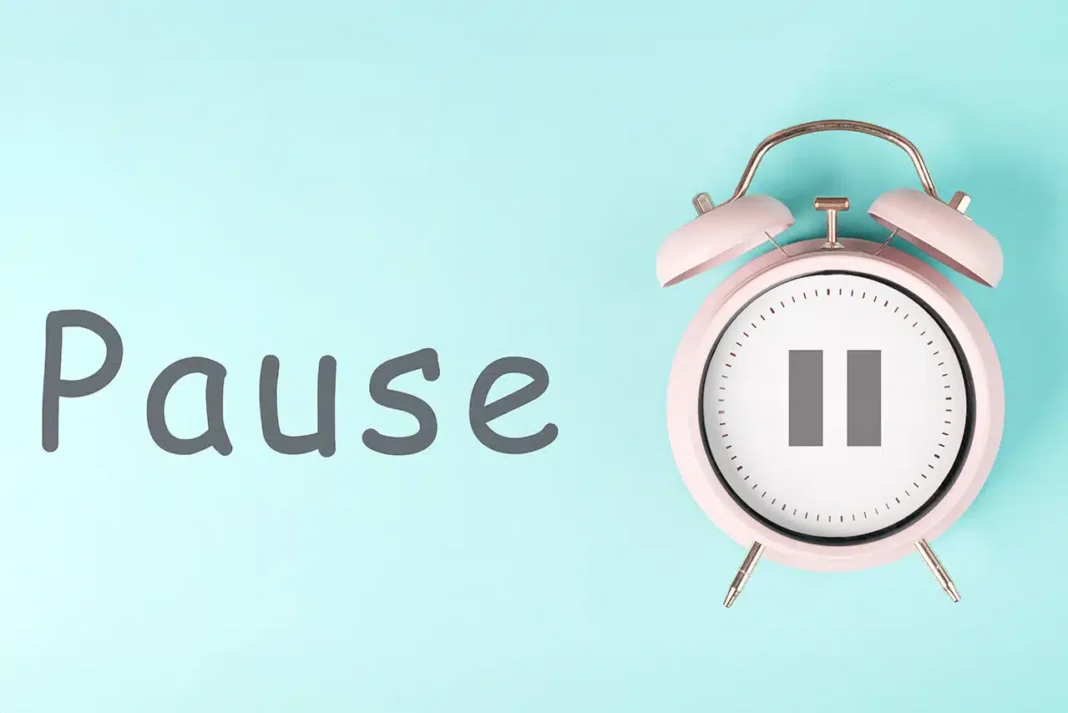
When I say “micro moment,” I’m talking about a deliberate pause of 30–90 seconds. Unpretentious, unglamorous, yet it resets the attention and emotion regulation systems.
In scientific terms: we send a small alert to the salience network that directs attention to “what matters”; we briefly label the emotion, calling the prefrontal cortex into play; we let the body downshift a few gears by holding on to the rhythm of the breath. I’m not saying this to sound impressive — what it feels like in practice is this: manageability. I like that word. Everything doesn’t suddenly become “good,” but it becomes “manageable.”
Sometimes I remind myself:
“Pause. Notice. Name. Save.”
Pause: A tiny stop sign for both the mind and body.
Notice: Pick one single detail from outside — light on the glass, the texture of the fabric on the couch, a distant hum.
Name: Give what’s happening inside a small headline — “shoulders tense,” “mild anxiety,” “sleepy haze.”
Save: Stay with that simple moment for ten breaths; no exaggeration, no forcing. That’s it. No need to open a meditation app or put life on hold.
I know the doubt, too. The mind asks, “What can thirty seconds do?” A fair question. Micro moments don’t erase trauma or carry life’s weight alone. But we know that short repetitions leave traces in the nervous system; accumulation is key here. Just as a muscle strengthens when you work it regularly, the brain responds to these brief, frequent adjustments.
On the first day, nothing seems different; by the third week, you might notice you can say “pause” in the middle of an argument. Even if the emotion’s intensity is the same, the time you can stay on top of the wave grows longer.
In the therapy room and in my own life, I’ve become convinced that the best friend of micro moments is ordinariness. You don’t need perfect silence or a special corner. While waiting for the elevator, just before turning on the computer, the moment your hand touches the doorknob… The flow of daily life itself gives us cues. I call these cues “stitches” — like mending the torn spot in the fabric of the day with a small, invisible stitch.
One of my clients chose the “grocery store queue” as their stitch; another, the moment subway doors close; another, dimming the lights at night. Everyone’s stitch is different.
The shortest instruction I give myself and the reader is this:
“One clear detail anchors me.”
Sometimes the detail isn’t outside but inside. My heartbeat has sped up; my palms are warm. Naming it “anxiety 3/10” feels less like an alarm bell and more like a status update. In that moment, I place a hand on my chest and whisper to myself:
“May I be steady for one minute.”
I love this sentence because it’s humble. It doesn’t say, “May I always be calm”; it asks for one minute. The brain finds that doable. Sometimes I stumble upon a pleasant moment — the smell of bread from the corner bakery, the cool edge of a cup, the small joy of a message. I record it for ten breaths, savoring it just a little extra. This isn’t about forcing happiness; it’s like gently increasing the contrast in a good photo.
Of course, it doesn’t always work. Sometimes the wave is big, sometimes the fatigue is heavy. For those moments, I keep this sentence in my pocket:
“It’s a wave; I can surf thirty seconds.”
The wave still comes, but I’m no longer someone just waiting on shore; I have a surfboard. I can stay on for thirty seconds. Most of the time, this means delaying a conversation, stepping out of the room for two minutes, looking at my breath instead of my phone. Small-seeming but powerful differences in choice.
As the night approaches, the sound of micro moments becomes clearer. Lights dim, the city speaks in a softer voice. At those hours, I ask myself a short closing question:
“What made it through from today?”
Sometimes it’s a single word — “laughter.” Sometimes a sensation — “shoulders relaxed.” When I write that note, I’m building a small bridge to tomorrow. A habit that would serve the magazine reader as well: a one-sentence daily summary. Not a list, not a goal; just a trace.
And I want to make this clear: micro moments are not toxic positivity. They don’t pressure you to “feel good”; they increase contact with reality. Instead of covering difficult emotions, we examine them under a microscope: their shape, color, duration. And often, we learn to tell “danger” apart from “alert.” That distinction makes it easier to set boundaries in relationships — “I don’t want to talk right now, let’s reconnect in ten minutes.” And strangely enough, it makes relationships more honest.
So how do we start? I won’t suggest a big plan. Just choose one cue: the elevator, the doorknob, the power button on your computer, the bedside lamp. When you see that cue, give it just one minute. One external detail, one internal label, ten breaths. If you like, a pocket-sized notebook; if not, a sentence in your mind. That’s all.
A few weeks later, you might struggle to pinpoint where the change began. Because micro moments don’t make noise; they work silently. But your language changes. Instead of saying “I lost it again,” you start saying “I caught it.” The intensity of the emotion sometimes stays the same; but the space between you and it grows. That’s what I call psychological flexibility: bending without breaking.
I’ll end with a sentence I want to keep reminding myself:
“Small moments, often.”