


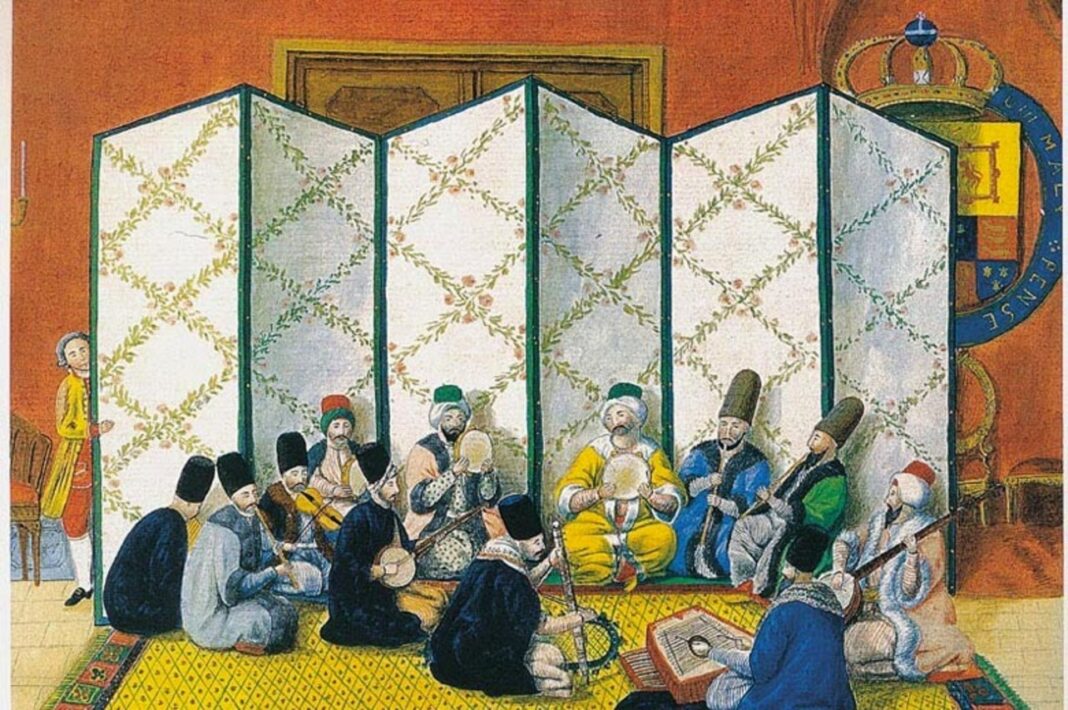

Throughout history, people have tried to treat not only physical illnesses but also mental disorders. One of the most important examples of this effort can be found in the Ottoman Empire, where treatment methods using water and music were applied. These methods, used in Ottoman darüşşifas (hospitals/bimaristan), are considered early examples of modern music therapy and environmental therapy in psychology. In these institutions, patients were supported not only with medication but also with a calming environment, the sound of water, and music.
Healthcare In The Ottoman Empire
Healthcare in the Ottoman Empire was mainly provided in institutions called darüşşifas. These were not only hospitals but also treatment centers where patients’ mental well-being was highly valued. One of the most well-known examples of this approach is the Bayezid II Complex, built in the 15th century. This darüşşifa is especially notable for its methods used in treating mental illnesses. Architectural design, water sounds, and music were used together to help patients relax and achieve mental calmness.
Architectural Harmony and The Sound Of Water
The architecture of darüşşifas was designed in harmony with the treatment approach. Typically, a fountain or a small pool was placed at the center of the structure, and the rhythmic sound of flowing water created a peaceful atmosphere. This sound was considered a natural element that calmed the human mind. Today, psychological research also shows that natural sounds can reduce stress and promote mental relaxation. Therefore, water sounds were an important element used for psychological relief in Ottoman darüşşifas.
The Healing Power Of Music
Another key element of psychological treatment in the Ottoman Empire was music. Ottoman physicians believed that music had a powerful effect on the human soul. At certain times, musicians performed for patients using instruments such as the ney, oud, and tambur. These performances helped balance patients’ emotional and mental states. The aim was not simply to entertain, but to regulate mood and support psychological healing.
Understanding Modern Music Therapy
Music therapy is an approach designed to help treat various conditions. It can address physical, emotional, social, and cognitive problems in people of all ages. Therapy is tailored to individual needs and may include listening to music, singing, playing instruments, or working with rhythm. Today, music therapy is recognized as a scientific method and is widely used in the treatment of stress, anxiety, depression, and trauma.
Development Of Music Therapy As A Discipline
The modern development of music therapy accelerated in the 20th century. After World War II, the positive effects of music were observed in the treatment of wounded soldiers in hospitals in the United States. From the 1940s onward, music therapy became an academic discipline and is now widely accepted and practiced around the world.
The Role Of The Maqam System
In these applications, the maqam system played a crucial role. In Turkish music, each maqam was believed to evoke a different emotional and psychological state. Therefore, the music performed in darüşşifas was not random; specific maqams were chosen according to the patient’s condition.
One of the most well-known maqams is Rast, which was believed to provide peace, joy, and inner balance. It was thought to support mental stability and help in the treatment of mental disorders. Uşşak maqam is associated with emotional depth and inner calmness and was often used for relaxation. Hüseyni maqam is known for its soothing and refreshing effects, supporting emotional balance. Hicaz maqam, on the other hand, was believed to intensify emotions and help individuals express their inner feelings. Nihavend maqam was associated with balance, strength, and mental relaxation.
Maqams And Specific Conditions
In addition, some maqams were believed to have specific effects on certain illnesses. For example, Iraq maqam was thought to benefit brain-related conditions, Isfahan maqam to improve mental clarity, Rehavi maqam to relieve headaches, and Büzürk maqam to reduce mental fatigue. This approach reflects the belief that music can influence not only emotions but also cognitive processes.
Diverse Therapeutic Techniques
Music therapy in the Ottoman Empire was not limited to listening alone. Different techniques were also applied. In active treatment, patients participated in movement accompanied by music, while in passive treatment, they listened to music and water sounds in a relaxed state. Rhythm exercises and playing instruments helped develop motor skills and self-confidence. These methods show similarities with modern music therapy practices.
The Influence Of Turkish and Islamic Traditions
Ottoman music therapy was also influenced by earlier Turkish and Islamic traditions. In Central Asia, shamans used music and rhythm for healing, while scholars such as Ibn Sina (Avicenna) and Farabi studied the effects of music on the human soul. They argued that music could regulate emotions and support psychological balance. Ottoman physicians developed these ideas further and turned music into a systematic treatment method.
Conclusion
In conclusion, water sounds, music, and the maqam system were essential components of psychological treatment in Ottoman darüşşifas. These practices reflect a holistic approach that emphasizes the healing of both body and mind. The widespread use of music and environmental therapy today shows how advanced and meaningful these historical practices were in understanding human psychology.
References
Tümata – Türk Musıkisini Araştırma ve Tanıtma Grubu. (n.d.). Makamlar ve etkileri. https://tumata.com/turk-muzigi-makamlari-ve-etkileri/
Somakcı, P. (2003). Türklerde müzikle tedavi. Erciyes Üniversitesi Sosyal Bilimler Enstitüsü Dergisi, 1(15), 131-140.
Şehsuvaroğlu, B. N. (1965). Edirne II. Beyazıt Darüşşifası. İçinde Edirne’nin 600. fetih yıldönümü armağan kitabı (ss. 257–264). Ankara.
Erdal, B., Tepe, Y. K., Öztürk, O. M., Çiğdem, B., Erol, T., Bulut, M. H., & Topaktaş, S. (2022). Tarihi Türk Müziği Makamlarının Fizyolojik ve Psikolojik Etkileri Üzerine Bir Araştırma. BİLDİRİ TAM METİN KİTABI, 106.
Erer, S. ve Atıcı, E. (2010). Selçuklu ve Osmanlılarda Müzikle Tedavi Yapılan Hastaneler. Uludağ Üniversitesi Tıp Fakültesi Dergisi, 36 (1) 29-32.
Öztuna, Y. (2005). el-Mûsîka’l-Kebîr. TDV İslâm Ansiklopedisi. https://islamansiklopedisi.org.tr/el-musikal-kebir
Fârâbî F. Kitāb Al Mūsīqá Al Kabīr. https://archive.org; 2000.
İbn-i Sina., El-Kânûn Fi’t-Tıbb. İbni Sina El Kanun Fit Tıbb. https://archive.org; 2023.
KOÇ E, ÖNAL H. TÜRK – İSLAM MEDENİYETİNDE MÜZİKLE TEDAVİ. İnönü Üniversitesi Kültür ve Sanat Dergisi. Published online January 5, 2024:177-190. doi:10.22252/ijca.1399064