


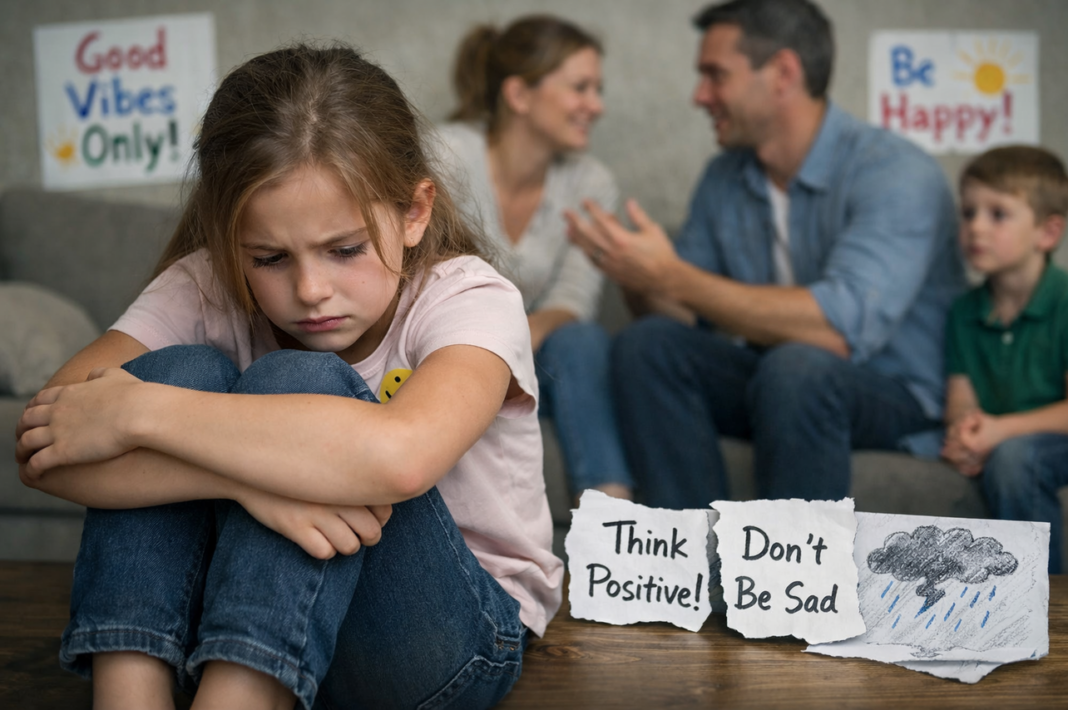

In today’s societies, issues of positive thinking and emotional resilience are becoming increasingly important. However, toxic optimism, described as an extreme and unrealistic pressure to remain positive, has serious negative effects, especially on children during their developmental years. Toxic optimism manifests as the belief that one must always “feel good,” leading individuals to suppress difficult emotions and challenging experiences. The negative consequences of this phenomenon are particularly evident in children’s emotional and social development.
Emotional Suppression and Inability To Recognize Feelings
Children need to express all of their emotions and see these emotions validated in order to develop in a healthy way. However, in environments shaped by toxic optimism, emotions such as sadness, anger, frustration, or fear are often dismissed as exaggeration, negativity, or weakness. This approach prevents children from learning how to identify and understand their emotional world.
As a result, children may struggle with emotional awareness, experience internal conflicts, and fail to recognize complex emotional states. Over time, this lack of emotional regulation can lead to difficulties in coping with stress and managing emotions effectively in adulthood.
Damage To Self-Worth
In environments dominated by toxic optimism, children are often taught that being a “good child” means always being cheerful and positive. This message can cause children to interpret their negative emotions as personal failures. When a child believes that feeling sad, angry, or overwhelmed is wrong, they may begin to see themselves as flawed or inadequate.
This process can seriously harm self-worth, leading children to suppress their emotions, feel shame for their inner experiences, and develop guilt for not meeting an idealized emotional standard. Over time, this internal conflict may increase vulnerability to anxiety and depression.
Disruption ın Family Communication
A child’s ability to express emotions freely within the family is a cornerstone of secure attachment. However, when families consistently encourage only positive emotions, children may begin to doubt the authenticity of emotional communication at home. When faced with pain or difficulty, they may hesitate to share their experiences.
This dynamic can result in emotional isolation, superficial communication patterns, and weakened problem-solving skills. The child may withdraw emotionally, feeling that their true experiences are unwelcome or invalid.
Distortion Of Reality Perception
Children learn how to understand the world by observing how adults respond emotionally. When negative emotions are ignored or minimized, children are deprived of the opportunity to develop realistic coping mechanisms. They may grow into adults who struggle with frustration, avoid challenges, and feel overwhelmed by adversity.
An environment dominated by toxic optimism creates an unrealistic expectation of constant happiness, preventing the development of a balanced and healthy perception of life.
Weakening Of Psychological Resilience
Although positivity is often associated with strength, suppressing negative emotions actually weakens psychological resilience. For children to develop emotional strength, they must be allowed to experience, process, and work through difficult emotions. Toxic optimism disrupts this process, leaving children emotionally fragile and less equipped to handle life’s challenges.
Conclusion
Toxic optimism may appear well-intentioned, but it overlooks the emotional needs of children. Healthy development requires space for both positive and negative emotions. Allowing children to express their feelings freely, validating their emotional experiences, and adopting a balanced and empathetic approach supports the development of emotionally resilient and psychologically healthy individuals.
References
Bradshaw, C. (2021). Toxic Positivity: Keeping It Real in a World Obsessed with Being Happy. Atria Books.
Linehan, M. (2015). DBT Skills Training Manual. Guilford Press.
Fredrickson, B. (2009). Positivity: Groundbreaking Research to Release Your Inner Optimist. Crown Publishing.
Rogerson, M., & Flett, G. (2020). Unhealthy Positive Emotions: The Role of Toxic Positivity. Journal of Emotional Studies, 12(3), 45–57.
Güner, P. (2019). A Study of Emotional Suppression and Child Development. Journal of Child and Adolescent Psychology, 6(2), 120–134.