


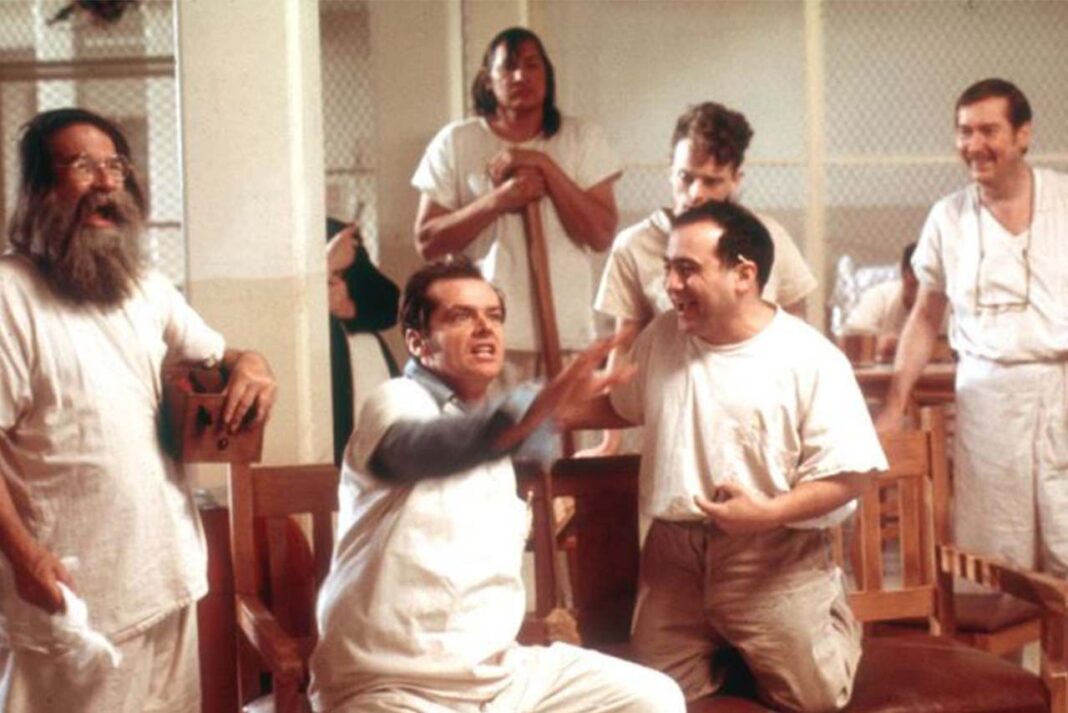

What defines what is “normal”? How reliable are concepts such as mental health and mental illness? Is accurate diagnosis always possible, and do psychiatric labels consistently reflect an individual’s true condition? This paper explores these questions through the lens of David Rosenhan’s landmark 1973 study, which fundamentally challenged the validity of psychiatric diagnosis and the objectivity of mental health assessments.
Rosenhan’s experiment, titled “On Being Sane in Insane Places,” was designed to test the reliability of psychiatric diagnoses. Eight psychologically healthy individuals, with no history of mental illness, presented themselves at 12 different psychiatric hospitals across five U.S. states. They claimed to hear three words—“empty,” “hollow,” and “thud.” Aside from these fabricated auditory hallucinations, they reported no other symptoms and provided truthful personal histories.
Once admitted, the participants behaved normally and stated that the hallucinations had ceased. However, hospital staff failed to identify them as healthy. All were diagnosed with severe mental disorders—mostly schizophrenia—and were hospitalized for an average of 19 days. The shortest stay was 7 days, while the longest lasted 52 days. The hospitals involved included both prestigious private institutions and well-regarded public hospitals, indicating that the findings were not due to substandard care facilities.
The pseudopatients included individuals from various professional backgrounds—psychologists, a psychiatrist, a pediatrician, a psychology student, a painter, and a housewife. They concealed their real identities to ensure their diagnoses were based solely on the invented symptoms. After being admitted, they secretly discarded the medications they were prescribed. Astonishingly, staff failed to notice that none of the participants were taking their medication. In total, the eight individuals were given nearly 2,100 doses of psychotropic drugs, including antipsychotics, antidepressants, and mood stabilizers. Despite receiving similar diagnoses, the type and amount of medication varied significantly from patient to patient.
Rosenhan’s findings revealed that psychiatric diagnoses were not purely clinical judgments but were also influenced by context, expectations, and institutional culture. Behaviors considered normal outside the hospital were frequently interpreted as symptoms of illness inside. The study demonstrated how psychiatric labels can shape both perception and treatment, often in ways that obscure a person’s actual condition.
The publication of Rosenhan’s article in 1973 caused considerable controversy within the psychiatric community. That same year, homosexuality was officially removed from the Diagnostic and Statistical Manual of Mental Disorders (DSM), reflecting increasing scrutiny of the field’s scientific foundations. The 1960s and early 1970s were marked by rising criticism of psychiatry, particularly from the anti-psychiatry movement, which questioned the legitimacy and humanity of psychiatric practices.
In response to the growing demand for reform, Robert Spitzer, a psychiatrist known for his work on diagnostic criteria, was appointed to lead the development of DSM-III. Although Spitzer played a key role in removing homosexuality as a mental disorder, he was also one of Rosenhan’s fiercest critics. In a detailed rebuttal, Spitzer acknowledged flaws in psychiatric diagnoses but argued that such issues also plagued other branches of medicine. He accused Rosenhan of singling out psychiatry unfairly and dismissed the study’s conclusions as overly sensational. Spitzer’s critique began with the statement, “Some foods taste delicious but leave a bad aftertaste. So it is with Rosenhan’s study.”
Rosenhan, in his defense, emphasized that the core issue was not deception or gullibility but the diagnostic leap from a single symptom—auditory hallucinations—to a severe psychiatric label such as schizophrenia. According to him, this leap exposed the fragility and subjectivity of diagnostic judgments in psychiatry. Spitzer, however, largely ignored the institutional observations in Rosenhan’s study and doubted whether hospital conditions were truly as bleak as described.
Despite the criticism, the Rosenhan experiment remains a milestone in the history of psychology and psychiatry. It highlighted the dangers of diagnostic overreach, the impact of labeling, and the lack of clear boundaries between sanity and insanity. It also underscored the limited interaction between hospital staff and patients, the influence of institutional settings on perception, and the potential harm caused by misdiagnosis.
Ultimately, Rosenhan’s work revealed that psychiatric labels can be more reflective of institutional expectations and clinician bias than of objective clinical reality. The study provoked a reevaluation of diagnostic practices and contributed to significant reforms in psychiatric classification systems. While the methodology has been debated, the questions it raised continue to resonate across mental health disciplines, reminding us that the line between sanity and insanity is not always as clear as we might assume.