


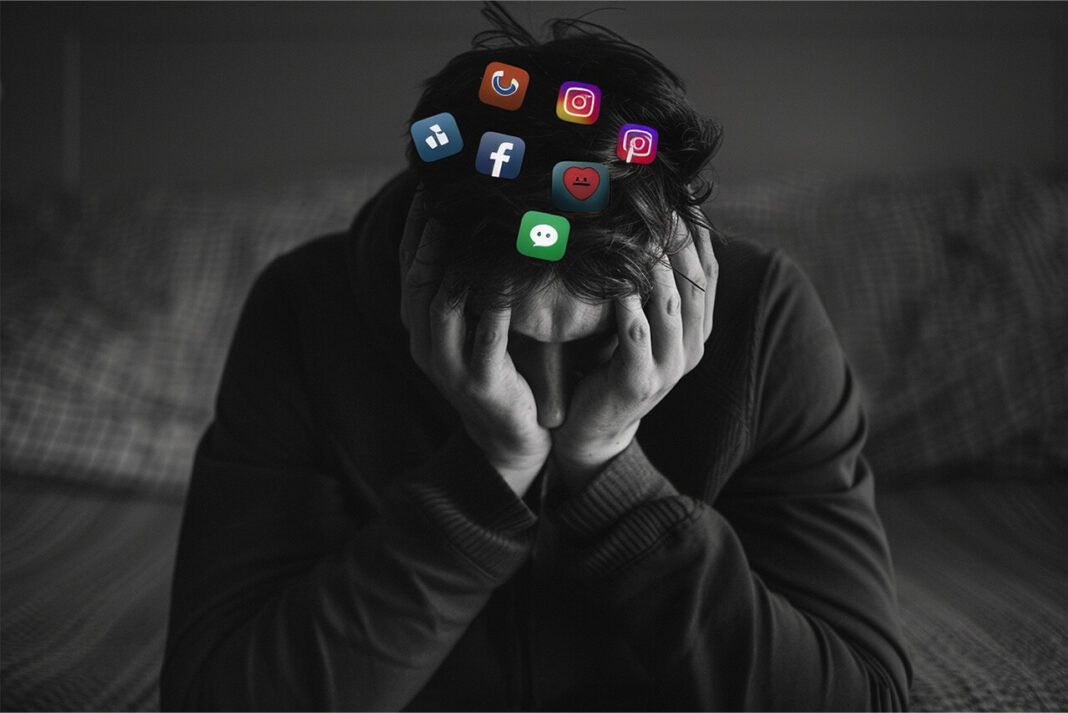

For many young adults, social media is where friendships are maintained, news is consumed, and identity is explored. Yet the same spaces often carry a background hum of worry. Research consistently links heavier or more problematic patterns of social media use with higher levels of anxiety and depressive symptoms, especially in adolescents and emerging adults (Keles et al., 2020; Lee et al., 2022). The connection is not simply about screen time. What people do on platforms, when they do it, and how many platforms they juggle all matter (Primack et al., 2017).
How Social Media Fuels Worry
One pathway is social comparison. Feeds are built from highlight reels. When young adults passively scroll through idealized snapshots, it is easy to conclude that other people are more successful, attractive, or connected. A systematic review found that time spent, passive browsing, emotional investment, and problematic use were each associated with depression, anxiety, or general distress in adolescents, with social comparison and fear of missing out frequently implicated (Keles et al., 2020).
Sleep is another mechanism. Late-night checking keeps the mind alert when it should be winding down. Blue light exposure and the anticipation of new notifications can delay sleep or fragment it, which in turn elevates the next day anxiety and negative mood. Reviews identify sleep disruption as a plausible link between heavier engagement and internalizing symptoms (Keles et al., 2020).
Information overload also plays a role. During the early COVID-19 period, many young adults turned to social media for real-time updates. A meta-analysis of studies conducted during that time found that greater time on social media was associated with higher odds of anxiety and depression, suggesting that heavy exposure to uncertain or threatening content can intensify worry (Lee et al., 2022).
Finally, the breadth of platform use appears important. In a nationally representative U.S. sample of young adults, using a larger number of platforms was independently associated with stronger symptoms of depression and anxiety even after adjusting for total time spent. The pattern was linear and robust, pointing to the stress of constant switching and social multitasking across different online contexts (Primack et al., 2017).
Why the Story Is Not All Negative
Social media is also a social lifeline. Many young adults find support, express emotions, and practice self-disclosure more comfortably online than face to face. Recent work shows that specific features can be helpful, especially for those high in social anxiety. Asynchronicity and reduced nonverbal cues can make conversation feel safer and more controllable, while visual tools such as photos, short videos, and emojis can aid emotional expression. Among adolescents and young adults with higher social anxiety, these features related to greater breadth and depth of online communication, partly through their effects on emotional expression. For those with lower social anxiety, some of the same features related to lower perceived communication quality, which underscores that the impact of social media depends on the user and the context (Angelini & Gini, 2024).
What Helps in Practice
First, protect sleep. Create a buffer between the last scroll and bedtime, charge the phone outside the pillow zone, and turn off push alerts overnight. These small changes target a modifiable mechanism that links heavy use to anxious mood (Keles et al., 2020).
Second, shift from passive to active use. Commenting, messaging close friends, and participating in supportive communities tend to feel better than endless browsing. When a particular account reliably triggers comparison spirals, unfollowing or muting is an act of self-care rather than avoidance (Keles et al., 2020).
Third, set gentle boundaries for time and platform count. During stressful periods, higher use tracks with higher odds of anxiety and depression, so time windows and app limits can keep behavior aligned with values for the day. Reducing platform hopping may lower cognitive load and social multitasking demands (Primack et al., 2017; Lee et al., 2022).
Fourth, use features intentionally. If face-to-face disclosure feels overwhelming, try text-first channels or asynchronous formats to build confidence. Use visual tools to express feelings when words are hard to find. If these features leave you feeling disconnected, experiment with richer cue environments like voice notes or video calls instead (Angelini & Gini, 2024).
Fifth, ask for help when worry feels stuck. Clinicians can screen for problematic use and sleep problems as part of routine care and offer brief psychoeducation about how late-night use can amplify anxiety. Small, concrete behavioral plans often beat drastic digital detoxes.
Conclusion
Social media is neither a simple poison nor a simple cure. For many young adults it offers real connection and creative expression while also amplifying comparison, disrupting sleep, and flooding attention with uncertainty. Evidence suggests that how you use it matters as much as how much you use it. By protecting sleep, favoring active and supportive interactions, trimming platform overload, and choosing features that match your needs, you can tilt the balance toward well-being without stepping away from the digital world entirely (Keles et al., 2020; Primack et al., 2017; Lee et al., 2022; Angelini & Gini, 2024).