



Years Contained In A Locked Room: The Psychodynamic Echoes Of A Single Space
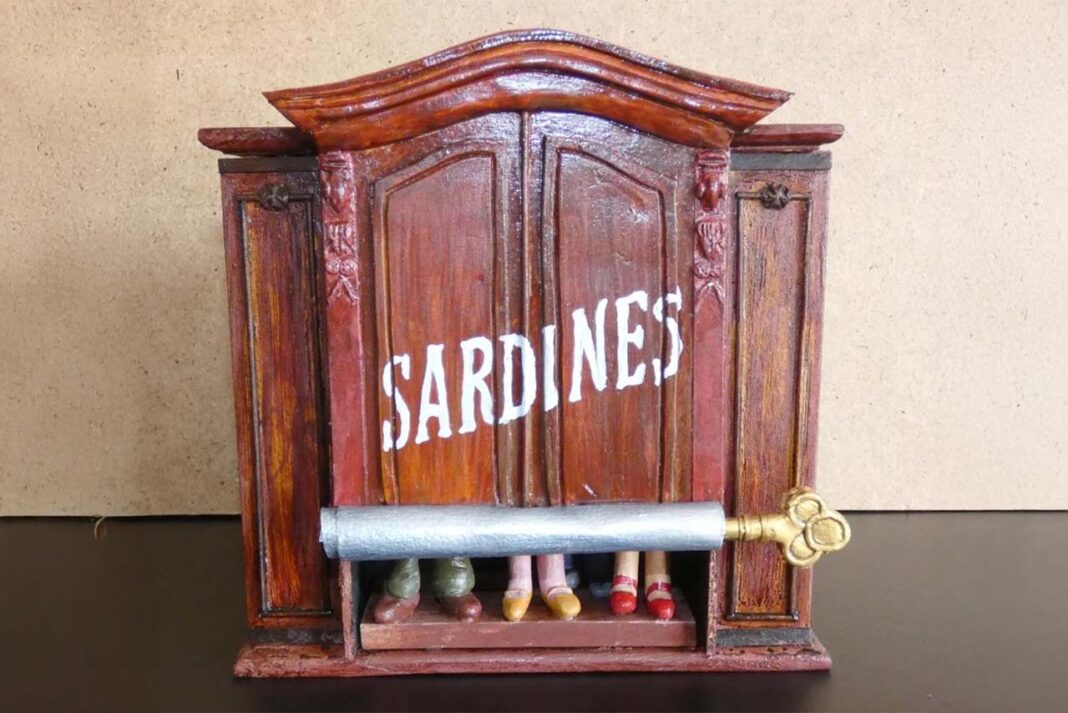
Inside No. 9’s episode “Sardiness” doesn’t merely tell a thriller about adults trapped inside a wardrobe; it also portrays, from a psychoanalytic perspective, a family squeezed into a shared unconscious, symbolized by the confined space. In psychoanalytic theory, tight and closed spaces are among the strongest metaphors for the ego’s sense of “being trapped” and for “repressed material.” As Freud (1915) notes, psychic contents that cannot be expelled are held in a sealed-off inner chamber, not unlike a locked room. Similarly, as each character enters the wardrobe, we see childhood defenses resurfacing: jokes used to escape shame, inexplicable tension, sudden freezes in communication…
Winnicott’s (1960) concept of the false self becomes increasingly visible as the characters grow more cramped inside the wardrobe. Social masks begin to dissolve, and the distance between one’s outer self and inner experience narrows, creating a vulnerable psychological intimacy. As family members gather in this confined space, group dynamics take on an uncanny tone. Freud’s (1919) definition of the Unheimlich—the familiar becoming frightening—is almost theatrically embodied here. The rhythm of the episode unfolds precisely through the timing of this unraveling: who will speak, who will go silent, who will crack a joke to diffuse tension, and which truth will escape unnoticed.
The Silent Organization Of Intergenerational Trauma
“Sardiness” skillfully depicts how, within a family system, long-standing trauma that is “unknown yet known” is preserved and reenacted. From Bowen’s (1980) family systems perspective, the wardrobe is not merely a setting but a room where emotional burdens passed across generations are compressed. Each character’s defensive stance around the childhood abuse incident becomes evident:
-
Denial: “Such things don’t happen in our family” — a continuation of familial silence.
-
Adaptation: Laughter and smiles used to normalize the tragic event.
-
Avoidance: Characters shifting positions inside the wardrobe during every exchange.
-
Loyalty Conflict: Cousins trying to protect the family while carrying the weight of the truth.
This demonstrates that abuse does not remain confined to the perpetrator and victim; it shapes the unconscious structure of the entire family. In the literature, intrafamilial sexual trauma is often protected through a “secret pact” (Ferenczi, 1933). In my clinical practice, the logic of “If no one says anything, nothing has happened” is a familiar pattern revealing how trauma is normalized within the family psyche. The growing discomfort toward the end of the episode represents the “return of the repressed,” long kept behind closed doors.
The Silence That Breaks At The End Of The Room
The emotional impact of the episode’s final revelation is not merely the exposure of a crime. On a deeper level, it is the surfacing of a long-delayed psychic reckoning that has been locked away for years. Clinically speaking, this confrontation is not a “catharsis”—because catharsis requires conscious acknowledgment. Instead, what bursts forth is a collective scream carried silently by those who have long borne an invisible weight. It reflects the kind of rupture Kaës (2009) describes in the “shared psychic space of collective trauma”: everyone knows, yet no one speaks; and the weight of speaking fills the entire room.
The wardrobe closes, years open; each person walks away with their share of the burden. The silence around denied traumas spills out from the narrow walls of the space and expands into a much larger room in the viewer’s mind.
References
Bowen, M. (1980). Family Therapy in Clinical Practice.
Ferenczi, S. (1933). Confusion of Tongues Between Adults and the Child.
Freud, S. (1915). Repression.
Freud, S. (1919). The Uncanny.
Kaës, R. (2009). Shared Psychic Spaces and Intergenerational Transmission.
Winnicott, D. W. (1960). Ego Distortion in Terms of True and False Self.