


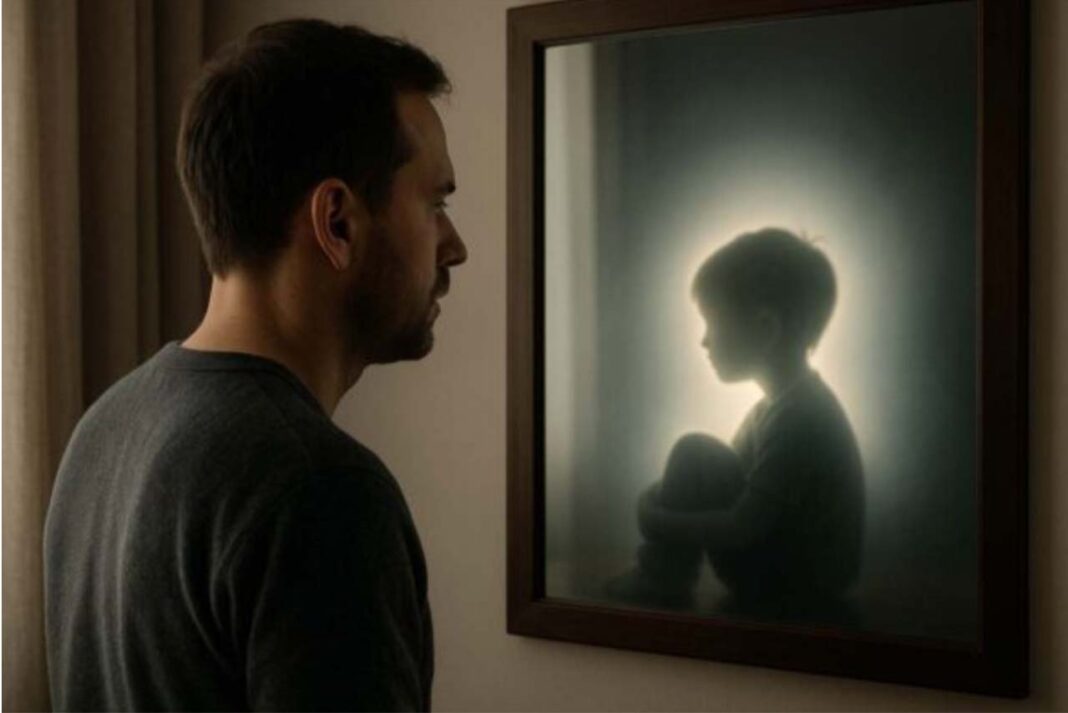

Sometimes, especially during conversations with our parents or immediate family, our reactions can be far more intense than the situation seems to warrant. Our voices rise, our tone hardens, our gestures change. Even during a calm dinner, a seemingly trivial disagreement can make us suddenly snap, raising our voice or responding with unexpected anger. What we say—or how we react in that moment—often surprises us afterward. Perhaps it’s a glance, a fleeting remark, or an old pattern being triggered. A feeling that’s been quietly buried for years surfaces without warning. And yet, the question remains: is this anger truly from today, or is it something older speaking through us?
The Roots Of Anger
Sometimes, especially during conversations with our parents or immediate family, our reactions can be far more intense than the situation seems to warrant. Our voices rise, our tone hardens, our gestures change. Even during a calm dinner, a seemingly trivial disagreement can make us suddenly snap, raising our voice or responding with unexpected anger. What we say—or how we react in the moment—often surprises us afterward. Perhaps it’s a glance, a fleeting remark, or an old pattern being triggered. A feeling that’s been quietly buried for years surfaces without warning. And yet, the question remains: is this anger truly from today, or is it something older speaking through us?
Who Gets The Brunt
Unresolved feelings often find their outlet in the people we are closest to—most frequently, our parents. Why? Because the very first lessons on recognizing, managing, and expressing emotions happen within the family. In households where feelings are acknowledged, discussed, and accepted, children learn to process both joy and frustration in healthy ways. But when emotions are suppressed, criticized, or ignored, they remain unprocessed.
If as a child we were scolded or punished for raising our voices, that same sensation of fear, guilt, or shame reappears when we experience anger as adults. The guilt that follows our anger doesn’t just belong to today—it belongs to those long-learned rules. Like any suppressed feeling, anger finds a way to surface, often abruptly, and frequently toward the people we know most intimately: our parents.
What Follows The Outburst
In families where negative emotions are not accepted, expressing anger rarely brings relief. Instead, guilt and regret usually follow. Thoughts like, “I overreacted,” “I lost control again,” or “I shouldn’t be like this” fill the mind. Yet this internal criticism often belongs not to the present but to the past.
For someone whose feelings were punished or ignored in childhood, anger is never just an emotion—it is tied to guilt and learned associations. The self-directed harshness that often follows is less about the anger itself and more about the messages we internalized long ago.
Anger Related Conditional Love
Much of this pattern stems from experiences of conditional love. In families where love depended on calmness, compliance, or “not causing trouble,” emotions were no longer experiences to be expressed—they became risks to be managed. As adults, when anger arises, it is rarely just about the present moment. It carries with it the fear of losing the love we depend on.
The guilt that follows anger is often a reflection of this early conditioning. Anger, then, is not merely a feeling—it is a signal from the past, reminding us of boundaries crossed, unmet needs, and invisible wounds.
Awareness Of Anger
Recognizing our anger—even when small, ordinarily unremarkable events provoke disproportionately strong reactions—is the first step toward understanding it. Awareness allows us to observe the emotion without immediately reacting, to trace its roots to both present circumstances and past experiences.
Anger often signals that a boundary has been crossed, a need has gone unseen, or an old wound has been touched. Paying attention to it softens the self-criticism that usually follows and helps cultivate a more compassionate relationship with ourselves.
Especially when anger is directed at our parents, examining its origins can provide insight and relief. Because while it may feel like today’s conversation triggered our outburst, healing begins not by blaming the emotion, but by listening to it.