


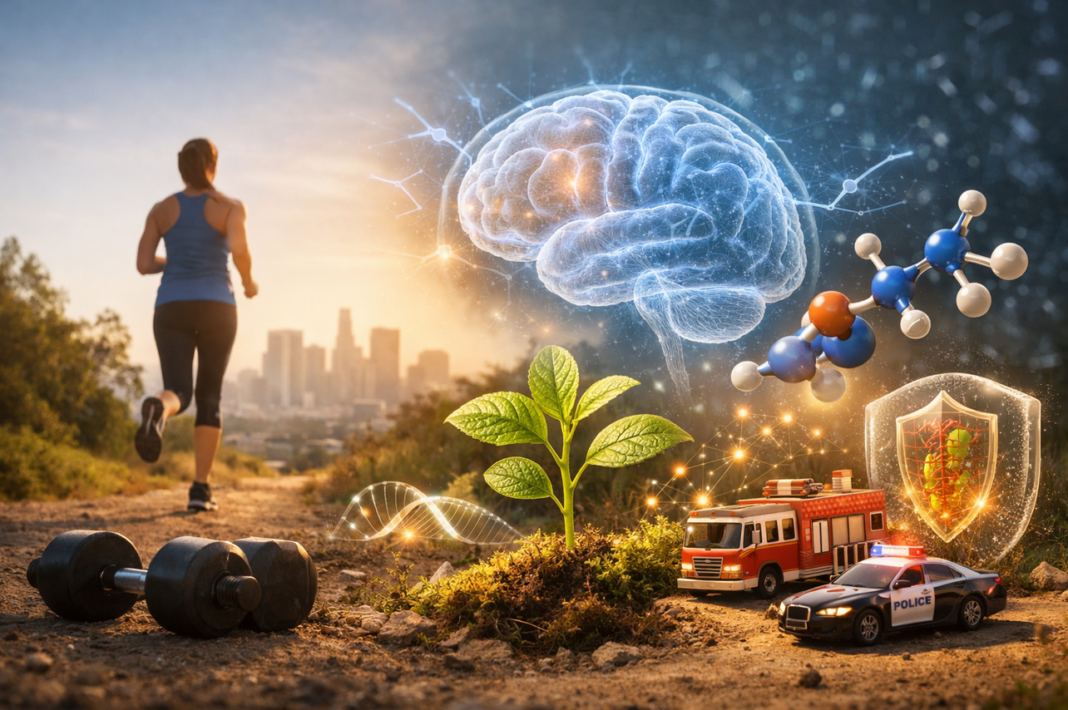

Although pharmacological methods are generally used in the treatment of depression today, there is a natural antidepressant in our bodies waiting to be activated: Exercise. As modern psychology accepts, this situation arises from the mutual relationship between body and mind. Exercise contributes to the body biologically, psychologically, and socially. For instance, it regulates our hormones biologically, increases our sense of self-efficacy and self-confidence psychologically, and encourages social bonding. This multi-dimensional effect of exercise emerges as one of the most effective natural methods to break the “cycle of inactivity” created by depression and anxiety.
Brain Fertilizer (BDNF)
BDNF (Brain-Derived Neurotrophic Factor), also known as brain fertilizer, is at the center of neuropsychological effects of exercise. BDNF is a type of protein found in the brain and the peripheral nervous system. It is called “brain fertilizer” because it keeps neurons alive and enables them to grow. In other words, if we assume the brain is a forest, BDNF is the fertilizer of this forest.
What Does Brain Fertilizer Do And How?
-
Neurogenesis (New Cell Production): In its simplest definition, it is the process of forming new neurons. In adults, this occurs mainly in the hippocampus (the center for learning, memory, and emotion). If we think of the brain as a garden, neurogenesis represents the new saplings planted in this garden.
-
Neuroplasticity (Flexibility): This is the brain’s ability to reshape itself based on new experiences and environmental changes. If we think of the brain as a smartphone, neuroplasticity can be seen as software updates provided over time to meet the user’s needs.
-
Neuroprotection (Protection): This covers all biological strategies applied to prevent neurons in the brain from being damaged and to help them survive. If we think of the brain as a city, neuroprotection is the police or fire departments established to ensure the city’s security.
Physical activity is a “production signal” for the brain. Through hormones secreted from the muscles during physical activity, the brain activates the BDNF gene. In this process, the brain renews itself by activating new cell production, neuroplasticity, and protection mechanisms. A comprehensive review (Cotman et al., 2007) showed that regular physical activity increases BDNF activation, which enhances the brain’s resilience to stress factors and preserves neuroplasticity. This suggests that exercise does not just create a temporary effect but makes the brain more resilient.
A Natural Antidepressant: Serotonin
Exercise does not only intervene physically in the brain; it also intervenes neurochemically. These neurochemical interventions are carried out through hormones. One of the most important hormones in this process is serotonin. Serotonin is a “happiness hormone” produced by the body itself. It is one of the most important factors regulating human mood. 90% of the serotonin produced by the human body is found in the gut. However, this serotonin in the bloodstream cannot pass into the brain because of the Blood-Brain Barrier. Since serotonin has a large structure, this barrier is a major obstacle.
At this point, an amino acid called Tryptophan, the raw material of serotonin, comes into play. Tryptophan is small enough to cross the barrier, but it moves slowly due to the “traffic” created by other large-chain amino acids. This is where exercise acts as a “traffic cop.” While exercising, the amino acids that tryptophan competes with are sent to the muscles as an energy source. As a result, the traffic at the Blood-Brain Barrier decreases, and tryptophan, which can now easily enter the brain, is converted into serotonin. This is the most concrete proof of why people feel better after exercising. Exercise does not provide an external chemical; it opens the way for the brain to produce its own happiness hormone.
The most common explanations for depression see decreased serotonin levels in the brain as the root cause of symptoms. Today, the most common intervention in modern medicine is SSRI (Selective Serotonin Reuptake Inhibitors) drugs, which aim to keep more hormones in the synapses by preventing the reabsorption of serotonin. In fact, exercise naturally achieves the result that SSRI drugs aim for in depression treatment (Blumenthal et al., 1999). In the SMILE (Standard Medical Intervention and Long-term Exercise) study conducted by Blumenthal and colleagues, 156 patients diagnosed with Major Depressive Disorder were divided into three groups: Exercise Only, Medication Only, and a Combination Group. At the end of the study, a similar rate of improvement (approximately 60-70%) was observed in all three groups. Furthermore, in the follow-up after the study, it was found that the relapse rate for the exercise-only group was very low. This study proves the importance of exercise in treating depression.
Exercise As A Stress Factor
Although exercise seems like a miracle, its effect depends on a dose-response relationship. This means that the benefit of the exercise increases as the exercise is at/near the optimal level. Physical activity naturally creates stress in the body. This stress is caused by the brain secreting the hormone cortisol as a result of strained muscles and increased heart rate. A short-term increase in cortisol is important for the body to adapt to exercise and produce the necessary energy. However, high-intensity exercise makes this cortisol increase chronic. A study by Sapolsky (1996) revealed that chronic high levels of cortisol lead to the indirect suppression of BDNF production, the brain’s most important growth factor. According to that, it can be argued that exercise that is not kept at an optimal level may not show the expected antidepressant effect.
Exercise Maintained At An Optimal Level
We should see exercise as an investment in both our body and mind, not just a way to build muscle. This is because moving helps the brain renew itself and releases hormones that balance our mood. The “natural antidepressant” effect of exercise shows us why regular movement is so important. However, there is a catch: to get these benefits, exercise must be done at an optimal level—meaning not too little, but also not so much that it exhausts the body. Modern psychology now suggests that physical activity shouldn’t just be an “extra” tip. Instead, it should be a main part of treatment for mental health.