


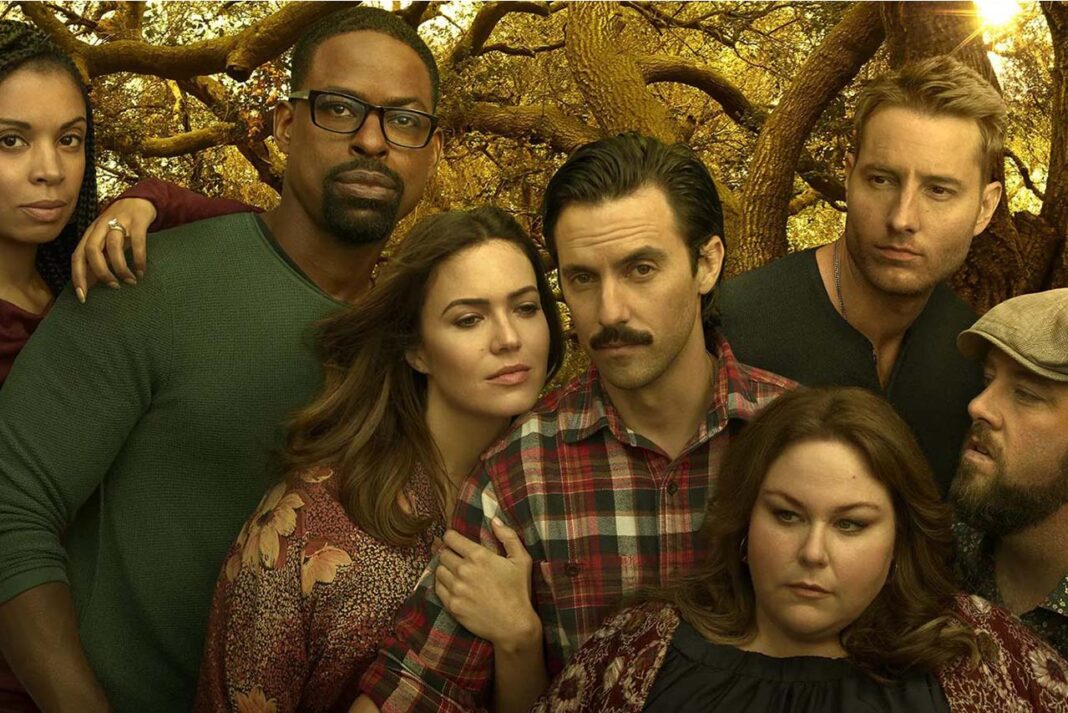

Some series are watched; some are felt. This Is Us is one of those rare stories that touches the core of a person, reminds us of old wounds, yet at the same time wraps us in a sense of comfort. In every episode, as we confront a different emotion, we actually find ourselves looking more closely at who we are.
This series is a drama centered on three children born on the same day and their parents. While Jack and Rebecca are expecting triplets, one of the babies dies at birth. At the same time, an abandoned baby is brought to the hospital. As the doctor delivers this painful news, he suggests to Jack that they adopt the newborn, saying: “You can take the sourest lemon life has to offer and turn it into something resembling lemonade. You can do this, and you can leave the hospital with the three babies you planned to go home with.” As we see in the series, Jack and Rebecca truly do turn the sourest lemons in the world into a perfect lemonade and leave the hospital with three babies: Kevin, Kate, and Randall.
Family Dynamics
Jack and Rebecca’s experience of parenthood, although woven with mistakes, gains meaning through intention and effort. Love is not presented here as a magical force that fixes everything; rather, it appears as a form of connection that exists alongside vulnerability—sometimes wounding, but more often healing. In this respect, the series questions idealized notions of family and makes visible the real-life counterpart of flawed love.
As for the siblings, the conflicts Kevin, Kate, and Randall experience in adulthood carry the traces of the forms of love they encountered in childhood. Each character expresses their need to be loved in different ways, yet all face the same fundamental question: Is it possible to be accepted with one’s flaws? Just as we do in real life. This Is Us does not give a clear answer to this question; instead, it realistically shows that love often takes shape amid uncertainties and contradictions. Guided by the idea that “every story that brings tears to our eyes is also a bit of our own story,” the series invites viewers to ask similar questions of themselves and draws them into the storyline—making it deeply impactful.
The Perfection Created By Flaws
While watching Jack and Rebecca’s youth, their marriage, and how they raised their children, we also witness the children’s adult lives—their searches for identity, traumas, relationships, and coping efforts. Under the umbrella of the family theme, the series addresses not only parenthood but also universal issues such as loss, addiction, body image, race, and love. The series reminds the viewer of this:
Everyone has a story, and contrary to what is often thought, that story is not meaningful because it is perfect, but because of the vulnerabilities and mistakes that make us who we are.
Loss And Grief
One of the central points of the series is Jack’s loss. This Is Us quietly shows—just as in real life—that loss does not simply happen and end in a moment; the grieving process stretches across years and countless memories, and love never promises us perfection. By placing loss and grief at its center, the series affects us through everyday yet heart-touching events, revealing that pain in life often does not shout but usually settles in quietly.
What we call loss is not limited to death alone. Unspoken words, unfinished relationships, or missed possibilities are also forms of loss. Jack’s death leaves a deep mark on everyone, and each person lives with that mark differently. We see that grief is not so much a process as it is a state—sometimes calm, sometimes angry—and sometimes a feeling that reminds us of itself at unexpected moments. Through this, we understand that grief does not work the same way for everyone and that there is no single “correct” way to grieve. The mind finds its own ways to cope with pain and loss.
Jack is not a perfect father; Rebecca is not a perfect mother. Love is not idealized in the series; it is nourished by opposing emotions—such as being able to feel both love and resentment toward someone at the same time. It shows that love is not flawless and that, just like in real life, people accept and love one another with their mistakes.
The Memory It Leaves Us With
When we look at the series as a whole, perhaps the most striking aspect is how it shows that love does not eliminate loss but makes it possible to live with it. We see that grief changes shape and that pain, rather than disappearing over time, becomes more bearable. Our memories, the stories we tell, and small moments help lighten the burden.
In the end, rather than giving us a life lesson, the series reflects the fact that life itself is flawed, that people can be hurt, and that loss is inevitable. Perhaps the real issue is not escaping pain, but learning to live with it—and being able to see not perfection itself, but the perfection carried within flawed love