


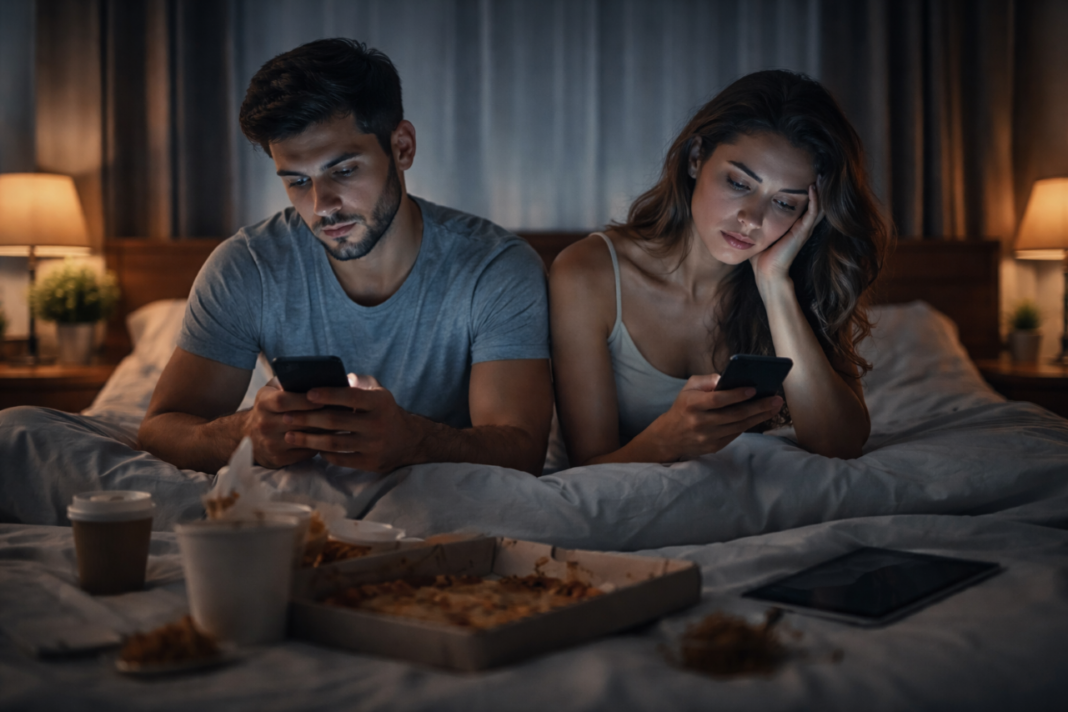

From the pile of notifications on the phone we open our eyes to in the morning until the food we order when we return home in the evening, our lives proceed within a cycle of consumption culture. To possess quickly and consume just as fast. Today, consumption has become a fundamental condition of existence; people feel that they are living as they consume and display it to others. In other words, in the modern world, humans define their existence through objects; consumption has become an identity construction and a status symbol. This consumption culture, rather than liberating the individual, isolates them within crowds and turns them into an object of the system.
No one spends time repairing a broken radio, a torn shirt, or worn-out shoes anymore. Because reaching the new is more effortless, and there are too many options. This effortless, multi-option, fast consumption state has, inevitably, manifested itself in today’s relationships as well.
Consumption Culture And Modern Relationships
People no longer invest in a single person as they once did. They do not write love letters, they do not strive to build deep relationships, they do not want to collect memories, and they do not value their partner in the same way. Instead, they turn to instant excitement and disposable relationships. With social media, relationships have become a displayed image, and with dating apps, people “swipe” as if they are examining a catalogue in a digital marketplace.
Consumption culture has restructured romantic relationships according to market logic. The constant swiping, the search for “better,” and the urge to respond to every stimulus create emotional fatigue, superficiality, and fear of attachment. The anxiety of “What if there is someone better?” feeds commitment avoidance and makes relationships fragile. Partners can easily give up on each other under this mindset.
At the same time, this anxiety undermines satisfaction within the relationship. The individual remains constantly alert, unable to relax into emotional security. The relationship ceases to be an enduring bond and is instead perceived as an easily cancellable and replaceable contract.
The Dopamine Trap And Liquid Bonds
The inner void and loneliness that cannot be filled through consumption push the individual to constantly seek new emotional stimuli—this is the dopamine trap. In modern relationships, the first excitement, a new notification, or a new match triggers dopamine release in the brain. However, this dopamine depletes rapidly.
When the excitement fades, people believe they have “consumed” the relationship and move on to a new novelty. In such an environment of uncertainty, deep bonds such as love are replaced by liquid bonds—connections that are easily formed and abandoned at the same speed.
Micro-Cheating: Emotional Consumption Without Contact
Consumption culture has also given rise to the concept of micro-cheating by blurring the boundaries of infidelity. Micro-cheating does not necessarily involve physical contact; instead, it represents a form of emotional energy theft—emotional snack consumption.
Secretly messaging an ex, stalking their social media account, or hiding one’s relationship status allows the individual to receive external validation and consume excitement. At the core of this behavior lies the redirection of emotional investment away from the partner toward a virtual or external figure.
Because this mindset codes the other person as a need-fulfilling object rather than a human being, individuals engaging in micro-cheating often remain indifferent to the emotional damage they cause. They avoid responsibility for the insecurity and rupture they create.
Approval Seeking And Emotional Immaturity
Underlying these behaviors is often a deep sense of inadequacy. Individuals engaging in constant validation-seeking determine their self-worth not from an internal source, but from external feedback—a message, a reaction, a match. While engaging in these behaviors, they continue to test their value in the “market.” Since their partner’s love appears guaranteed, it loses its perceived value.
Each new flirtation temporarily numbs feelings of inadequacy. This cycle resembles emotional addiction: dopamine decreases, emptiness emerges, and a new source of excitement is sought. Emotional immaturity becomes visible at this point.
Why Real Love Feels Threatening
Real love requires effort, patience, and crisis management—much like repairing a broken radio or mending a torn shirt. Individuals trapped in consumption logic avoid this effort. They desire only the free dopamine of the honeymoon phase.
Deepening a relationship feels frightening because depth requires self-confrontation. These individuals prefer to remain on the surface, consuming superficial connections while fleeing from their inner void. The endless search for excitement does not stem from a lack of passion for their partner, but from an attempt to fill a profound internal emptiness with external approval.
Consumption society sells the illusion that this emptiness can be filled by “a new match.” Yet every new escapade represents a further erosion of personal integrity. Real love is not a consumption object; it is a production process.
From Patience To Speed: The Cost Of Consumption
Accepting a person with all their imperfections has been replaced by the search for the most flawless option through endless comparison. Speed has replaced patience. As a result, people feel increasingly disconnected while being more digitally connected than ever before.
Why do individuals feel lonelier in an era of constant connectivity? Are we becoming more isolated as we consume more?
Theoretical analyses and empirical data provide a strong yes to this question. The exit from this loneliness-producing cycle is only possible when consumption ceases to be the primary mode of existence.