


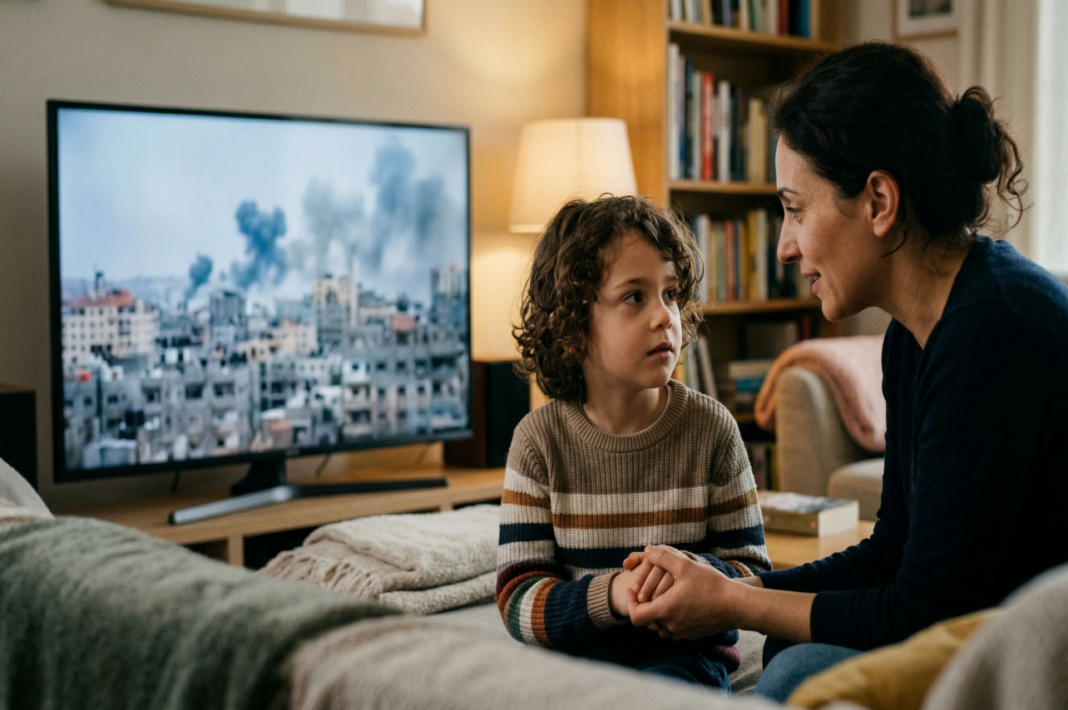

In this article, I have compiled for you, our valued readers, how children make sense of situations such as wars, terrorist incidents, etc. and how we should approach them when explaining such situations. Enjoy your reading.
When we look at world history today, we see that wars begin not only on battlefields but also in minds. The images of war we see on our screens penetrate not only adults’ but also children’s worlds. Television news, social media videos, short-form content, and even some digital games can expose children to violence at a very early age. But how do children make sense of these images? How do scenes of explosions, conflict, or people in pain take hold in children’s minds? These questions are not only current but also highly critical from a child psychology perspective.
The Emotional Processing Of War Images
Children’s ways of making sense of the world differ from those of adults. An adult may interpret images of war within political, historical, or social contexts. However, children have not yet developed the ability to process these complex contexts. For them, images often directly translate into an emotional experience. Therefore, constant exposure to violent images on screens can affect children’s perception of safety, their view of the world, and their understanding of interpersonal relationships.
Social Learning Theory and Observation
At this point, the “Social Learning Theory,” which holds an important place in psychology, offers a significant explanation. According to this theory put forward by Albert Bandura, people learn a significant portion of their behavior through observation. Children model not only what is told to them, but also the behaviors they observe in their environment. If a child constantly encounters images showing that problems are solved through violence, the concepts of power and resolution may take shape in their mind within this framework. Of course, this situation alone does not mean that a child will exhibit violent behavior in the future; however, it can pave the way for the normalization of violence.
The Risk Of Desensitization and Empathy
Another significant effect of constant exposure to violent images is desensitization. Psychological research shows that people tend to become less emotionally responsive to repeated images of violence over time. While a war scene seen for the first time may provoke intense fear or sadness, this emotional response may diminish when the same type of images are repeatedly shown. This situation poses a significant risk, particularly for children in the developmental process. Because the development of empathy is closely related to the capacity to recognize others’ pain and respond emotionally to it. The constant portrayal of violence as a routine sight may affect the way children understand the pain experienced by others.
Trauma Transmission Across Generations
To understand the impact of war images on children, the concept of “trauma transmission” also needs to be considered. Trauma transmission refers to the ability of traumatic experiences to affect not only the individuals directly exposed to them, but also the people around them and even subsequent generations. Even if children are not directly involved in the war, they can experience an indirect traumatic reaction when they are constantly exposed to images containing fear, panic, and suffering. Especially at young ages, such images can lead to reactions in children such as anxiety, nightmares, perceiving the world as a dangerous place, or separation anxiety.
Collective Memory and Societal Perception
At this point, not only an individual but also a societal dimension comes into play. The wars and conflicts that societies have experienced in the past create a “collective memory” that is passed down from generation to generation. Collective memory refers to societies’ recollection of past suffering, fears, and experiences within a shared narrative. The war images and narratives in the media constantly reproduce this collective memory. As children grow up with these narratives, they learn not only an individual but also a societal perception of violence. Therefore, the way children are exposed to violence is closely related not only to the family environment but also to the cultural and media environment they are in.
The Role Of Parents and Guidance
The role of parents and adults is crucial in this process. It is often not possible to completely shield children from information flows; however, it is possible to help them make sense of the images they see.
-
It is necessary to use language appropriate to the children’s age.
-
Instead of making complex political statements, simple and clear expressions that reinforce trust should be preferred.
-
When a child sees an image related to war, adults can explain that conflicts between countries occur from time to time in the world, but many people are working to resolve these issues.
Consequently, war is not merely a conflict fought on the battlefield; it also leaves its mark on minds and emotions. Images of war that enter our homes through screens may unconsciously affect children’s perception of the world. Therefore, although it is not possible to raise children in a completely sheltered world, it is possible to guide them in how they make sense of the events they see and hear. Because the foundations of peace are laid not only through political agreements but also through the feelings of trust, empathy, and understanding established in children’s minds.