


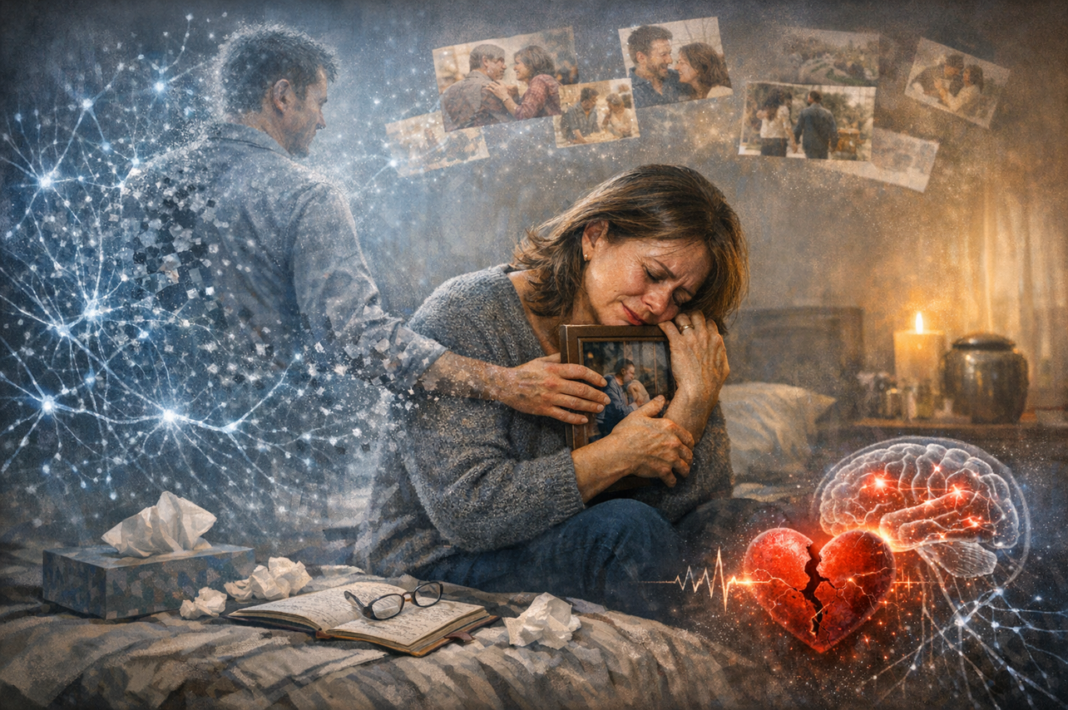

To comprehend the depth of grief, one must first understand the biological and psychological nature of “attachment.” According to John Bowlby’s Attachment Theory, humans have evolved to form intense emotional bonds with others as a means of survival. When we love someone, our brain constructs massiveneural networks dedicated to them. These networks govern our expectations, habits, and sense of security.
When loss occurs, a vast chasm opens between external reality (death) and internal biological preparedness (the urge to attach). The “neural maps” dedicated to that person remain active; the impulse to call out to them upon waking or the fleeting thought that they have arrived when the doorbell rings is a result of this neural inertia. The grieving process is the effort to gradually prune these neural pathways and redirect that energy toward new spheres of life.
Beyond Stages: The Chaotic Dynamics Of Grief
While Elisabeth Kübler-Ross’s “Five Stages” model (Denial, Anger, Bargaining, Depression, Acceptance) is often perceived in popular culture as a linear ladder, from a deep psychological perspective, grief is chaotic and cyclical. An individual may leap back and forth between these stages.
Denial: A temporary psychological anesthesia developed by the mind against a reality too heavy to bear. It is a defense mechanism preventing the fragmentation of the ego.
Anger: A rebellion against the absolute helplessness brought by loss. The individual directs anger toward fate, God, medicine, or sometimes even the deceased for leaving them. This is a distorted reflection of the desire to regain control.
Bargaining: The labyrinth of “what ifs.” The mind seeks refuge in the fantasy that it can escape today’s pain by altering past events.
From Object Loss To Self Loss
In depth psychology, when we lose someone, we experience a dual loss: the external object (the person) and the part of ourselves defined through our relationship with them.
From a psychoanalytic standpoint, the loved one is incorporated into the ego (introjection). An adult who loses a mother loses not only her but also their status as a “child,” their reflection in her eyes, and their safe haven. This is why the bereaved often say, “I feel incomplete” or “A part of me is gone.” This is not a metaphor; it is a psychological reality. The success of mourning lies in grieving that severed part and constructing a new identity element in its place.
Pathological Grief and The Darkness Of Melancholia
The fundamental difference between normal mourning and clinical depression (melancholia) lies in its impact on self-esteem. As Freud noted, in normal mourning, the world looks empty and impoverished; in melancholia, it is the self that feels empty and worthless.
If the relationship with the deceased was highly conflicted or excessively codependent, the grieving process may become blocked. The individual directs unconscious anger toward the deceased back onto themselves. This state, often referred to as “unfinished business,” can cause a person to remain frozen in the same level of pain for years. In pathological grief, the individual cannot symbolize the loss, and the pain effectively calcifies.
A Neurobiological View: The Somatic Face Of Heartbreak
Grief is not solely a mental process; it is a physical collapse. Research shows that the areas of the brain associated with “physical pain” (the anterior cingulate cortex) are hyperactive in those who are grieving. The body processes the absence of a loved one as if it were a physical injury or the loss of a limb. Medical conditions such as “Broken Heart Syndrome” (Takotsubo Cardiomyopathy) provide tangible evidence of grief’s impact on physical heart tissue. The “cognitive fog” experienced during this time results from the brain diverting all glucose and energy toward this massive emotional repair.
The Psychological Function Of Cultural Rituals
Funeral rites and mourning rituals developed throughout human history allow grief to transition from an individual experience to a collective one. Psychologically, rituals serve to “materialize an abstract loss.” Social support prevents the bereaved from detaching from reality and provides a “holding environment” to experience their pain safely. In modern society, viewing grief as an “inefficiency to be quickly overcome” complicates and isolates the individual’s mourning process.
Establishing New Bonds: Continuing Bonds
Older schools of psychology argued that the goal of mourning was “detachment”—to sever ties and forget. However, the modern “Continuing Bonds” theory suggests that healthy grief does not involve completely forgetting the deceased.
Healthy mourning is the transformation of the relationship with the deceased from a physical presence to a symbolic one. Keeping them alive in our memories, our perspective on life, and our internal dialogues is not pathological; it is a healthy adaptation. The person is no longer in the world, but they have become an integral, wise part of our inner world.
Conclusion: The Rediscovery Of Meaning
Grief is not a disease, nor is it a “disorder” that needs to be cured. It is the price of love and a testament to the resilience of the human soul. As Viktor Frankl emphasized, it is possible to find meaning even in the deepest suffering. When the grieving process concludes (though it never truly ends, but merely diminishes in intensity), the individual emerges from the tunnel with a deeper grasp of life’s transience, an increased capacity for empathy, and a recognition of the boundaries of their own existence.