


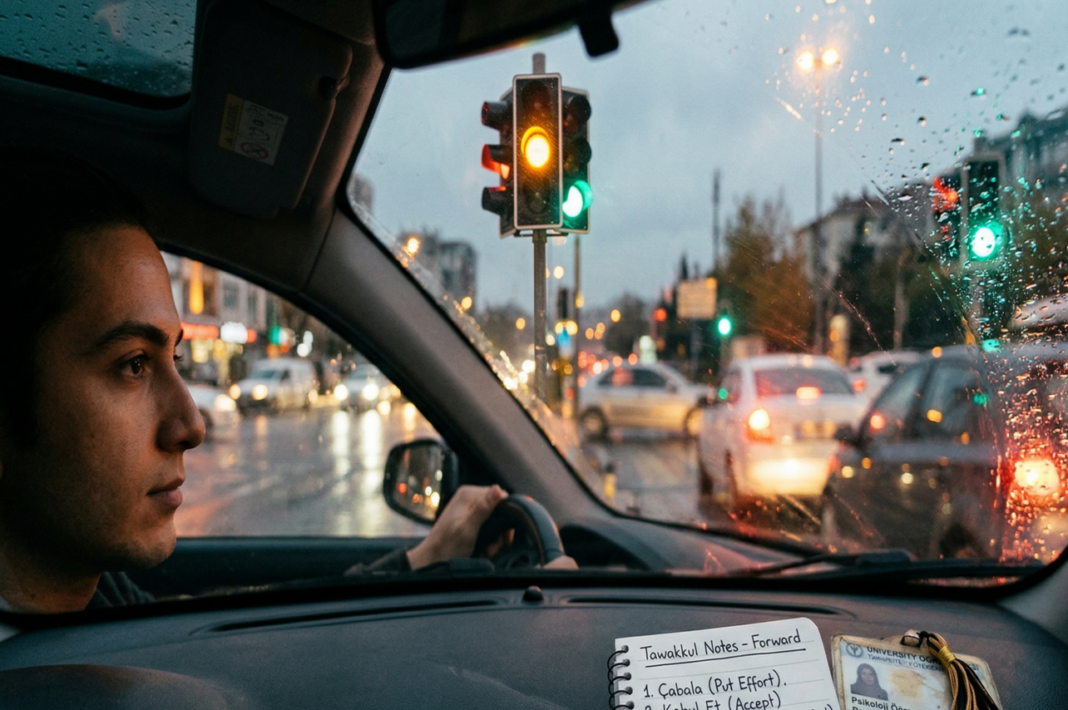

As a psychologist our objective is basically helping. But to be able to help others who are in need, I think everyone had to have a clear mind to produce something in their life or for the world. But because of today’s world, being able to clear or stable is not an option, if you ask me. Is there anyone who could say that they can predict future easily? What will happen next week, Are those investments will be valued or not, What happens next year in terms of the internship that you have to done, How I’m going to find a job and be able to have that capability to feed my self after graduation, Are we in safe because there are bombs in everywhere, Everyone says the water that we have right now is just not enough after 2029, and so on.
The Weight Of Uncertainty
Fears, ideas, anxieties and hopes that we have are hard to walk with them, those are heavy to carry on. So, you may ask what I’m offering, right? Because if I’m writing this text right now, it means I need an opinion to share regarding this. And yes, I had one, but it’s more than an opinion it’s a science-based fact. In the religious literature we define this situation as a tawakkul, even it couldn’t mean the same logic we can translate this term as trust in God. It means moving forward after you do your best, not thinking and worrying about future from today. If I need to give one example about, why did I write this as a science-based fact: Kenneth I. Pargament et al. (2004) found that “religious coping was a significant predictor of changes in mental and physical health over time.”*
Practical Application In Professional Life
How I’m using this tawakkul in my life as an upcoming psychologist who will graduate from BA in 4 months. How can I let it go after I get a lot of rejection for the things that I put an effort into, How can I capable of a lot of responsibilities and internships while I try to make my research thesis and my graduation project? By just trust to Allah. I define this situation as cars and traffic lights in the road; when you driving you may increase or decrease your speed because of the external factors, those factors can be natural or handmade, but it did not bring any difference in your responses. If you notice a child who is running on the main road you just put your feet on the break as soon as possible, you do not think about the reasons, you do not think about the situation and complain about it, you just accept and take the action. In same logic we also accepted the existence so the consequences of the traffic lights; according to the color you will take your action, it’s an accepted fact, right?
Internalizing The Traffic Light Logic
So, we try to apply same procedure in our life. If we’re driving to catch something up but we had so much obstacles and we couldn’t (red light) we just accept this situation and stopped it, when we internalize the situation we understand that we need to prepare ourself again for other possible options (yellow light), then if we see another change about something else (green light) we just simply put an effort on it. In conclusion simplify the situations, decisions and this life rather than complicated.
Reference
*Pargament, K. I., Koenig, H. G., Tarakeshwar, N., & Hahn, J. (2004). Religious coping methods as predictors of psychological, physical and spiritual outcomes among medically ill elderly patients. Journal of Health Psychology, 9(6), 713–730.