



In a social order woven with patriarchal codes, breathing as a woman is a form of resistance. For us, every difficulty has been not just an obstacle but part of an effort to prove our existence. In every job, journey, or sentence, we faced a mechanism of control. Every detail—from the length of our clothes to the hour we went out—was turned into a “justification.” Our safety was sought to be imprisoned within boundaries drawn by others.
The most painful part is being sacrificed by those we trusted most. We became targets of a stranger’s rage or brutality legitimized under the guise of “honor.” They always found a reason for our killers: being out late, being alone at home, or what we wore. They deemed having a boyfriend a crime or used our refusal to submit to family pressure as an excuse. They tried to bury us within these reasons. However, can any justification take away a human’s right to life? What “but” can legitimize the brutal massacre of thousands of women?
As for the women they could not kill, they operated a systematic wheel of oppression. Whenever a woman succeeded, we collided with a mindset that could not reconcile success with womanhood. Belittlement was hidden behind the question, “How can a woman do this?” and insinuations that “a man’s support must be behind her.” We struggled against thousands who did not believe a woman could achieve something through her own labor. Unfortunately, the presence of fellow women joining this mindset deepened our wounds even further.
Today, we must offer self-criticism for women whose right to life was taken or whose lives were enslaved. Perhaps we are all somewhat guilty for remaining spectators. We are responsible because we felt momentary sadness and then retreated to our safe zones, choosing to forget until the pain came closest. We have a debt of conscience to every soul crushed between these gears. I hope they can forgive us. I hope their unfinished screams resonate within our collective voice, shaking the walls of injustice.
I call out to women who are living but “without seeing”: let us not pass by without reading freedom from the pen of Duygu Asena or confronting the reality in Pınar Kür’s Asılacak Kadın. We must understand the rebellion Duygu Asena began by saying, “Woman has no name.” We should know how this brave woman, whose books were placed in plastic bags and declared “obscene,” struggled against censorship simply for saying, “I exist too.” What was imprisoned in those bags was not just a book, but a woman’s free will. To know the women of feminist history is to gain identity. Let us read and become conscious. If there is an unjust order, we have the power to dismantle it.
A world where a woman’s voice resonates resembles a flower garden. Let us no longer be deprived of that garden where truth blends with justice. Let us not allow more flowers to be plucked or our branches to be broken.
I consider it a duty to thank those who opened this path. I thank Ziya Gökalp for introducing “Turkish Feminism” in The Principles of Turkism. Of course, the greatest thanks go to Mustafa Kemal Atatürk, who granted us the right to vote and to be elected decades before many European countries. His revolutionary steps enabled Turkish women to emerge from the darkness of the Middle Ages and become a dignified part of the modern world. If we take our place in school desks, parliaments, or the business world today, it is entirely thanks to his foresight. Our gratitude to you will never end.
To Duygu Asena, who never compromised her courage; to Halide Edip Adıvar, who inspired the masses at the Sultanahmet rally; to Nezihe Muhiddin, who fought for our political rights; to Şirin Tekeli, the pioneer of academic feminism; and to Canan Arın, one of the architects of Mor Çatı, a haven against violence… and greetings to all the beautiful women we have lost.
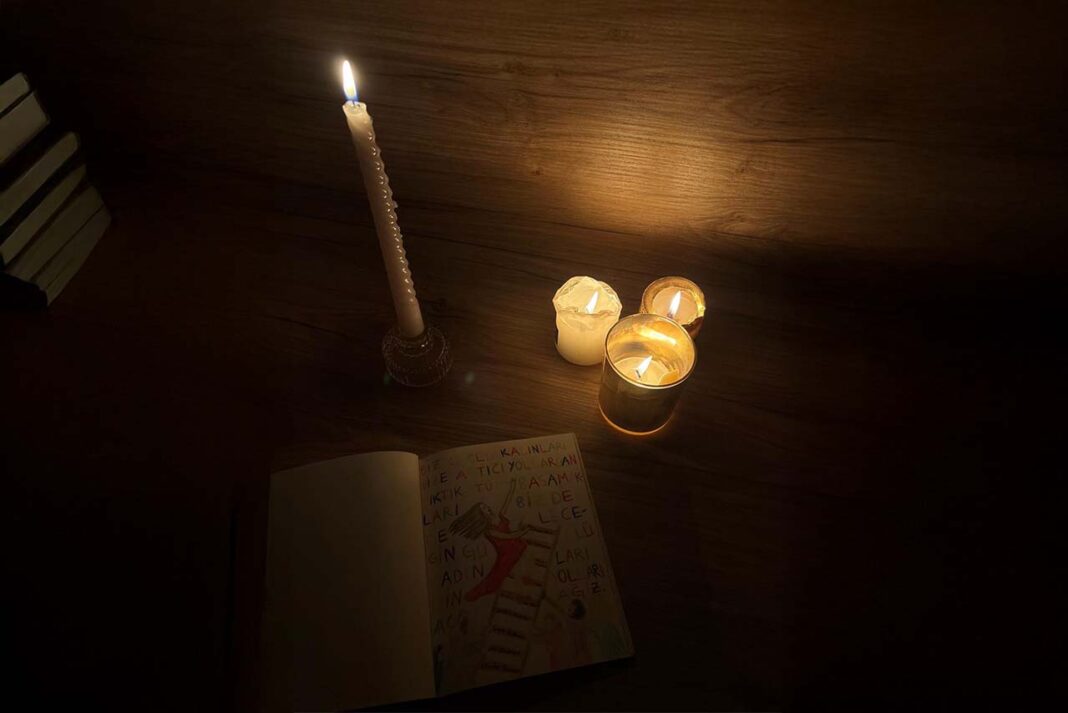
The torch they lit is in our hands today. We will not let it go out; we will continue to walk toward the light.
Happy March 8th, International Women’s Day!