


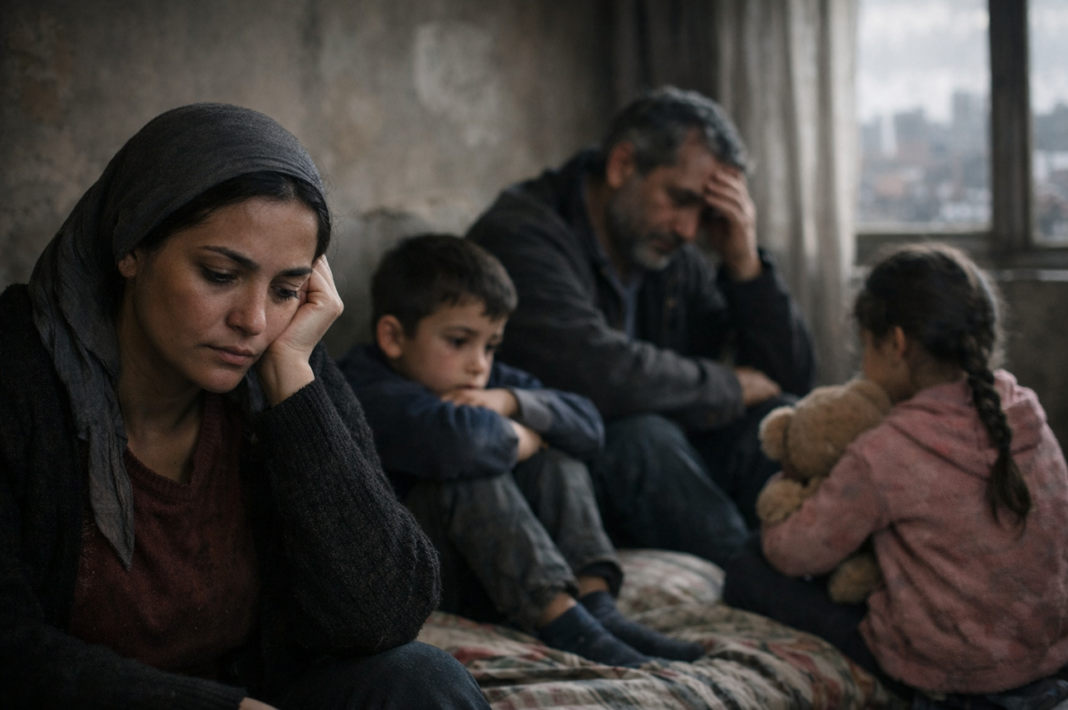

Migration is one of the most profound disruptions an individual can experience in life. It involves leaving behind not only a geographical location, but also an established order, an identity, and often an entire world of meaning. From the perspectives of clinical and developmental psychology, migration is not a single event but a psychological process that unfolds over time. This process reshapes not only where a person lives, but also how they perceive and understand themselves.
In the narratives of individuals who have experienced migration, one recurring theme frequently emerges: the loss of familiarity. The human mind derives a sense of safety largely from repeated experiences. Walking the same streets, hearing the same language, encountering familiar faces—all contribute to psychological continuity. When migration disrupts this continuity, individuals may find themselves not only in an unfamiliar place, but also within an unfamiliar sense of self.
Multiple Loss And The Psychology Of Mourning
In psychological literature, this experience has been conceptualized as multiple loss, as what is lost extends far beyond physical space to include social roles, status, language, and expectations for the future. In fieldwork with migrant populations, one of the most commonly observed phenomena is the insufficient mourning of these losses. Migrants often feel compelled to remain “strong.” Survival, caring for children, and establishing a new life become immediate priorities. This enforced functionality can result in the suspension of emotional experience. As trauma theories emphasize, emotions that are suppressed or postponed do not disappear; they continue to exist in quieter and deeper forms.
Family Dynamics And Developmental Impact
The psychological impact of migration becomes even more complex within the family system. Although family members share the same migratory experience, they do not necessarily interpret or process it in the same way. For parents, migration often entails a heightened sense of loss and responsibility, whereas for children, uncertainty and identity confusion tend to come to the forefront. It is frequently observed that children become aware of their parents’ emotional burden and attempt to carry it themselves. This dynamic can push children’s developmental needs into the background and lead to signs of premature maturity.
Clinical observations and research on migrant children indicate that adaptation difficulties do not always manifest behaviorally. Some children become quiet and choose invisibility; others display excessive compliance in an effort to meet external expectations. What these responses share is the child’s tendency to suppress their inner emotional world. From a developmental psychology perspective, such patterns may have long-term effects on self-concept and emotional regulation capacities.
The Invisible Burden On Migrant Women
For women, migration often carries an invisible psychological burden. Many migrant women attempt to cope simultaneously with their own losses and the emotional needs of their families. Motherhood, partnership, and employment are all redefined within new cultural expectations. The exhaustion experienced during this process frequently presents as symptoms of depression or anxiety, yet these reactions are often framed as individual pathologies. When evaluated contextually, however, they represent understandable psychological responses to the demands of adaptation.
Identity, In-Betweenness, And Cultural Dislocation
One of the domains most profoundly affected by migration is identity. Identity is not solely an individual construct; it is a dynamic process shaped through social relationships and cultural context. Over time, migrants may experience themselves as existing “between two worlds.” Feeling disconnected from the place they left while not fully accepted in the place they arrive can create a psychological state of in-betweenness. If unaddressed over the long term, this state may deepen feelings of alienation and worthlessness.
Language, in this context, becomes more than a tool of communication; it forms a psychological foundation. The inability to express emotions in one’s native language can create a sense of internal disconnection for many migrants. Clinical studies indicate that psychological well-being is stronger when individuals are able to preserve their mother tongue and express emotions through it. A person feels most deeply connected to themselves when their emotions can be carried in their own language.
Resilience And The Potential For Transformation
Despite its challenges, migration is not solely an experience of injury; it also contains the potential for transformation. Research on psychological resilience demonstrates that, under appropriate support conditions, migration can enhance individual flexibility. Resilience is not the absence of pain, but the capacity to construct meaning despite suffering. The rebuilding of social connections, the ability to narrate one’s life story, and the establishment of small routines that provide continuity are fundamental elements of this process.
Reducing migrants to categories of either “victims” or “successfully adapted individuals” impoverishes psychological understanding. The human psyche extends far beyond such binaries. The same individual may be both vulnerable and strong, may have experienced profound loss while continuing to live. One of psychology’s most valuable contributions lies in acknowledging that these contradictory states can coexist.
Migration As An Ongoing Journey
Ultimately, migration is not a destination reached, but a process that is carried. Individuals bring with them not only their bodies, but also their pasts, relationships, and unresolved emotions. Therefore, working with migration involves more than facilitating adaptation; it requires making the psychological meaning of lived experience visible. Healing becomes possible not through forgetting, but through having one’s story heard and recognized. Only then can a person truly settle into a new place.
Source
Akhtar, S. (2011). Immigration and identity: Turmoil, treatment, and transformation. Jason Aronson.
American Psychological Association. (2010). Resilience and recovery after trauma. APA.
Berry, J. W. (1997). Immigration, acculturation, and adaptation. Applied Psychology: An International Review, 46(1), 5–34. https://doi.org/10.1111/j.1464-0597.1997.tb01087.x
Boss, P. (2006). Loss, trauma, and resilience: Therapeutic work with ambiguous loss. W. W. Norton & Company.
Bronfenbrenner, U. (1979). The ecology of human development: Experiments by nature and design. Harvard University Press.
Cummins, J. (2001). Bilingual children’s mother tongue: Why is it important for education? University of Toronto Press.
Masten, A. S. (2014). Ordinary magic: Resilience in development. Guilford Press.
Papadopoulos, R. K. (2007). Refugees, trauma and adversity-activated development. European Journal of Psychotherapy & Counselling, 9(3), 301–312. https://doi.org/10.1080/13642530701496930
van der Kolk, B. A. (2014). The body keeps the score: Brain, mind, and body in the healing of trauma. Viking.