



Introduction: The Fine Line Between Hanker and Desire
Hanker is a concept that describes how a passion, fueled by a person’s past, desires, and unfulfilled wishes, constantly transforms into more desire, ultimately leading to violence and destruction, or, conversely, a process of self-discovery (Barbara Taylor). According to Schopenhauer, these desires, which have an end and originate from lack, carry the essence of life. A feeling of inadequacy nourishes desires. In Fernando Pessoa’s definition of “suffering without suffering,” hanker is a feeling that brings to the surface the repressed aspects of the unconscious self, trapped between echoes of the past and unfulfilled desires. At this point, psychoanalytic theories, particularly Jung’s concept of the shadow, provide the clearest expression of the conflict between the conscious self and unconscious desires, as well as how these desires and longings affect people. The shadow is a symbol of a person’s repressed or rejected aspects, and true desires are only satisfied when these aspects are confronted; postponing satisfaction perpetuates hankering.
ID: Peter Shaffer, Equus
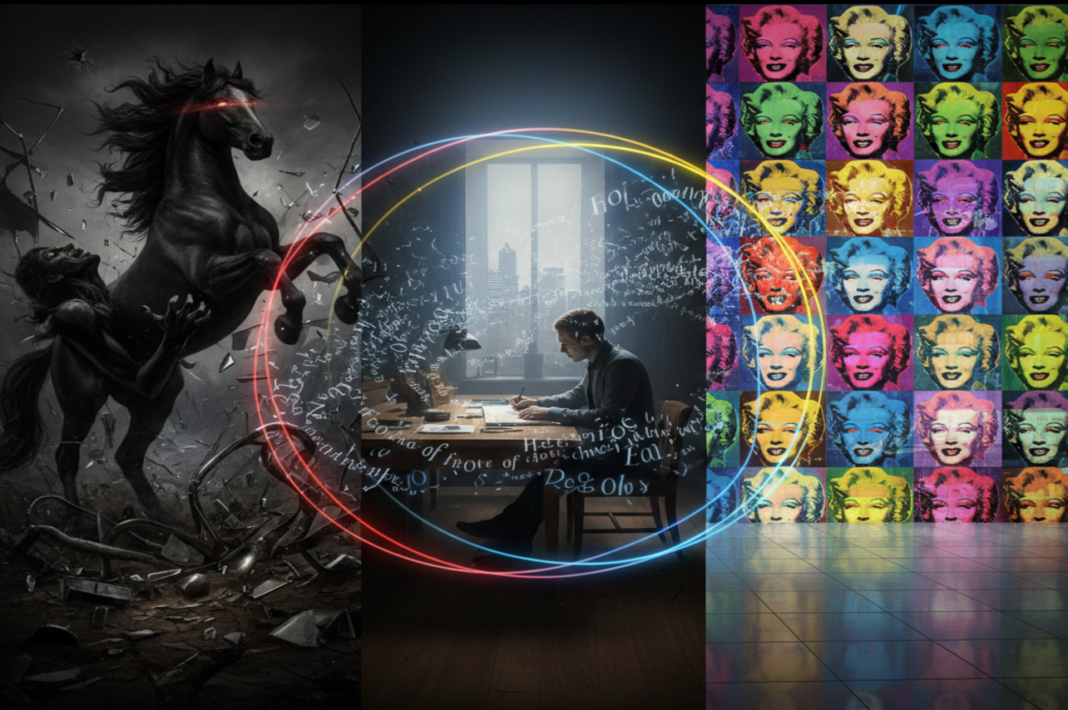
ID is an instinctive drive for the immediate gratification of what is desired. It is independent of social norms. Peter Shaffer’s 1973 play,Equus, is about the character Alan Strang, who has a pathological obsession with horses, and Dr. Martin Dysart, a child psychiatrist who tries to treat him. Equus was inspired by a news report about a 17-year-old boy who blinded 26 horses.
The first act begins with a monologue in which Martin Dysart recounts the Alan Strang case. He then expresses his dissatisfaction with his profession and his life. He finds his life boring. He laments that he does not possess the same genuine passion as Alan, who worships horses. At this point, he experiences a dilemma between professional clarity and moral relief in normalizing Alan, believing that he will obtain the “true desire” he himself lacks from Alan. Dysart states that Strang’s crime is excessive, but he believes that excess is necessary to break free from the chains of existence.
For Dysart, the Hanker is a feeling of finding his desire in life, of bridging the gap between external norms and internal values in his professional role. For Alan Strang, this yearning is a fusion desire, a desire for absolute unity, the elimination of the boundary between self and other. He sees beauty, power, and absolute freedom in horses. He wants both to be one with them and to control them. For Strang, the horse is a sacred being rather than an object or a symbol. Here, the id possesses the impulsive drive to destroy even what it loves. Strang’s blinding of the horses is not hatred or sadism. It is an act of silencing a beauty that excessive passion cannot bear. It is a willingness to destroy rather than lose what one desires. In this context, the hanker is processed at the ID level in Equus. Its representation here is: an absolute desire for unity that is impossible to satisfy, cannot be symbolized, cannot be limited, and is precisely for this reason, destructive. The “pain” that accompanies the “hanker,” born from an unbearable intensity, is shown sharply and harshly on stage.
EGO: Pablo Neruda, Tonight I Can Write The Saddest Lines
The ego is a structure that represents the balance between the id and reality, controlling internal impulses to make realistic decisions in accordance with external norms and the individual’s understanding of reality. Pablo Neruda’s poem, “Tonight I Can Write the Saddest Lines,” as its title suggests, is a powerful example of how desire is experienced at the ego level. Here, desire is transformed into a linguistic form without being suppressed or denied. Neruda longs for his beloved, but this longing does not lead him to a destructive act, a withdrawal as Schopenhauer envisioned, but rather to revolution, creativity, and transformation, as in Nietzsche’s perspective.
The desire becomes the poem itself. For Neruda, longing is silent, spread over time, and yes, painful, but it is under control. At the ego level, it is made portable. Its voice is exuberant, like Alan Strang’s, and anonymous, like in Warhol’s world. Here, the speaking subject is a consciousness aware of the desire but not trying to bring it back. There is no denial. The loss of a past love or bond is not denied. Nor is it idealized. The healthy relationship the ego establishes with reality provides a form of remembrance and acceptance. In conclusion, Neruda’s poetry demonstrates that the dagger can be transformed into meaning and expression by being brought to the level of the ego.
SUPEREGO: Andy Warhol, Marilyn Diptych 1962
SUPEREGO, by defining right and wrong within the framework of internalized moral values, directs behavior towards conforming to social norms. It reflects moral values and conscience; it is not individual. It is society, culture, and norms that speak. Andy Warhol is a pioneer of the pop art movement. Warhol’s art is shaped by social norms, cultural symbols, and especially the values of consumer society. In his work, Marilyn Diptych, there is a critique of the desires and obsessions of society, the imposed moral and aesthetic values, and the separation of individual and cultural identity, which is a clear reflection of the SUPEREGO concept.
In Warhol’sMarilyn Diptych, Marilyn Monroe is glorified as a cultural icon. Marilyn was a significant figure who became a symbol of American culture and cinema at that time. Through this iconic figure, he illustrates how superficial the meaning attributed to a cultural idol is, how it lacks a genuine identity, and how it becomes almost a consumer object; he shows that the meanings attributed to this cultural icon do not contain a basis in reality or belonging. Society is being de-identified, particularly through shaping via media and popular culture. Marilyn Monroe’s numerous, recurring portraits symbolize how her identity and image have become a social construct, criticizing society’s constantly repetitive, mechanized, and superficial desires.
In summary, in Warhol’s Marilyn Diptych, the SUPEREGO reveals the individual’s commitment to and effort to conform to the societal norms of right and wrong. In this context, the hanker symbolizes an existential meaning, representing an endless quest and the internal conflicts it brings, rather than a mere desire. It is an expression of the individual’s inability to complete themselves, a part of dissatisfaction, the continuity of the inner search stemming from dissatisfaction. In capitalist societies, the hanker feeling in individuals is a consequence of consumer culture. The desire to reach the ideals and beauty standards defined by society creates an inner void beyond individual satisfaction. When evaluated through Marx’s theory of alienation, it symbolizes an unlimited cycle of desires resulting from a continuous effort towards imposed desires, alienated from the individual’s own desires and inner needs.
Conclusion
In this paper, the relationship between ID, EGO, and SUPEREGO is examined through the concept of the hanker, using three different works. The concept of the hanker is addressed from different perspectives by Peter Shaffer, Pablo Neruda, and Andy Warhol. The yearning for unfulfilled human desires is explored in three main dimensions: existential, social, and romantic. In Equus, Shaffer describes the connection between ID and hanker as an internal conflict that is unfulfilled and leads to destruction. Both main characters are in an existential dilemma. In Neruda’s poem “Tonight I Can Write,” the reality of a lost love is depicted as a yearning accepted by the EGO. Hanker emerges as a non-destructive, transformative version of an inner void nourished by the echoes of the past, transformed into creative power and poured onto paper, into words. Warhol’s Marilyn Diptych, with its concept of SUPEREGO, illustrates the cycle of continuity caused by society’s dominance over the individual and the desires it imposes, leading to the suppression of true desires and the yearning for a hanker that can never be attained. Consequently, the dynamics between hanker, ID, EGO, and SUPEREGO, and the inner journey resulting from unmet hanker and desires in both individual and societal contexts, are reflected in the diverse works of different artists.
References
Kaufmann, W. (1950).Nietzsche: Philosopher, psychologist, antichrist. Princeton University Press. Schopenhauer, A. (2018). The world as will and representation (Vol. 2). Cambridge University Press. Alberti, F. B. (2019). All by myself: A biography of loneliness: The history of an emotion. Oxford University Press. Marx, K. (1844). Economic and Philosophic Manuscripts of 1844. (S. Ryazanskaya, Trans.). Progress Publishers. Hatzimoysis, A. (2019). Jean-Paul Sartre. Oxford Handbook of Phenomenological Psychopathology. Powers, E. From Drip to Pop: Andy Warhol. Neruda, P. (1924). Tonight I can write (The saddest lines). In Twenty Love Poems and a Song of Despair (pp. 1-4). New York: New Directions Publishing. Albayrak, G. (2024). The Dionysiac rupture in Equus: A Nietzschean perspective on Peter Shaffer’s modern tragedy. DTCF Dergisi, 64(1), 704-732. https://doi.org/10.33171/dtcjournal.2024.64.1.28