
Holding on to Childhood Amid the Shadows of War: A Psychological Look at “Life is Beautiful”

War is a destructive reality that robs childhood of its innocence and leaves deep, lasting scars on the soul. Yet the extraordinary psychological resilience of the human spirit and the transformative power of parental love allow hope to take root even in the darkest moments. The search for meaning, too, represents a fundamental driving force in human life. As Nietzsche observed, “With a purpose to live for, one can withstand nearly any way of living.” In a similar vein, Viktor Frankl, the founder of logotherapy, recounted how those who survived the Nazi camps most often were the ones who knew they still had a task to fulfill.
The interplay of meaning and imagination is central to the human quest for a deeper sense of purpose. Imagination is the capacity to think creatively, to generate new ideas, and to envision alternative realities. Through creative thinking, individuals are able to discover fresh and innovative ways of confronting challenges and overcoming difficulties.
The Role of Play in Cognitive and Emotional Development
Piaget emphasized the importance of play in connection with the stages of a child’s cognitive development. During the sensorimotor stage, he argued, play is less about thought and more about physical action. Later comes the stage of symbolic play, which lays the foundation for symbolic thinking, when one object is used to represent another. Through such play, children learn about the world around them by moving, experimenting with, and manipulating the objects and materials in their environment.
In a child’s life, play is more than just fun and games; it is an essential way of expressing feelings, grasping the world, and navigating painful experiences. Play also helps to safeguard the continuity of developmental stages. Traumatic events can disrupt a child’s normal developmental process, and in some cases even cause regression. Maintaining ordinary childhood activities contributes to the ongoing cognitive, social, and emotional growth of the child.
Life is Beautiful (La vita è bella)
Roberto Benigni’s Oscar-winning masterpiece Life is Beautiful reveals how, even in one of the darkest chapters of human history, the Holocaust, a father’s invention of a “game” to shield his son could serve as a remarkably powerful defense mechanism.
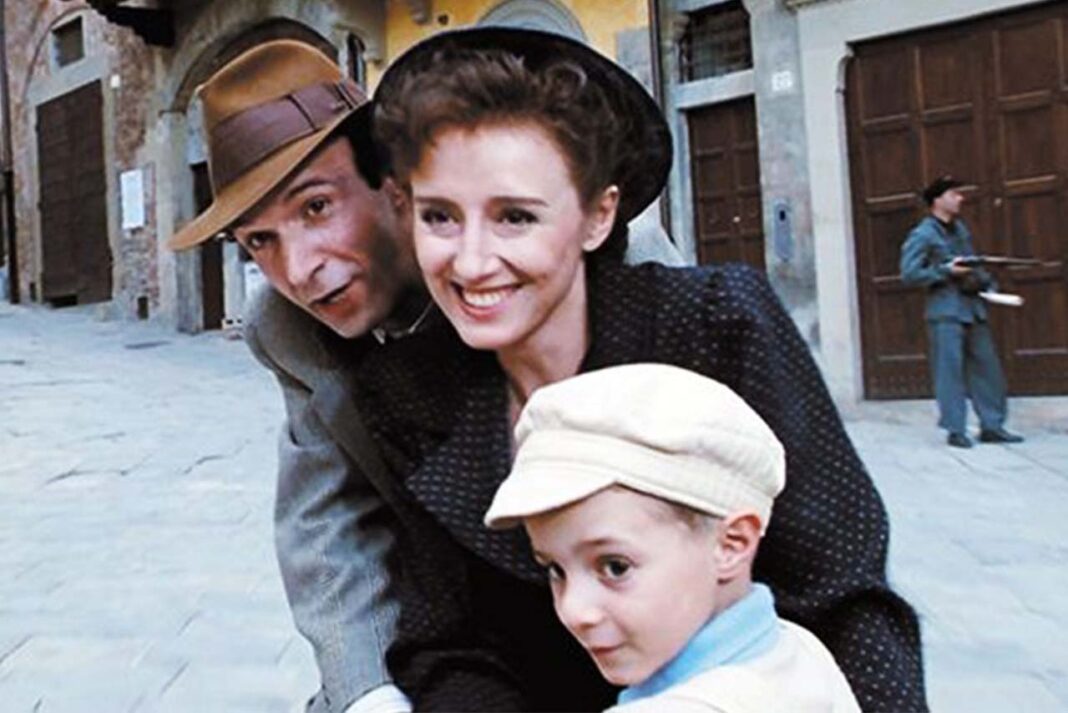
Directed by and starring Roberto Benigni, Life is Beautiful tells the story of Guido Orefice, a Jewish father in World War II who transforms reality into a “game” in order to shield his son Giosuè from the terrors of a Nazi concentration camp.
Set against a tragic backdrop, the film underscores the psychological resilience of the human spirit, the power of love, and the importance of preserving innocence. From a psychological perspective, it explores the complex dynamics of both adult and child psychology, the mechanisms of coping with trauma, and the transformative force of hope.
Guido’s Psychology: Humor and Creativity as a Defense Mechanism
The film reveals Guido’s extraordinary psychological resilience, expressed through his humor and imagination.
Even in the midst of Nazi persecution, Guido relies on humor and creativity as his primary defense mechanisms. His approach exemplifies, in Freudian terms, the processes of sublimation and denial.
By reframing the horrors of the concentration camp as a “game” in his son’s eyes, he seeks to shield Giosuè from a direct confrontation with traumatic reality. This represents the ultimate expression of a parent’s instinct to protect their child.
Guido’s effort to sustain this “game” is also his way of coping with his own inner fear and helplessness. By suppressing his pain, he offers his son an illusion of hope and normalcy. This becomes a striking illustration of psychological resilience, the ability to preserve one’s integrity and adapt even in the harshest of circumstances.
Although Guido’s approach is extreme and unique, it symbolizes the broader effort of parents to shield their children from the impact of traumatic events. In modern psychology, protecting children from trauma involves providing a safe environment, offering age-appropriate information, and ensuring emotional support. When parents manage their own anxiety and present a calming presence, it has a positive effect on how children adjust after trauma.
Giosuè’s Psychology: The Fragility of Childhood Innocence and the Perception of Reality
Giosuè’s experience points to the long-term effects of childhood trauma. Children process trauma differently from adults and often express it through play, drawing, or changes in behavior. Giosuè inhabits the world of the “game” his father has created. Since a child’s mind cannot fully grasp abstract concepts or the reality of death, he easily adapts to his father’s narrative. This illustrates the tendency of children to interpret reality according to their level of cognitive development.
Giosuè’s compliance with his father’s rules and his willingness to hide stem both from his belief that he is part of a game and from the deep trust he places in his father. At times, however, moments when the game clashes with reality, for instance when he witnesses the suffering of other prisoners, trigger experiences of cognitive dissonance. Such moments expose the fragility of a child’s innocence and the potential for harsh reality to break through. The film underscores how vulnerable children are in the face of trauma and how deeply they depend on protection.
In such cases, evidence-based interventions such as play therapy and trauma-focused cognitive behavioral therapy can help children process traumatic memories and develop healthy coping skills. Early intervention and continuous psychosocial support play a critical role in reducing the long-term effects of trauma.
Dora’s Psychology: Unconditional Love and Sacrifice
Despite not being Jewish, Dora decides to leave behind her family and comfortable life to stand beside the man she loves and their son in the concentration camp. This act stands as one of the strongest symbols of unconditional love and sacrifice. Her helplessness within the camp and her efforts to reach her family reveal the instinct of a mother and wife to protect her loved ones. Dora’s character embodies both the emotional burden and the sense of loss that war imposes on individuals, while also reflecting the psychological resilience of an adult who strives not to lose hope.
The film emphasizes the importance of hope and the search for meaning even in the darkest of circumstances. Guido’s “game” becomes a beacon of hope for Giosuè and, at the same time, a reminder to the audience of the psychological resilience of the human spirit.
Conclusion
In conclusion, Life is Beautiful stands as powerful evidence that the human spirit, through imagination and love, can resist even in the most hopeless situations and preserve the innocence of childhood. The “game” Guido creates serves as a shield against the horrors of war, functioning almost like a form of play therapy.
The film conveys in a universal language that play is not only a therapeutic tool for children who have endured traumatic experiences, but also a means of holding on to life, of healing, and of looking toward the future with hope. Giosuè’s ability to cling to life and preserve his innocence despite the horrific experiences he faces reveals the transformative power of both play and unconditional love.
Thus, safeguarding children’s mental health through play therapy and play remains indispensable, even in the harshest conditions, and stands as one of humanity’s most enduring responsibilities.