


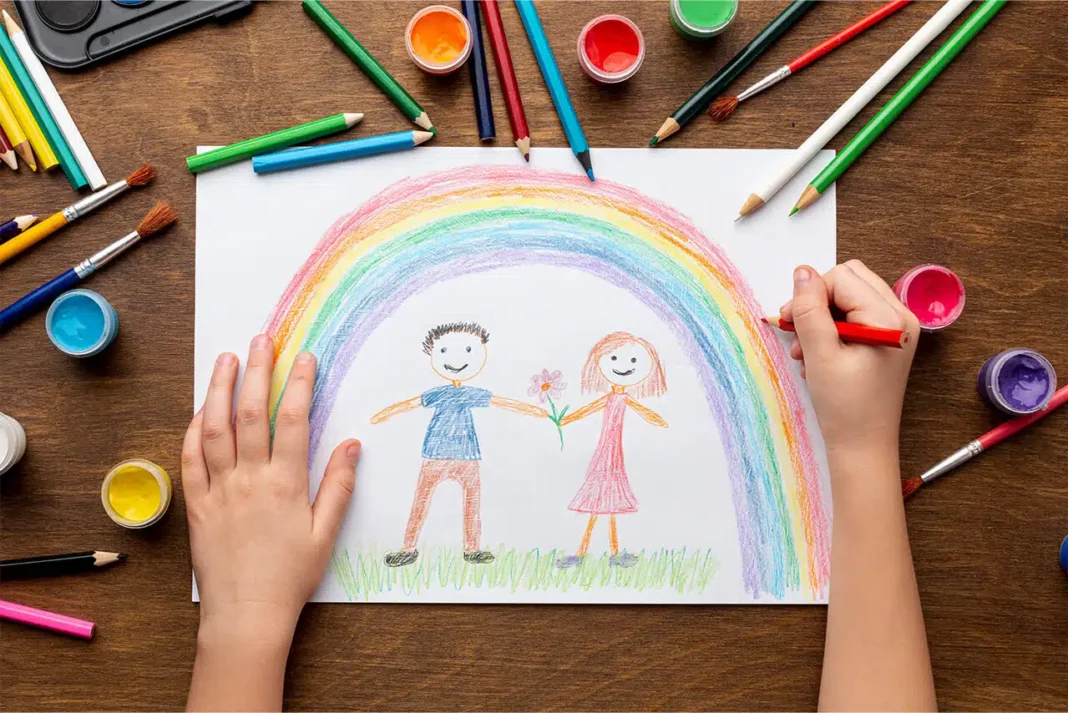

If the windows of a house drawn by a child are closed, if there is no sun, or if the figures are far apart… all these are screams heard in a child’s lines. These expressions, which may seem like simple drawings for adults, can actually be a sign of emotional neglect and abuse. Children who experience emotional neglect and abuse may find it difficult to express what they have experienced in words. For this reason, children’s drawings are a vital means of expression. Dark colours and missing figures are symbols of the neglect and abuse experienced by the child. Correctly analysing these symbols is very important because helping a child means being able to hear the screams in their drawings.
Why Do Children Express Themselves Through Art?
For children, drawing is not just an activity. They express their feelings and needs through pictures. Language development is not yet complete, especially in children between the ages of 0 and 6, making it difficult for them to express themselves with words.
For this reason, children’s drawings, which are a common point between art and child psychology, are important for understanding children. Studies in psychology have found that children are more comfortable expressing traumatic experiences through drawing. Children express the emotional neglect and abuse they are subjected to through their drawings.
Dark clouds or unhappy facial expressions seen in children’s drawings are symbols of neglect and abuse. All these symbols represent the emotional neglect and abuse that children are exposed to.
The Reflection of Emotional Neglect and Abuse in Lines
Emotional neglect and abuse leave deep scars on a child’s soul. Every figure in children’s drawings expresses their traumas. Every line in a child’s drawing has meaning.
-
Dark colours may be an expression of a dark psychology.
-
Not using colour can reflect indifference.
-
Missing body parts indicate a weak relationship with that person.
-
Irregular or messy lines express unresolved emotions.
-
Pressing down with a pen may reflect anger and stress.
However, individual differences among children must not be forgotten. A quick diagnosis should not be given. Children should be evaluated holistically.
Hearing the Silent Screams
Emotional neglect and abuse in children can often be identified using drawings. Children cannot always express neglect and abuse outwardly, making it the responsibility of parents, teachers, and mental health professionals to understand their needs.
It is necessary to communicate with children and listen to them. This support provides hope, which is therapeutic for children. To achieve this:
-
Do not judge children.
-
Provide a safe space.
-
Mental health professionals should collaborate with teachers and parents.
By doing these things, emotionally neglected and abused children can be helped.
Conclusion
The stories in children’s drawings are screams waiting to be heard. It is our responsibility to hear these screams. Children’s drawings are a key to understanding their emotional needs. Correctly understanding these drawings and intervening appropriately is essential. Every child is special, and every line opens a different door. Emotional neglect and abuse must be taken seriously and addressed. That is why it is important to view drawings as stories.