


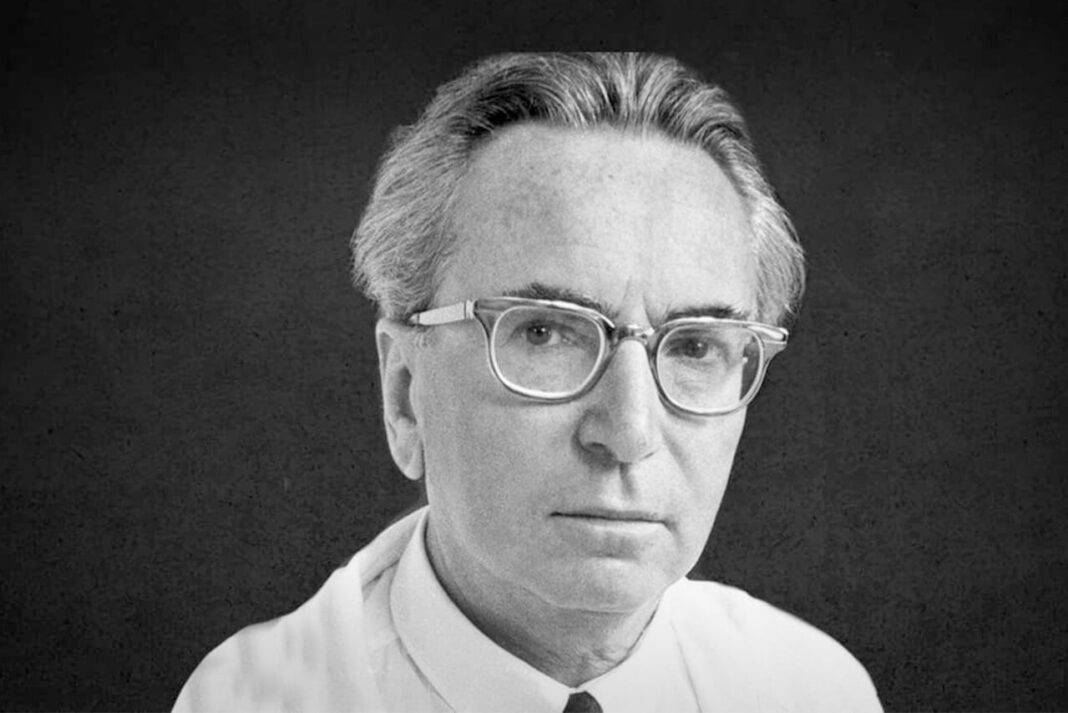

Life sometimes brings harsh winds. Some of us are swept away, while others try to remain standing by sending our roots deep. Victor Frankl, one of the most significant psychotherapists of the 20th century, introduced to the world his struggle for survival in Nazi concentration camps and the psychotherapy approach he developed during this process. The logotherapy school developed by Frankl argues that individuals’ search for meaning in their lives has a profound impact on their psychological well-being and emotional resilience.
Viktor Frankl was a powerful figure who managed to survive the inhumane conditions of Nazi concentration camps through the power of meaning and humor. The logotherapy he developed maintains that humans can find meaning even amidst suffering. So, what place does humor have in this search for meaning? Frankl realized that even in camp life, laughter was a form of resistance. He observed that making a joke, even in the most difficult moments, could distance a person from helplessness. According to him, humor was one of the highest forms of existence. This is because humor allowed a person to step back from the trauma they were experiencing and view their situation from a different perspective.
Humor as Resistance in “Man’s Search for Meaning”
In his book Man’s Search for Meaning, Victor Frankl explains with examples how humor can be a mechanism of resistance while describing some of the events he experienced in the concentration camp. Frankl relates how, despite the terrible conditions they were in, medical visits with his camp friends proceeded like a “medical comedy show.” Doctors among the prisoners would perform humorous sketches addressing the unhealthy conditions in the camp. For instance, Frankl once jokes with a friend about the “so-called luxury spa services” in the concentration camp: “This morning there’s a hot bath, outdoor sports in the afternoon, and a wonderful gourmet meal in the evening! The only difference is that there’s no hot water, the sport is carrying stones, and the meal is just a spoonful of soup!” Such humorous perspectives helped prisoners alleviate, to some extent, the horrible events they were experiencing. This was not merely a laughing reflex but a psychological resilience strategy developed for survival.
Logotherapy and the Search for Meaning
Logotherapy reflects Frankl’s gentle yet profound psychological perspective. According to Frankl, there is meaning in every situation that humans face in life. This meaning is the key to coping with difficulties and delving into the depths of life. Frankl expressed this understanding as, “The meaning of life is always a personal discovery.” People can develop psychological flexibility to create meaning even in challenging life conditions. This search for meaning facilitates individuals’ coping with stress and makes them emotionally more resilient.
The Psychological Role of Humor
Humor is an emotional state that has an important function in human psychology. Psychological research has shown that humor can improve individuals’ emotional states, help them cope with stress, and reduce anxiety (Martin, 2007). Humor allows individuals to evaluate the difficulties and stressful situations they experience from a different perspective. In this respect, humor not only serves as a mere entertainment tool but also functions as a useful and healthy coping mechanism. A humorous perspective alleviates anxiety felt towards the negative aspects of life and gives individuals a sense of control.
Humor and Frankl’s Search for Meaning
Frankl emphasizes that individuals need to develop psychological flexibility to add meaning to their lives. This flexibility determines the attitudes individuals adopt in the face of difficulties. Humor is an important tool that provides this flexibility. For example, when a person encounters a traumatic experience, they can develop a sense of control over the event by addressing it humorously. Humor is used as a strategy for gaining power against difficulties and coping with them. According to Frankl, “The meaning of life consists in finding that options exist in every situation.” As one of these options, humor helps individuals develop a meaningful perspective even within painful experiences.
The Effect of Humor on Emotional Well-Being
The effects of humor on emotional well-being have been proven by psychological research. Martin (2007) states that humor provides emotional balance and reduces anxiety levels. Additionally, it is known that humor helps individuals relax by secreting endorphins. Humor protects individuals from the effects of negative emotional states and enables them to develop a more positive perspective. Humor makes a person less vulnerable when facing difficulties. In Frankl’s logotherapy, the importance of establishing strong social bonds for individuals to add meaning to their lives is also emphasized. Humor is a tool that strengthens these bonds, enabling individuals to form more social, solidary, and meaningful relationships.
Conclusion
Victor Frankl’s logotherapy aims for individuals to add meaning to their lives and ensure their emotional well-being through this meaning. Humor is an important psychological tool in this search for meaning. According to Frankl’s approach, humor helps people develop a more flexible, resilient, and meaningful perspective when coping with difficulties. Humor is not just a form of entertainment but also a powerful coping mechanism that enables people to deal with stress and reduce anxiety. When logotherapy and humor come together, they form a powerful combination for individuals’ emotional well-being.
It is possible to adopt a similar perspective in our daily lives. When faced with difficulties, we can remind ourselves of Frankl’s words: “Everything can be taken from a man but one thing: the last of the human freedoms—to choose one’s attitude in any given set of circumstances.” Perhaps one of the most powerful ways to use this freedom is to add a bit of humor to life. Sometimes a smile, sometimes a joke… Perhaps the greatest support to our inner search for meaning is a slight smile we adopt towards life.
Reference
Martin, R. A. (2007). The Psychology of Humor: An Integrative Approach. Burlington, MA: Academic Press.