


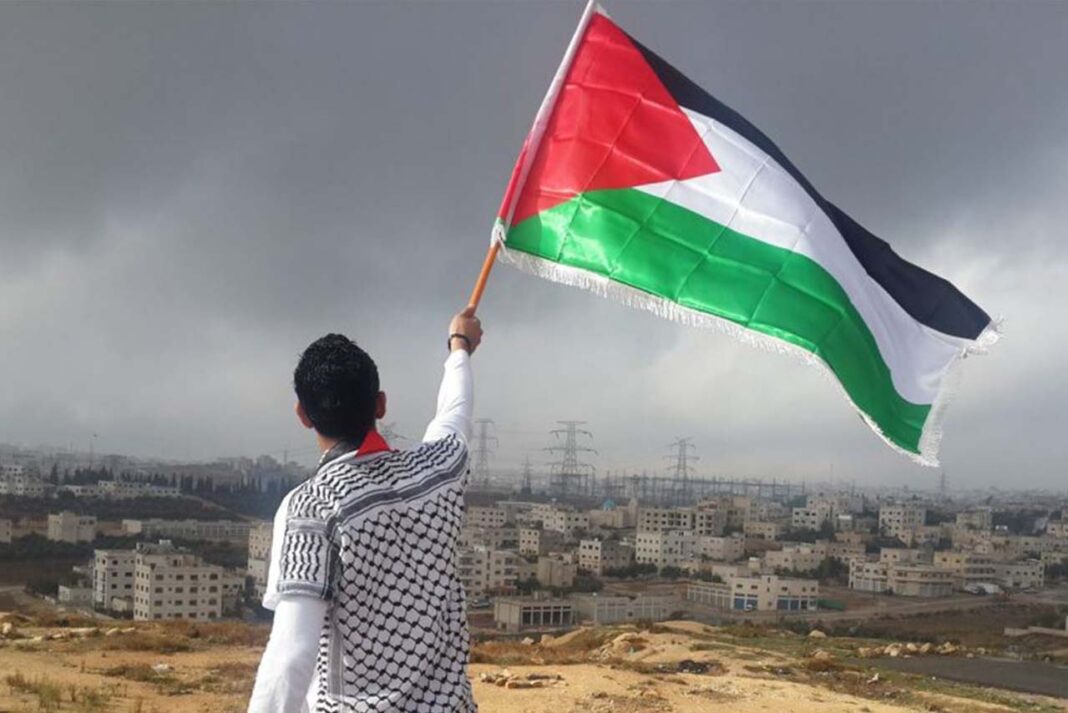

Throughout history, Palestinians have been consistently exposed to prolonged violence, cultural and ethnic discrimination, and forced displacement by occupying forces in the area. Regardless of the severe outcomes of dispossession that Palestinians experience, they embrace a kind of survivor identity where they don’t just assume themselves as the victims, yet they strive to endure these challenges and find ways to cope. This brings us to the psychological concept of resilience, which is described as “the ability of an individual to ‘bounce back’ after experiencing stress” (Meadows et al., 2015). Resilience can be expressed by an individual’s ability to cope with traumatic events, constant stressors, and immense hardships, as well as a person’s ability to pull themselves together after adversities and setbacks. Despite all of the systematic violence, occupation-related hardship, and restrictions on basic human rights that they get exposed to, Palestinians somehow show a strong sense of resilience, both in their mental health and general wellbeing. Living under layers of loss, restriction, and marginalization, Palestinians hold on to their resilient spirit and endure these hardships with quiet strength to go on. But what makes them resilient in the face of trauma and daily adversity? Is it about their faith, family and community bonds, or perhaps preservation of narrative and identity? In fact, all of these have something to do with their resilience.
Sumud: The Philosophy of Steadfastness
While the word Sumud (صمود) refers to steadfastness or perseverance in Arabic, it is also a concept for Palestinian cultural construct and cultural identity that supports psychological resilience in the context of occupation (Hammad & Tribe, 2021). Sumud is not just a passive endurance, but an active form of resistance that one manifests in their everyday life either by remaining on their ancestral land and holding to their land, preserving language and tradition, and cherishing family ties. Sumud culture is a culturally based coping strategy that helps Palestinians manage their emotions, maintain their optimism, and find purpose in the face of chronic adversity. It provides people with a sense of unity, purpose, and group membership while acting as a buffer against the psychological effects of prolonged conflict, chronic anxiety, and trauma.
Faith and Spirituality
Palestinian communities, the majority of whom are Muslim, possess a deep sense of spiritual endurance connected to Islamic teachings. Islam plays a central role to cultivate sabr (patience), raja (hope), and tawakkul (trust in God), which together provide a powerful psychological basis for coping with trauma and uncertainty. Palestinians find purpose in their suffering and maintain a positive attitude even in the face of difficulties through religion and a strong belief in divine justice. Also for them, martyrdom (shahada)—sacrificing one’s life in the name of justice, faith, and homeland—is another strong source of meaning and communal healing that turns suffering into spiritual purpose and strengthens resilience through solidarity and shared faith. This spiritual strength integrates suffering with determination, resistance, and purpose rather than just dismissing it. This eventually helps people and groups in controlling their emotions, maintaining their dignity, and looking to the future with hope.
Hamula and Community Bonds
Hamula is the name for networks of extended family connections within Palestinian communities (Tessler & Grant, 1998). Strong familial ties, social identity formed by family and community, a holistic perspective on life, and a connection to the land are among the basic Palestinian values shared by the majority of the population (Marie, SaadAdeen, & Battat, 2020). These connections are not only formed by bloodlines but also shaped by shared values like common history, experiences, and collective pain. The wide family structure of Palestine is also the root for the social/cultural identity and sense of belonging of the individual. This extended communal hamula system is also the very first environment where individuals get their financial, social, and psychological support. In the face of difficulties and crisis, hamula especially eases the mental burden of individuals through solidarity and common action.
Narrative and Identity Preservation
The narration in Palestinian communities is one of the strongest ways that keep the collective memory alive, protect the cultural identity, and overcome the traumas. Particularly the songs, poetry, and stories that are told from generation to generation make the generational trauma, common pain, losses, and dispossession of the 1948 Nakba remembered. The stories of Nakba recall that the loss and pain is not only on the individual level, but it is communal pain. These narratives are also documents of resistance and existence. For Palestinians, storytelling is not just about remembering the past; it’s also about holding on to the future with hope. Figures like the poet Mahmoud Darwish have pioneered Palestinians in expressing both individual and collective wounds through poetry. Darwish’s verses carry both a political and emotional memory, exploring themes of identity, homeland, love, and loss while telling the world what it means to be Palestinian.
“My wounds are the wounds of my people”
Mahmoud Darwish (The Minds Journal, n.d.)
Conclusion
Palestinian resilience is a silent revolution that turns suffering into meaning, loss into remembrance, and struggle into steadfast hope. It goes beyond simply enduring oppression. Palestinians redefine endurance through their faith, family, narrative, and cultural identity.
And in the echo of their footsteps on ancestral land, in the lullabies of longing, and the verses of Darwish, one truth resounds:
“We suffer from an incurable disease: hope”
Mahmoud Darwish (Latif, 2016)
References
Hammad, J., & Tribe, R. (2021). Culturally informed resilience in conflict settings: A literature review of Sumud in the occupied Palestinian territories. International Review of Psychiatry, 33(1–2), 132–139. https://doi.org/10.1080/09540261.2020.1741259
Latif, A. (2016, February 16). Love in a time of refugees. The On Being Project. https://onbeing.org/blog/love-in-a-time-of-refugees/
Marie, M., SaadAdeen, S., & Battat, M. (2020). Anxiety disorders and PTSD in Palestine: A literature review. BMC Psychiatry, 20(1), 509. https://doi.org/10.1186/s12888-020-02911-7
Meadows, S. O., Miller, L. L., & Robson, S. (2015). Understanding resilience. In Airman and family resilience: Lessons from the scientific literature (pp. 9–22). RAND Corporation. http://www.jstor.org/stable/10.7249/j.ctt19rmdbt.10
Tessler, M., & Grant, A. K. (1998). Israel’s Arab citizens: The continuing struggle. The Annals of the American Academy of Political and Social Science, 555, 97–113. http://www.jstor.org/stable/1049214
The Minds Journal. (n.d.). 60 Mahmoud Darwish quotes about Palestine, love, and hope. https://themindsjournal.com/mahmoud-darwish-quotes/
Timimi, S. (1998). Refugee families have psychological strengths. BMJ: British Medical Journal, 317(7156), 475. http://www.jstor.org/stable/25180133