



Mental Wellbeing
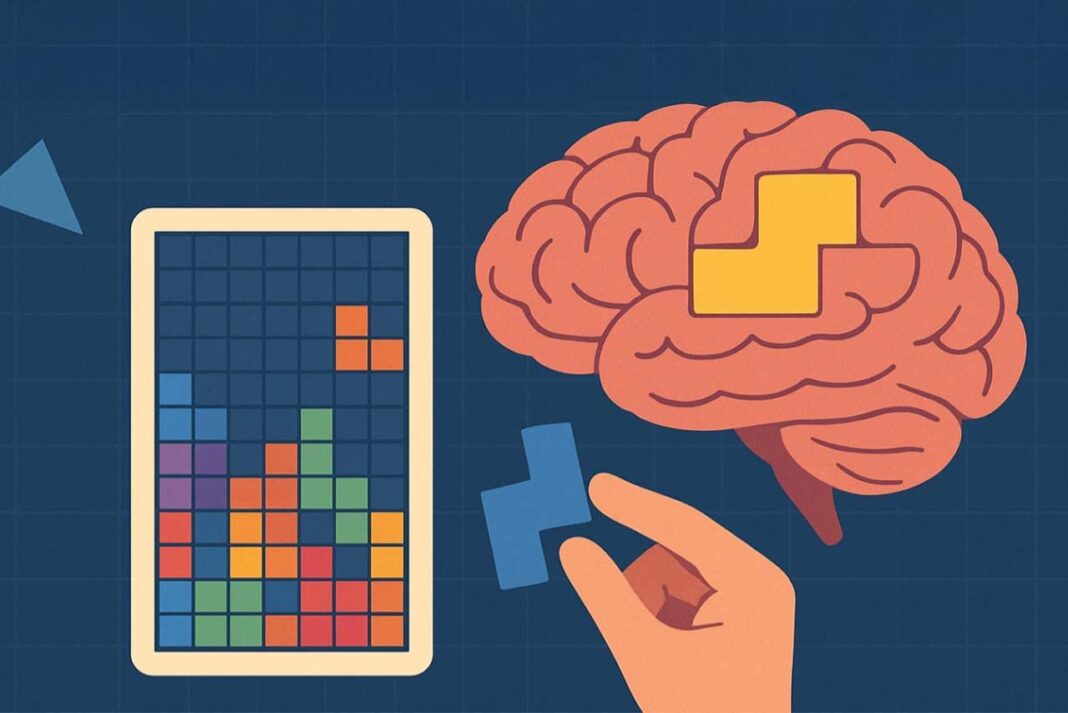
What do you think about which games have therapeutic effects? What if I say all of us have at least once played this game? Tetris as a legendary game, Minecraft as one of the cult games of the new generation, Candy Crush as mom’s favourite, and so on… Those visuospatial games can act as an emotional regulation tool. Although these games are seen as free-time activities, they actually are little helpers to get over difficult conditions in post-traumatic stress disorder and depression.
What Are Visuospatial Games?
One type of intelligence in Howard Gardner’s Multiple Intelligences Theory is visuospatial intelligence, in which there are skills like memorizing what is seen, visualizing the procedure, and manipulating objects with multidimensional thinking. Visuospatial memory works with feedback coming from the visual cortex and the parietal lobe (Xu, 2023). Games aiming this type of intelligence require the use of location, direction, shape, or route analysis skills within a logical framework. Chess, Tetris, puzzles, and tangrams are examples of visuospatial games. Examples from the digital world are Candy Crush, Minecraft, Tetris, and so on. Visuospatial games are popular among a very wide age range of individuals. Could the emotional regulation role of these games be a reason for the popularity?
Visuospatial Games As A Tool Of Emotional Regulation
Visuospatial games can function as an emotional regulation tool. These games can help to feel temporarily relaxed in situations like anxiety and stress. Cognitive load theory explains this relaxation in its own perspective by suggesting that while the brain is occupied with the visual stimulus, there is not enough capacity to process negative emotions, which distracts the individual’s attention. To illustrate, in the research that is done by James et al., it is found that Tetris and likewise puzzle games decrease the anxiety levels of individuals (James et al., 2015).
Some therapeutic effects of visuospatial games make them more than just a cognitive tool. Despite their easy nature, the therapeutic effects of visuospatial games on more than one psychological disorder are proven. They decrease the intrusive memories in the individuals who experience post-traumatic stress disorder (Kessler et al., 2018). In other words, visuospatial games prevent the continuous re-processing of trauma-related memories. They also diminish the impulsive desires, prevent overthinking, and hence have a facilitative effect on anxiety-like disorders (Skorka-Brown et al., 2014).
Flow And Control Experience
The deep focus during the game is called flow, and is associated with the healing process. Visuospatial games allow deep focus and create an experience of flow. We can define the concept of flow as being completely lost and hooked in a game. The loss of environmental awareness during play may decrease the amount and intensity of negative emotions by increasing positive affect. The temporarily diminished stress levels can be associated with being hooked into the game, and hence an increase in positive affect.
Focusing all their attention on games, individuals manage to avoid revisiting the past, staying present, and thinking about their next move in the near future. While immersing oneself in the flow can be relaxing, it can also lead to games being viewed as an escape from negative life experiences and real problems. Therefore, long-term therapeutic effects should be evaluated with the possibility is considering. While the long-term effects of visuospatial games on cognitive development have been proven (Toril et al., 2016), only a few studies on their long-term therapeutic effects have been conducted in the literature. The idea that it might lead to addiction symptoms may have hindered these studies. Although using visual-spatial games as a short-term emotional regulation and relaxation tool may be effective, in the long term, they can be considered an escape experience.
Uncertainty and intolerance may challenge individuals, paving the way for pathological disorders. Through actions like turning and placing blocks, individuals experience “control.” In addition to generating positive affect, visuospatial games offer individuals the opportunity to take control. For someone who feels out of control in their life, taking control through small-scale games can be a rewarding experience and can also be used as a strategy to reduce anxiety and worry.
Since one of the moments when craving for control is the strongest is eating disorders, a sense of control and order in play tasks may provide an alternative cognitive pathway to the need to control eating behaviours (Griffiths et al., 2016). I think, visuospatial games satisfy the need for control in a safer way than other types of games, because they allow individuals to experience trial and error. They can turn a piece as many times as they like until it fits, and this turn does not cost them any points. At the same time, the limited control area and simple rules reinforce this safe zone. Visual-spatial games, which require focus rather than haste, present individuals with elements they control in a world devoid of complexity.
As A Result
Visuospatial games contribute to the mental well-being of individuals in addition to entertaining them. Cognitive load theory, flow, and a sense of control are just a few of the reasons underlying this healing power. Who knew that Tetris, once a game everyone loved, could be a tool for regulating negative memories? This perspective may lead therapists to explore innovative and gamified ways to heal. However, the fine line between using games as an escape and having proven their healing effects may be slowing this progress. After all, in psychology, not everything often fits together like blocks in Tetris.
References
Griffiths, E., Hawkes, N., Gilbert, S., & Serpell, L. (2016). Improving the post-meal experience of hospitalised patients with eating disorders using visuospatial, verbal and somatic activities. Journal of Eating Disorders, 4(1), 9. https://doi.org/10.1186/s40337-016-0098-y
Kessler, H., Holmes, E. A., Blackwell, S. E., Schmidt, A., Schweer, J. M., Bücker, A., Herpertz, S., Axmacher, N., & Kehyayan, A. (2018). Reducing intrusive memories of trauma using a visuospatial interference intervention with inpatients with posttraumatic stress disorder (PTSD). Journal of Consulting and Clinical Psychology, 86(12), 1076–1090. https://doi.org/10.1037/ccp0000340
Skorka-Brown, J., Andrade, J., & May, J. (2014). Playing ‘Tetris’ reduces the strength, frequency and vividness of naturally occurring cravings. Appetite, 76, 161–165. https://doi.org/10.1016/j.appet.2014.01.073
Toril, P., Reales, J. M., Mayas, J., & Ballesteros, S. (2016). Video game training enhances visuospatial working memory and episodic memory in older adults. Frontiers in Human Neuroscience, 10, 206. https://doi.org/10.3389/fnhum.2016.00206
Xu, Y. (2023). Parietal-driven visual working memory representation in occipito-temporal cortex. Journal of Neuroscience, 43(12), 2345–2357. https://www.ncbi.nlm.nih.gov/pmc/articles/PMC10615870/